What if the fastest way to stand out in a crowded market is to say no to the one thing everyone expects?
Jenn Saesue and Chat Suansilphong didn’t just open another Thai restaurant, they rejected the playbook entirely. No pad thai. No bloated menu. Just a clear point of view and the conviction to back it up.
In this episode, we get into how complementary skill sets—not identical ones—became their competitive edge, why hiring experts early (especially around money) gave them control instead of costing it, and how they used data like a weapon to run smarter, not harder.
If you’re tired of playing it safe and blending in, this is the conversation that will challenge how you build, hire, and position your brand.
Free 5-Day Restaurant Marketing Masterclass – This is a live training where you’ll learn the exact campaigns Josh has built and tested in real restaurants to attract new guests, increase visit frequency, and generate sales on demand. Save your spot at restaurantbusinessschool.com
After coaching 400+ restaurant owners, I’ve found that almost every single one underprices their menu. The fear is that raising prices will drive people away. The reality? Nobody’s watching. $16 and $18 are the same number in your customer’s mind. I tested this at my own restaurant by changing prices every single week for six months. Here’s the P90 benchmarking method I use to find your real price ceiling, and why value is what you get, not what you pay.
I’m going to say something that might make you uncomfortable: you are almost certainly underpriced.
I know this because I’ve worked with over 400 restaurant owners, and the pattern is nearly universal. They’re afraid to raise prices. They’re anchored to food cost multipliers. They’re terrified of that one-star review that says “overpriced.” And as a result, they’re leaking margin on every single transaction, every single day.
Here’s the thing that set me free, and I hope it does the same for you: nobody’s watching. Nobody is tracking your menu items. Nobody is tracking your pricing. Nobody cares about your business as much as you do. Most of the people reading this don’t know what they paid for gasoline last week, or the week before that. So few of your customers have visit frequency high enough to notice an incremental change in price that it would actually have an impact.
Once you internalize that truth, everything changes.
How Do You Raise Menu Prices Without Losing Customers?
You raise menu prices without losing customers by making small, strategic moves instead of dramatic ones: benchmark against the top of your market (the P90 method below), move prices in increments guests don’t register — to most diners, $16 and $18 are the same number — start with your best-sellers where value perception is already strongest, and treat every change as reversible. Nobody tracks your menu prices the way you fear they do; guests judge the experience, not the line item. The rest of this guide breaks down each method with the real numbers from my own restaurants and coaching practice.
The Two-Way Door: Why Menu Changes Are Never Permanent
Jeff Bezos divides all decision-making into two categories. Is it a one-way door, or is it a two-way door? A one-way door is a decision you can’t undo. Signing a lease with a personal guarantee. Choosing to close a restaurant. Those are big decisions that deserve weeks of deliberation.
A two-way door is a decision you can reverse. Every pricing change you make is a two-way door. You do it, you see how it goes, and you can always undo it. If you adjust your menu this week and it doesn’t work, you adjust it back.
I want to drop the stakes around pricing because we have a tendency as restaurant owners to think with a sense of permanence. When I change my menu, it feels like a permanent change. But I would argue that we need to think like professional marketers, where everything is iteration. You’re not changing your menu once. You should be changing your menu constantly, getting it closer and closer to the most perfect version of itself.
Fear is the enemy of progress. And the fear around pricing is almost always unfounded.
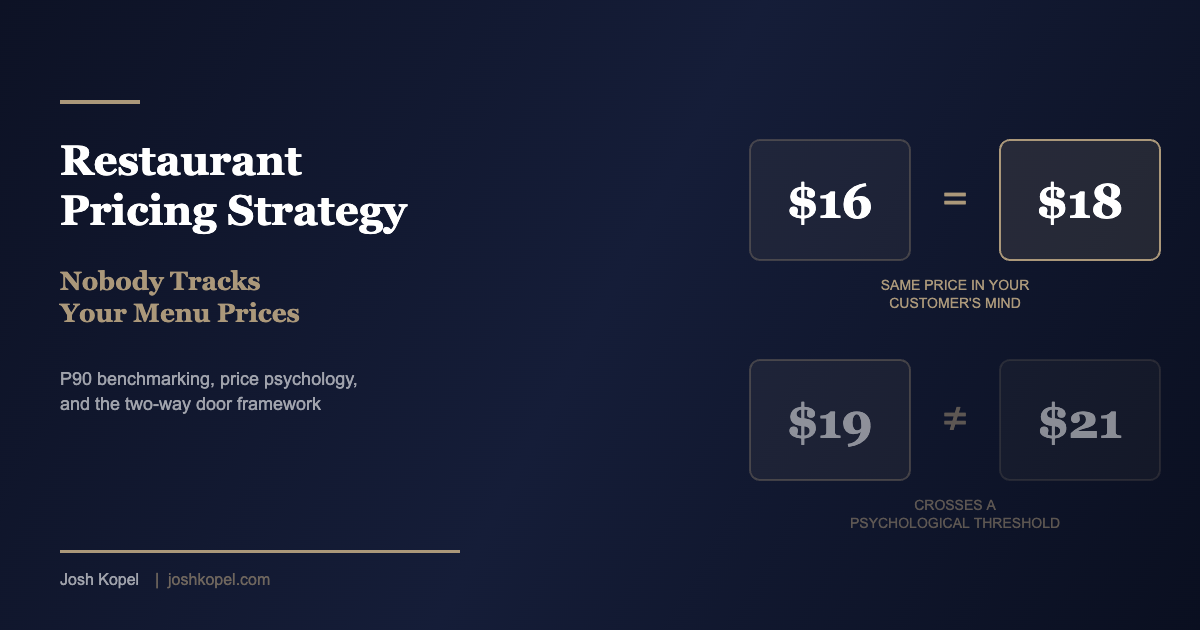
$16 and $18 Are the Same Number
Let me ask you a question. Is there a difference between a $16 burger and an $18 burger?
The answer is no. In the mind of your customer, those are the same price. The decision to buy a $16 burger and the decision to buy an $18 burger are functionally identical. Nobody is sitting there calculating the difference.
Now, is there a difference between a $19 burger and a $21 burger? Yes. Those are completely different burgers. The psychological threshold between the teens and the twenties is real and measurable. Crossing that line changes how people feel about the purchase.
This means that if you’re at $12, you could be at $14. If you’re at $14, you could be at $16. If you’re at $21, you could be at $23. Within the same psychological tier, you’re leaking margin for absolutely no reason.
I talked with a gentleman in a training who was selling hot dogs to kids for $6. His margin was off by about 10%. I said, just raise the price by a dollar. He said he couldn’t. People would stop coming. I said, you really think that a parent is going to refuse to buy their kid a $7 hot dog when they would have bought the $6 one? The pennies mean nothing to your customers. But they’ll change everything for you.
The South City Price Experiment: Testing Elasticity in Real Time
At South City, my fast casual fried chicken concept, we had a digital menu board. And for the first six months we were open, I changed the price of our fried chicken sandwiches every single week.
Every. Single. Week.
Because I didn’t want to suspect where the price threshold was. I wanted to know. I wanted data, not guesses. And what I found was that the threshold was much higher than I ever would have guessed.
This is the experiment I want every restaurant owner to run. You don’t need a consultant. You don’t need fancy software. You just need to change the price, track the sales, and see what happens. Your POS system gives you the data automatically.
Most restaurant owners never do this because they’re afraid. But the only way to find your actual price elasticity is to test it. And because it’s a two-way door, there’s no risk. If sales drop, you change it back tomorrow.
P90 Benchmarking: The Method That Removes Emotion from Pricing
Never price in a vacuum. Your pricing should be anchored to what the market charges for similar products. This is what I call P90 benchmarking, and it’s one of the first things I do with every client.
Here’s how it works. You identify your competitive set. You look at their menu prices for comparable items. You arrange those prices from low to high. P90 is the 90th percentile. That’s where you want to be.
Why 90th percentile and not 100th? Because I want you to be top of market without being the outlier. The most expensive restaurant in your category might have pricing that’s disconnected from reality. But P90 positions you as premium, which is exactly where margins expand.
The psychology here is simple. Nobody is buying the pepperoni pizza they’re going to eat this weekend because it’s the second most expensive in town. That’s how restaurant owners think other people think. But that’s not how we think as consumers. When you want a pizza, you just buy the pizza you want. When you want a sandwich, you go buy the sandwich you want. Price is rarely the primary decision driver.
So if someone else in your market has already proven the price elasticity at a higher level, why aren’t you there? If they’re busy charging more for comparable product, that’s your proof that the market will bear it. I want to match them on price, and then I want to overcome them with perceived value.
When we benchmark clients, we typically find that 40-60% of menu items are underpriced. The revenue sitting in those underpriced items is staggering. For one client, just a $1.18 increase in per-customer average spend translated to over $150,000 in additional annual revenue. No new marketing. No new customers. Just optimizing the pricing of what was already there.
Your Best Sellers Are Where the Money Is
Here’s where most of the leverage lives. Your top five to ten best-selling items probably constitute 50 to 70% of your total item sales. That’s not a typo. The majority of your revenue comes from a handful of items.
If I increase the price of just those top sellers by 10 to 15%, it creates a massive tidal wave in net profit. And here’s why there’s almost no risk: people aren’t buying those items because of the price. They’re buying them because those are the things you’re known for.
Will your menu read as expensive? No. Because you’ve only changed five to seven items out of the entire menu. The rest stays the same. The overall impression of your pricing doesn’t shift. But the profitability of every transaction goes up significantly.
This is the single fastest way to make more money in your restaurant. It takes five minutes. The impact shows up immediately. And it’s a two-way door.
Value Is What You Get, Not What You Pay
After reading thousands of reviews and scraping a ton of online data, I discovered something that changed how I think about pricing forever. Nobody has ever said, “I wish I had paid less.” Not once. What they say is “it was too expensive.”
Those sound like the same thing. They’re not. “I wish I had paid less” is about price. “It was too expensive” is about value. The customer is telling you that the experience didn’t match the price. That’s a completely different problem with a completely different solution.
Value is not what you pay. Value is what you get.
So when you’re thinking about raising prices, the question isn’t “will people pay more?” The question is “am I delivering enough perceived value to justify the price?” And perceived value can be increased without spending meaningful money.
What are you actually selling? Most restaurant owners think they sell food and beverage. But your customers have food and beverage at their house. What they come to you for is eating and drinking. The experience. The effort that goes into creating an effortless experience. The transformation.
Take Day’s Pizza Garage in Tallahassee, Florida. You know what they do on the inside of every pizza box? They sign it and number it. Like a baseball card. It’s a small touch that tells you a human being made this. That costs them nothing and increases perceived value dramatically.
Shrinkflation Done Right: How to Serve Less and Charge More
How many of you are giving away a ton of to-go bags? Your portion sizes are large, and people are getting more food than they can consume in a single sitting.
Now take this from the perspective of a consumer. How many times have you gone to a restaurant and told a friend, “You’ve got to check out this place. They gave me so much more than I wanted”? Is that how we perceive value? A pile of leftovers that won’t taste the same in two days?
Nobody wants to lug your food around all day. Nobody wants to be too full. What they want is to eat just enough and have an incredible experience. Dialing back your portion sizes to what is reasonable for a human being to consume actually increases perceived value. It doesn’t diminish it.
And it simultaneously improves your food margins. That’s the double win. You serve the right amount. The customer has a better experience. And your profitability improves on every single plate.
The key is that you’re not just making it smaller. You’re making it better. A smaller portion, beautifully plated, with intention behind the presentation. That reads as premium. A huge pile of food on a big plate reads as quantity over quality. People don’t want quantity. They want quality. They want to feel like every bite was worth it.
Your Menu Is a Sales Tool, Not an Inventory Sheet
Here’s what I see when I look at most restaurant menus: a list of items and prices. That’s an inventory sheet. It’s a compass that sends people in a generalized direction.
Your menu should function as a roadmap. It should take people step by step through the experience so they have the best imaginable time with you. 80% of the people sitting in your restaurant every single day are first-timers. They have no idea what to get. They have no context. All they want to do is order right, but they don’t know how to define right. You have to define right for them.
When people ask your server “What’s good here?” or “What should I get?”, that’s a failure on the part of the menu. It should be obvious. Your menu should tell them what you’re known for, why your take is different, and guide them toward the experience that will make them a repeat customer.
And when you structure your menu around the target per-customer average you’re trying to hit, with intentional hierarchy and clear signaling, customer satisfaction actually goes up. Because people stop agonizing over what to order and start enjoying what you’ve carefully curated for them.
The Greatest Hits Album Approach
What do you think happens when your entire menu looks like your top 25% best-selling items? It becomes a greatest hits album. Everything looks good because everything is good. Because these are the things that already work.
With my clients, we typically cut at least a third of the menu. Strip away the distractions. Remove the items that, if someone ordered them as their first experience with you, they probably wouldn’t come back. Get down to the cleanest version of the best thing you have to offer.
Every menu item needs to earn its place. If it’s not one of the things you’re known for, if it’s not carrying its weight in margin, if it’s not contributing to the story you’re telling, it’s a distraction. And distractions cost you money. They complicate prep. They confuse customers. They dilute your identity.
When you do this, you become what I call a category of one. You’re not competing on variety or price. You’re competing on being the absolute best at the specific thing you do. And that’s a position where pricing power lives.
Your 7-Day Pricing Action Plan
Day 1: Benchmark your competitive set. Pull the menus of your five closest competitors. Identify comparable items. Calculate where your prices fall relative to theirs. Are you at P90? If not, that’s your opportunity.
Day 2: Identify your top sellers. Pull POS data and identify your top five to ten best-selling items. These represent the majority of your revenue. Calculate the exact margin on each one.
Day 3: Raise prices on your best sellers. Increase by 10-15%. This is a two-way door. If it doesn’t work, change it back. But I’ve done this hundreds of times, and the result is almost always the same: nobody notices, and profit jumps immediately.
Day 4: Audit your portion sizes. Walk through service during peak hours. How many to-go bags are going out the door? Where are you giving away more than a human can consume? Right-size the portions and bank the margin.
Day 5: Cut the dead weight. Look at the bottom 25% of your menu by sales volume. These items are not earning their place. Remove them. The result is a tighter, cleaner, more profitable menu.
Day 6: Upgrade your perceived value. Rewrite your menu descriptions to be evocative and story-driven. Add details about sourcing, technique, and craft. Improve plating on your highest-margin items. These changes cost nothing and support higher prices.
Day 7: Start price testing. Pick one item and test a price increase. Track demand for two weeks. If demand holds, you’ve found room. If it drops, roll it back. But test. The data is the only thing that matters, and guessing is leaving money on the table.
Money likes speed. Don’t plan this for next quarter. Do it today.
Free Live Training
Want Me to Walk You Through These Systems Live?
Join the free 5-Day Restaurant Marketing Masterclass. In 40 minutes a day, I’ll show you how to build a marketing system that actually makes you money.
How much can I realistically raise prices without losing customers?
Most restaurants can raise their top sellers by 10-15% with minimal demand loss. The key is understanding psychological price tiers. $16 and $18 are the same number to your customer, but $19 and $21 cross a threshold. Stay within the same tier and you’re safe. At South City, I changed the price of our fried chicken sandwich every week for six months and found the ceiling was much higher than expected.
What’s the fastest way to increase restaurant revenue through pricing?
Identify your top five to ten best sellers, which typically represent 50-70% of total sales. Increase their prices by 10-15%. This takes five minutes and the impact is immediate. One of my clients increased per-customer average by just $1.18 and added over $150,000 in annual revenue without spending a dime on marketing.
Should I use food cost multipliers to set menu prices?
Food cost multipliers should be your floor, not your ceiling. Your actual price should be driven by what the market will bear and the value you deliver. Use P90 benchmarking to compare your prices against your competitive set and price at the 90th percentile. If someone else is charging more for comparable quality and they’re busy, you have proof the market supports a higher price.
How do I raise prices without getting negative reviews about being expensive?
Nobody has ever said “I wish I had paid less.” They say “it was too expensive,” which means the perceived value didn’t match the price. The solution isn’t lower prices. It’s higher perceived value. Better menu descriptions, storytelling about sourcing and craft, improved plating, and service touches that communicate care. Increase value alongside price and the complaints disappear.
How often should I change my menu prices?
Think like a marketer, not a restaurant owner. Your menu should be constantly iterating toward its most profitable version. At minimum, benchmark and adjust quarterly. Test individual items monthly. And remember, every change is a two-way door. If it doesn’t work, you change it back. Nobody’s tracking your prices. The only person keeping score is you.
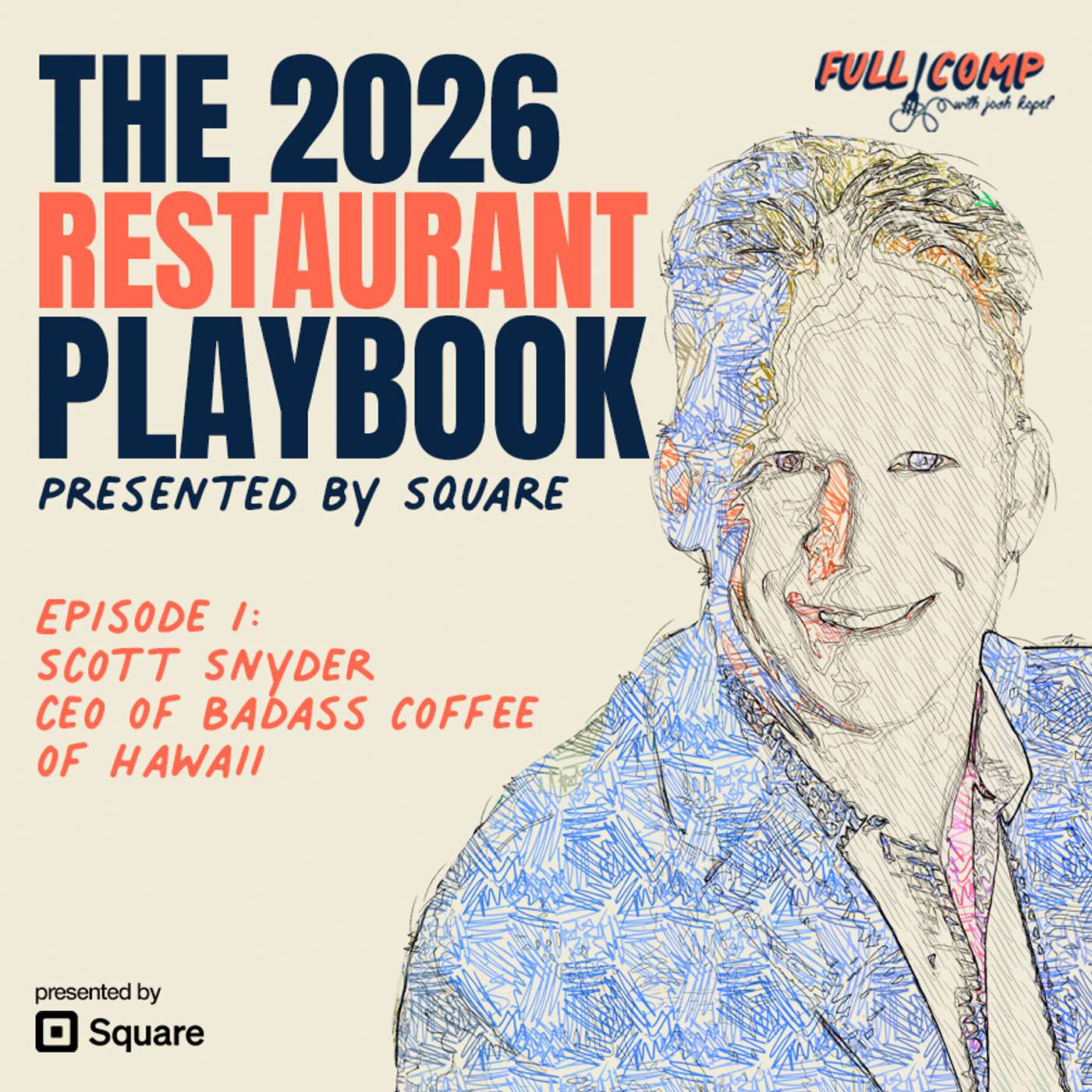
Most restaurant brands think their problem is sales. Scott Snyder thought he was walking into a franchise sales problem at Badass Coffee of Hawaii. What he found was much bigger: a brand with enormous recall, loyal memories, and a great product, but almost none of the infrastructure required to grow.
In this episode, Scott breaks down the first question every operator has to answer before opening or expanding: will anyone remember this?
He explains why a restaurant needs more than good food, good coffee, or a clever name. It needs a unique, ownable truth that guests can feel, repeat, and share. From there, the business has to support that promise through product, systems, training, technology, franchisee trust, and a guest experience that delivers consistently.
We talk about brand memory, social storytelling, local content, merchandise, franchisee buy-in, and why being memorable is not the same thing as being ready to grow.
This is the episode for anyone trying to build a concept that does not disappear into the noise.
To go deeper, download the free 2026 Restaurant Playbook at joshkopel.com/square
Today’s episode was brought to you by Square. If you want restaurant tech that actually supports how you run your restaurant, find out how Square can help at square.com/goodstuff.
Free 5-Day Restaurant Marketing Masterclass – This is a live training where you’ll learn the exact campaigns Josh has built and tested in real restaurants to attract new guests, increase visit frequency, and generate sales on demand. Save your spot at restaurantbusinessschool.com
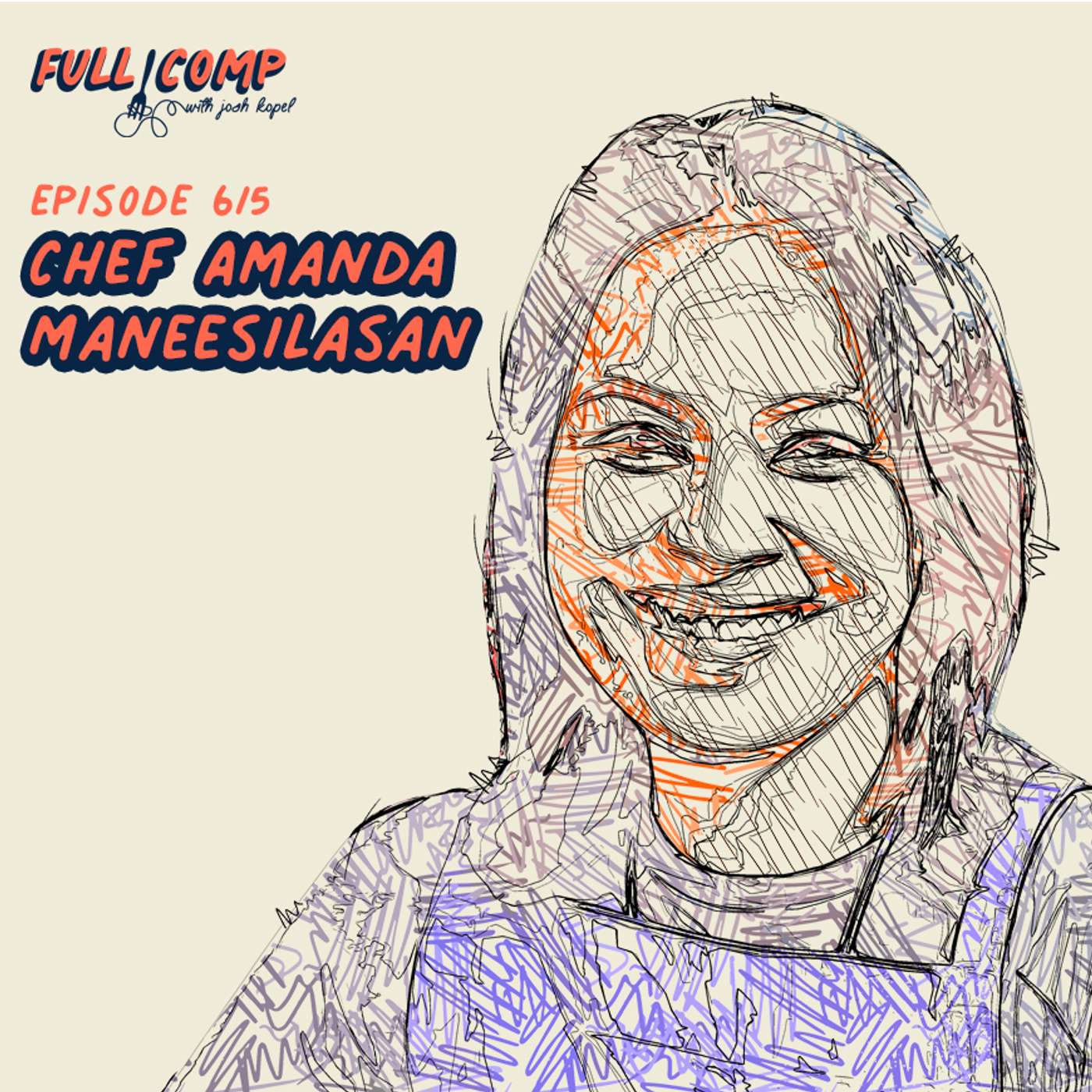
What if the very thing you’re afraid to remove is what’s holding your restaurant back?
Amanda Maneesilasan didn’t plan to take over her family’s restaurant. But when she did, she made a decision most operators avoid. She eliminated the familiar, stripped out the shortcuts, and rebuilt the menu around real, uncompromising Thai flavors. It cost her customers, consistency, and nearly her confidence.
In this conversation, we get into what it takes to earn respect when you inherit leadership, how to navigate the financial and emotional pressure of a full menu overhaul, and why cooking for yourself—not the market—is often the only path to standing out.
This is for operators who know they’re capable of more, but aren’t sure the risk is worth it.
Free 5-Day Restaurant Marketing Masterclass – This is a live training where you’ll learn the exact campaigns Josh has built and tested in real restaurants to attract new guests, increase visit frequency, and generate sales on demand. Save your spot at restaurantbusinessschool.com
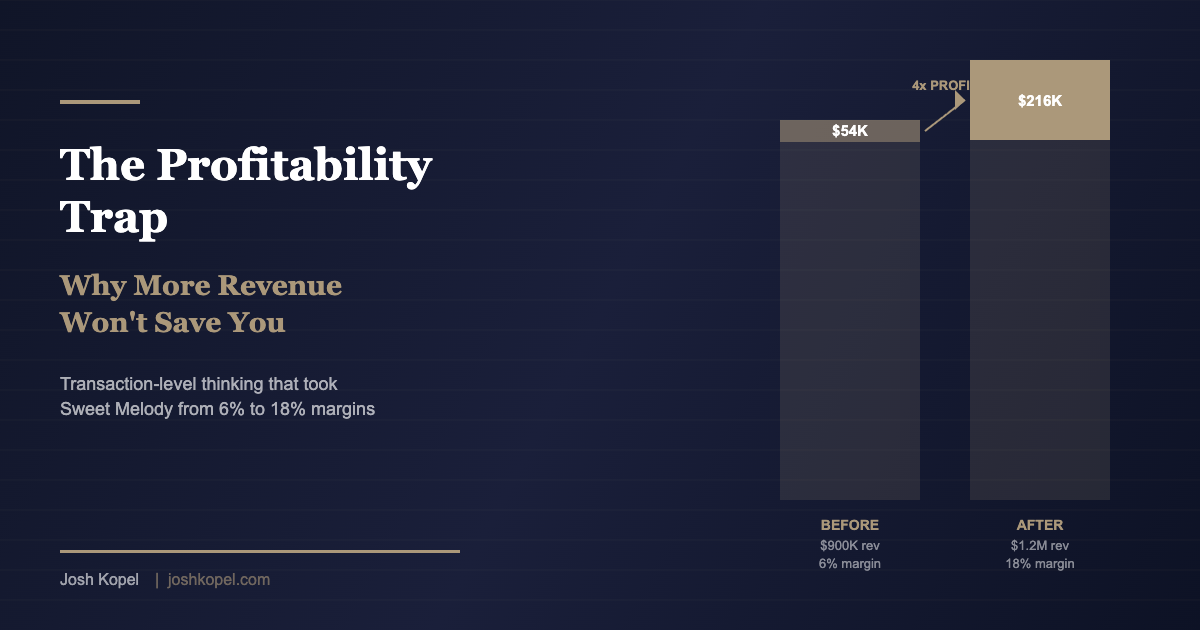
For years, my bookkeeper told me I was “just a couple thousand a week away from massive profitability.” It was a lie. Expenses rise with revenue. The goalpost always moves. The real lever is transaction-level profitability: making every button on every seat produce profit. When I applied this thinking to my client Sweet Melody, we went from $900K at 6% margins to $1.2M at 18% margins. The take-home went from $54K to $216K. Same restaurant, same team. Here’s the framework.
Two weeks into each month, I would get the profit and loss statement from my bookkeeper. And without fail, the message was the same: “You’re just a couple thousand a week away from massive profitability. If you could just make a little bit more money, you’d make a lot more money.”
So I would. I’d push harder. Run a promotion. Open another daypart. Squeeze out more covers. And then they’d move the goalpost. Every single time.
This is the most dangerous lie in the restaurant industry, and it looks exactly like truth. You hit your revenue target, but you’ve also added servers, expanded delivery, increased food costs with higher volume, run up utilities, and spiked your credit card processing fees. You hit your number and you’re somehow less profitable than when you were making less money.
I told myself this story for the first half decade of my career. It nearly destroyed me. The problem wasn’t revenue. It was never revenue. The only real problem in my business was money. And it took me way too long to understand that more revenue and more money are not the same thing.
More Work vs. More Money: The Distinction That Changes Everything
Here’s what I want you to write down and double underline: more work and more money look like the same thing on the front end. They look very different on the back end.
You could get a lot busier tomorrow by heavily discounting and giving away your product for free. But that’s more work. It’s not more money. And I know we’ve all been there, because the trap is seductive. More covers feels like progress. A full dining room feels like success. But if you’re paying to serve those customers, a full dining room is actually costing you money.
When I was 30, I opened a bar in Hollywood. 900 square feet. Lightning in a bottle. We cranked out of the gate and did $1.5 million a year at a 35% profit margin. I could do no wrong. So naturally, I decided to dip my toes into fine dining. How hard could it possibly be?
I lost a quarter million dollars the first year. It almost bankrupted both companies. I fired the general manager. I took over as general manager. I fired the executive chef. I brought in a new one. I ended up at Union Bank in Carlsbad, California, pulling the last $30,000 from my personal account and taking out a $50,000 cash advance from American Express because there was no personal guarantee attached to it. I was desperate.
The Hollywood bar was printing money at 35% margins. The fine dining restaurant was hemorrhaging cash. Same owner. Same work ethic. Same 12 to 15-hour days. The difference wasn’t effort. The difference was the profitability structure of each transaction.
Transaction-Level Thinking: Every Button on Every Seat Makes Money
This is the mental shift that changed my business and the businesses of hundreds of clients I’ve worked with since. Stop thinking about “the restaurant” as one thing. Your restaurant is actually hundreds of individual transactions happening simultaneously. Each table is a manufacturing run. Each order is a unit of production.
The question isn’t “is the restaurant profitable?” That’s too aggregate to be useful. The question is: is this specific transaction profitable?
Here’s my mantra. Every button on every seat makes money. Or it doesn’t. There’s no middle ground. A button is an order. A menu item. A beverage. A dessert. An add-on. Every single thing that gets rung up on that check needs to carry its weight in profit.
When a customer sits in your restaurant, that seat is an asset. It has fixed overhead built into it. Rent, utilities, labor, insurance. That seat costs you money to exist. The only way to justify that cost is to extract profit from every transaction at that seat. If someone orders a $15 entree and nothing else, they might not be profitable when you factor in everything. If they order the entree, a drink, and a dessert, now the math works.
This isn’t about squeezing customers. It’s about engineering profitability at the transaction level so your business actually functions.
The Sweet Melody Transformation: From $54K to $216K Take-Home
Let me tell you about Mike. His restaurant, Sweet Melody, is named after his daughter, Melody. He started serving ice cream in his garage just before the pandemic. Built it into a legitimate concept in South Florida. When we started working together, he was doing $900,000 a year at a 6% margin.
Let’s do that math. $900K at 6% is $54,000 take-home. Two employees drawing salary, and beyond that, barely anything left. Mike was trapped in the revenue illusion. His goal for the year was to increase cover count by 10%. More people through the door. More revenue. Problem solved.
I pushed back. Why would we drive more people through the door before we’ve maximized the earning potential of the people already sitting there?
We looked at his price-to-value ratio. We benchmarked against his competitive set and found he was dramatically underpriced. We identified that his best sellers constituted the majority of total item sales but were carrying thin margins. We raised prices strategically on those top items. We cleaned up the menu, removing the distractions. We trained his team on selling the right things, not just selling more things.
Within nine months, Mike was at $1.2 million in revenue at an 18% margin. That’s $216,000 take-home instead of $54,000. Same restaurant. Same location. Same team. The revenue only went up $300K. The profit went up $162K. More money, not more work.
That’s the power of transaction-level thinking. You don’t always need more revenue. You need your existing revenue to be more profitable.
Price Is a Story You Tell Yourself
One of the biggest obstacles I face when working with restaurant owners is fear around pricing. I get it. It’s scary to raise prices. But here’s what I’ve discovered after doing this hundreds of times: nobody’s watching.
Nobody is tracking your menu items. Nobody is tracking your pricing. Most of the people on this planet don’t know what they paid for gasoline last week. So few of your customers have visit frequency high enough to notice an incremental change in anything we’re discussing.
Let me ask you something. Is there a difference between a $16 burger and an $18 burger? Those are the same number. If you’re at $16, you could be at $18, and no one would blink. Now, there’s a massive difference between a $19 burger and a $21 burger. Those cross a psychological threshold. But within the same tier, you’re leaking margin for no reason.
Your top five to ten best sellers probably constitute 50 to 70% of your total item sales. If you increase the price of just those items by 10 to 15%, it creates a massive tidal wave in net profit. Will you read as expensive? No. Because you’ve only changed five to seven items on the entire menu. Are those items going to sell less? No. Because people aren’t buying them based on price. They’re buying them because those are the things you’re known for.
I ran an experiment at South City, my fast casual fried chicken concept. For the first six months we were open, I changed the price of our fried chicken sandwich every single week. Because I didn’t want to suspect where the price threshold was. I wanted to know. And what I found was that the threshold was much higher than I ever would have guessed.
Value Is What You Get, Not What You Pay
After reading thousands of reviews and scraping a ton of online data, I discovered something fascinating. Nobody has ever said, “I wish I had paid less.” They say “it was too expensive.” Those sound the same but they’re fundamentally different.
“Too expensive” means the price-to-value ratio wasn’t there. It doesn’t mean the price was too high. It means the value didn’t match the price. And that’s a solvable problem.
What are you actually selling? Most restaurant owners think they sell food and beverage. But your customers have food and beverage at their house. What they come to you for is eating and drinking. The experience. The effort that goes into creating an effortless experience. The transformation that comes from dining with you.
When you increase perceived value, you can charge more without resistance. Better menu descriptions. Storytelling about sourcing and craft. Thoughtful plating. Service touches that communicate care. None of this costs meaningful money. All of it supports higher prices.
Here’s the benchmark strategy I use with every client: identify the most expensive comparable restaurant in your category. If they’re busy and they’re doing it, you can do it too. We typically take clients up to P90, meaning the 90th percentile of pricing in their competitive set. And what happens? Nobody says anything. Nobody notices. Because we’re simultaneously increasing perceived value, so customers actually get a better experience for the higher price.
The Shrinkflation Opportunity: You’re Eating Your Own Margin
How many of you are giving away a ton of to-go bags? Portion sizes are large. People are getting more food than they can consume in one sitting.
Now think about this from the perspective of a consumer. Have you ever told a friend, “You’ve got to check out this restaurant. They gave me so much more food than I wanted”? Is that how we perceive value? A pile of leftovers that won’t taste the same in two days?
I would argue no. What people actually want is to eat just enough. To have a perfect experience. To leave satisfied, not stuffed. When you give them way more food than they can consume, they think “I overpaid for too much.” That’s not value. That’s waste.
Dialing back your portion sizes to what is reasonable for a human being to consume actually increases perceived value. It doesn’t diminish it. And it simultaneously improves your food margins. That’s the kind of double win that transforms a business.
Cut the Fat: Stop Competing Against Yourself
At Preux & Proper, my fine dining restaurant, I launched lunch three times. Three times. I kept thinking that if people loved us for dinner, they’d love us for lunch. And every time, the same thing happened.
Lunch was a completely different use case. Different customer. Different set of values. Different target price point. Different human entirely. And the worst part wasn’t that lunch lost money directly. It was that it created a leak in my funnel. People who should have been dinner customers came in for lunch, had a subpar first experience because lunch wasn’t our core business, and never came back for dinner.
When I ask you to do two things, you do no things. That’s decision fatigue in action. If your messaging says “come for brunch, lunch, and dinner,” people are likely to do none of it. If your messaging says “come for dinner this weekend,” they actually show up.
For all of you chasing multiple dayparts, multiple service styles, multiple revenue streams before your core business is maximized: you’re not diversifying. You’re diluting. Figure out your core business first. Crush it. Get it so full you can’t take any more capacity. Then and only then should you consider adding a new service.
The Blended Margin Strategy: How I Hit 15-20% Net
Once I figured out transaction-level profitability, the next evolution was revenue diversification. Not adding dayparts. Adding entirely different revenue streams that share your existing infrastructure but carry dramatically higher margins.
At my restaurants, in-house dining ran at 10 to 12% margins on most nights. Events and catering ran at 30%. Gift cards, when sold at scale with strategic discounting, were similarly high-margin. When I blended those revenue streams together, my overall margin jumped to 15-20% without cutting a single cost.
The events business went from $250K in inbound revenue to $1.6 million in under three years. Same kitchen. Same staff. Same fixed overhead. The incremental cost of an event was minimal because the infrastructure already existed.
This is why I stopped thinking about my restaurant as a dining business. My restaurant existed to promote my events and catering business, because that’s where the margin was. The dining room was the marketing engine. The events were the profit engine.
What This Looks Like When It All Comes Together
Easy Street is a single-unit burger joint in Studio City, California. It started in a parking lot with a tent. It’s owned and operated by two people without a huge management team. They generate $400,000 a month at a 34% margin from a single unit.
Sodici Pizza in Brownsville, Texas is owned by a guy named Dante. It does $1.4 million a year at an 18% margin. It’s open four days a week. Do the math on what a quarter million dollars a year in take-home means in Brownsville, Texas. And Dante’s not involved in day-to-day operations.
These aren’t massive operations. They’re restaurant owners who understood that the game isn’t about revenue. It’s about how much profit every single transaction generates.
Your 7-Day Profitability Action Plan
Day 1: Know your real margins. Pull the last month of POS data. Identify your top 10 best sellers. Calculate actual cost including food, labor, and overhead allocation. Are those transactions profitable? By how much?
Day 2: Benchmark your pricing. Pull the menus of your five closest competitors. Where do you rank on pricing? If you’re not at least P90 (90th percentile) on your best sellers, you’re leaving money on the table.
Day 3: Raise prices on your best sellers. Increase by 10-15%. These items constitute the majority of your sales and people buy them because they want them, not because of the price. This is a two-way door. If it doesn’t work, change it back tomorrow.
Day 4: Audit your portion sizes. Walk through service during peak hours. How many to-go bags are going out the door? Where are you giving away more food than a human can consume? Dial back to perfect portions and bank the margin.
Day 5: Cut the dead weight. Look at the bottom 25% of your menu by sales volume. These items are distractions. They complicate prep, confuse customers, and dilute your identity. Remove them. Make your menu a greatest hits album.
Day 6: Evaluate your dayparts. Are you running services that don’t carry their weight? Is lunch losing money? Is happy hour cannibalizing dinner? Calculate the true cost of every service you run, including the opportunity cost of diluted focus.
Day 7: Start tracking transaction-level profitability. Set up a simple system to monitor per-customer average spend by server, by daypart, by day of week. The patterns will tell you exactly where your profit leaks are.
The pennies mean nothing to your customers. But they’ll change everything for you. Money likes speed. Don’t plan this for next quarter. Do it this week.
Free Live Training
Want Me to Walk You Through These Systems Live?
Join the free 5-Day Restaurant Marketing Masterclass. In 40 minutes a day, I’ll show you how to build a marketing system that actually makes you money.
In-house dining typically runs at 10-12% net margins. My Hollywood bar hit 35% because it was a high-volume, efficient operation. The best path to 15-20% net is blending your in-house revenue with higher-margin streams like events (30%), catering (30%), and bulk gift card sales. Transaction-level thinking gets you to profitability faster than chasing a monthly revenue number.
How do I raise prices without losing customers?
Focus on your top five to ten best sellers, which represent 50-70% of total item sales. A 10-15% increase on those items creates significant profit impact while only affecting a handful of menu items. Nobody tracks your pricing. Nobody will notice. And your best sellers aren’t purchased based on price. They’re purchased because you’re known for them. This is a two-way door. If it doesn’t work, change it back.
Should I focus on cutting costs or increasing revenue?
Neither. Focus on transaction-level profitability. Make sure every button on every seat generates profit. That might mean raising prices, trimming portions, cutting unprofitable menu items, or training your team to sell the right things. At Sweet Melody, revenue only went up $300K, but profit went up $162K. The leverage was in making existing transactions more profitable, not in chasing raw revenue or slashing costs.
How do I know if a menu item is unprofitable?
Calculate true delivered cost including ingredients, prep labor, and overhead allocation. If margin is below 25-30%, flag it. Then decide: raise the price, reduce the portion, or remove it entirely. Most restaurants find that 25-30% of their menu should be restructured or eliminated. Your menu should be a greatest hits album, not an encyclopedia.
What if I’m already busy but still not profitable?
That’s the profitability trap. Being busy and being profitable are completely different things. If your dining room is full but your margins are thin, you’re paying to serve people. Audit your transactions. Identify which customers, dayparts, and menu items are dragging down your margins. It’s better to serve fewer people profitably than more people at a loss. Sometimes revenue needs to go down before profit can go up.
What if the biggest mistake in your business model is having a fixed address?
Most operators spend their careers fighting for foot traffic. Michael Russo went the other direction. As the Chief Growth Officer of Wild Bill’s, he bought a veteran-founded craft soda brand and scaled it into a 60-wagon franchise popping up at over 500 events a year nationwide.
In this conversation, we get into why going where your customers already are is more scalable than trying to attract them, how to fail with discipline instead of just failing fast, and why direct customer conversations will teach you more than any analytics dashboard.
If you’re rethinking your revenue model or looking for a smarter path to scale, this one is worth your time.
To learn more about Wild Bill’s and their franchise opportunities, visit drinkwildbills.com.
Today’s episode was brought to you by Square. If you want restaurant tech that actually supports how you run your restaurant, find out how Square can help at square.com/goodstuff.
Free 5-Day Restaurant Marketing Masterclass – This is a live training where you’ll learn the exact campaigns Josh has built and tested in real restaurants to attract new guests, increase visit frequency, and generate sales on demand. Save your spot at restaurantbusinessschool.com
What if your biggest problem isn’t awareness—it’s that people try your food and don’t come back?
Koji Kanematsu set out to bring onigiri to the American mainstream, convinced the market just needed to be introduced to something new. But for five years, his business sat at break-even: good enough to survive, not good enough to grow.
In this conversation, Koji shares how a single shift in product design unlocked demand, why blaming the market can stall your growth, and how small, iterative changes beat big, expensive bets.
If you’re stuck wondering why traffic doesn’t translate into loyalty, this one will challenge how you think about your menu.
Today’s episode is also brought to you by Table 22. Build predictable revenue outside your four walls with subscriptions, memberships, and product drops. Table 22 helps you design it and shows you the numbers before you commit. Try it free at table22.com.
Free 5-Day Restaurant Marketing Masterclass – This is a live training where you’ll learn the exact campaigns Josh has built and tested in real restaurants to attract new guests, increase visit frequency, and generate sales on demand. Save your spot at restaurantbusinessschool.com
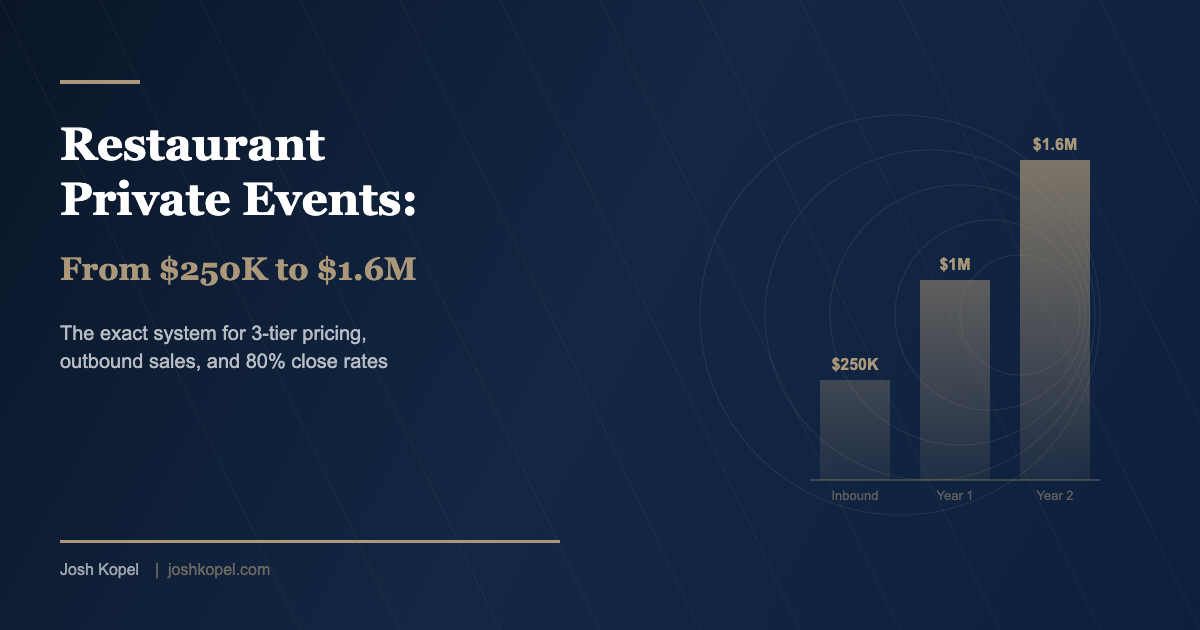
Private events aren’t a side hustle for your restaurant. They’re a separate business that shares your kitchen and staff, and they run at 30% margins compared to 10-12% for in-house dining. I took my own events business from $250K in inbound revenue to $1.6M using three-tier package pricing, outbound corporate sales, and a focus on annual recurring relationships. One client doubled event bookings and increased average event price by 50%. Here’s the exact system.
I’m going to say something that changed the entire trajectory of my restaurant business: it takes the same amount of effort to sell a $16 fried chicken sandwich as it does to sell a $10,000 private event.
Read that again. Same phone call. Same energy. Same 12 to 15-hour workday. The only difference is where you’re pointing that effort.
For years at my restaurants, we treated private events like an afterthought. Somebody would call about a holiday party, we’d scramble to put together a custom proposal, overextend the kitchen, stress out the team, and hope it went well. We were doing about $250,000 a year in inbound events. It felt decent. It wasn’t.
When I finally got serious and applied real systems to our events business, here’s what happened: within 12 months, $250K grew to $1 million. The next year, $1.6 million. And it only grew from there. Same restaurant. Same team. Same hours. Different approach.
The margins on those events ran at 30%, compared to 10-12% for our in-house dining at Preux & Proper. When you blend those revenue streams together, your overall margin jumps to 15-20% without cutting a single cost. That’s the power of diversification.
Why Private Events Are Your Restaurant’s Best-Kept Secret
Here’s the math most restaurant owners never do. Your restaurant has fixed overhead. Your kitchen is paid for whether you’re doing private events or not. Your staff already exists. Your lease doesn’t change. When you sell a private event, nearly every dollar of revenue drops closer to the bottom line because you’re not adding meaningful new expenses. You’re just using capacity you already have.
But the real unlock is understanding what private events actually are. They’re not one-off transactions. Private events are annual recurring revenue.
Think about it. If somebody has their holiday party with you and you don’t screw it up, why would they experiment next year? It becomes part of their tradition. It becomes part of their routine. And so the business compounds over time. One event becomes two events. Two events become four. A company that does their holiday party with you also needs team lunches, client dinners, seasonal celebrations, and awards banquets.
That compounding is what took us from $250K to $1.6M. We didn’t find 6x more clients. We built deeper relationships with the clients we already had, and the recurring revenue stacked year after year.
You’re Selling to the Wrong Person
This was the single biggest breakthrough in my events business, and I want you to sit with it for a minute.
Here’s what it looks like in most restaurants. John calls about booking an event for his office. You talk. You send him some menus. He comes in, walks the space, you chit chat. Seems like it went well. Then John goes back to his boss and says something like, “I met with Josh. These are the menus. This is what we can order. Josh doesn’t seem like an idiot. It’ll probably be okay.”
How does that sound? Not great, right? Because John isn’t the decision-maker. His boss is. And you never meet the boss.
The reason your close rate is lower than it should be isn’t because your food isn’t good enough or your space isn’t nice enough. It’s because the person who actually approves the expense has never spoken to you, never walked inside your four walls, and is making a decision based on whatever John can remember from your meeting.
So the question becomes: how do you help John sell for you when you’re not in the room? The answer is you give him assets so good that the vision sells itself.
The Asset Pack That Closed 80% of Our Events
Your ability to close is limited by your ability to give the prospect what they need to properly create the vision in the mind of someone who has never spoken to you. That’s the whole game.
Let me walk you through what we used to sell millions of dollars in events at Preux & Proper.
Page one: effort, not product. The first thing a prospect sees isn’t a menu. It’s a photograph that communicates effort. We’re making things. We’re artisans. We’re not showing you a finished plate on a table. We’re showing you the process, the care, the craft. And there’s a singular call to action. That’s it.
Page two: why us. This page is dedicated entirely to who we are as an organization and our perspective on catering and events. Here’s the key insight: the person who’s going to tour your space probably won’t read this page. But the person who has never been in and is going to approve the expense? They will. By page two, I’ve convinced the decision-maker they should do business with me.
Space options: paint the picture. I provide section-by-section options for the space, and here’s the important part: the photos show the room set up for events, not how it looks during regular dinner service. Most people can’t envision a world that doesn’t exist yet. That’s why they need you to show it to them.
At Preux & Proper, we didn’t have a private dining room. What we had was the left and right side of the room, which we internally called the North Semi-Private Dining Hall and the South Semi-Private Dining Hall. We chopped the space into sections so we could handle a party of 25 to 250 without disrupting regular dinner service. I preferred partial buyouts because I could keep a busy Saturday night running on one side of the room while selling out the other half for a 50-top.
Three-Tier Package Pricing: The Psychology That Prints Money
If you’re still sending individual menu items to corporate event bookers and going back and forth for 38 emails about whether they want the brussels sprouts or the asparagus, I need you to stop. That approach is wasting your time and killing your close rate.
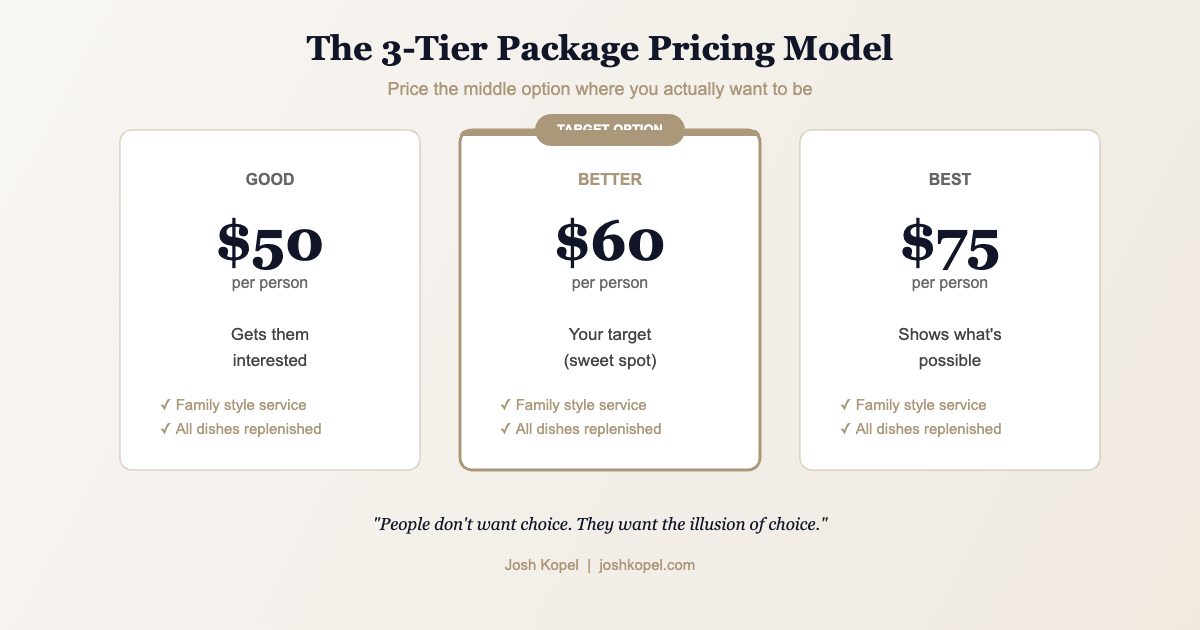
Here’s what I learned: people don’t want choice. They want the illusion of choice. They want to be told what to do, but they still need some level of autonomy. So instead of selling individual food items, I sell experiences through packages.
The three-tier pricing model: price the middle option where you actually want to be.
For family-style dinner, we offered three options: $50 per person, $60 per person, and $75 per person. The gap between $50 and $60 is nothing. The gap between $60 and $75 is a little scary. Where do you think I actually want them? At $60. That’s my sweet spot. The $50 option exists to make $60 feel reasonable. The $75 option exists to make $60 feel smart.
The same structure applied to butler-style tray pass: choose five items at $45 per person, choose eight at $55, with all dishes replenished as needed. Family-style buffet followed the same pattern with tiered options per section.
But here’s where I really won. Four words printed on every package page: “All dishes REPLENISHED as needed.”
What is the number one concern of somebody booking an event? Running out of food. Every single booker worries about it. So instead of having a conversation about it, instead of selling shrimp by the piece and making them guess how many they need, I eliminated the concern entirely on the first page they see.
And here’s the secret that makes this work financially: if you’ve ever hosted a corporate event, people don’t eat. They don’t drink. Nobody is going to a corporate event to get hammered and stuff themselves. They’re going so they don’t get fired. So you can feign generosity because you know how consumption actually works at these things. The promise of abundance costs you almost nothing in practice.
The Beverage Strategy That Improved Margins on Every Single Event
Our event beverage packages were priced intentionally high. Beer and wine was $20 per person per hour. Call bar packages were $30. Premium was $35. Select was $45. And I didn’t even offer a no-beverage option on the menu.
Why so expensive? Because this is where my margin lived. And because I knew nobody was actually going to drink that much.
Here’s what happened in practice: of the millions of dollars in events we sold over the years, we never sold a beer and wine package once. Not once. Because every time someone selected beer and wine, we immediately upgraded them to the call bar package.
Why? Because what I’m able to do is increase perceived value while simultaneously improving my margin. The call bar package costs me slightly more but charges significantly more. It’s a holistic win for every stakeholder: better margin for me, better experience for the guests, and a win for the booker who can tell their boss they negotiated an upgrade.
Which brings me to the most important lesson in events pricing: nobody wants to buy a $5,000 thing for $5,000. They want to buy a $6,000 thing for $5,000.
So when I upgraded the beverage package, I invoiced at full freight and then discounted it back. The client paid $5,000 for what looked like $6,000 worth of value. And the person who set the whole thing up got a win they could take credit for with their boss. Everyone walks away feeling like they got the better end of the deal.
Understanding Your Buyer: Nervous People Spending Other People’s Money
If you want to sell more events, you need to understand who’s actually buying them. And what I’ve found is that the people who professionally book corporate catering and events are very nervous people.
Think about it. Imagine setting up a holiday party for everyone you work with, and the overall performance you’re judged by at the end of the year is going to be rooted in the performance of someone who is not you. The caterer. The venue. The bartender. If any of them screw up, it’s your reputation on the line.
People are booking events for one of two reasons: either for people who give them money, or for people they’re directly related to. They don’t want to disappoint their boss, just like they don’t want to disappoint their mother-in-law.
What we sell isn’t food and beverage. It’s not events and catering. It’s confidence.
Every element of your asset pack, your pricing, your follow-up, and your service should be engineered to make the booker feel confident that they’re not going to get fired for choosing you. That’s the job.
The Outbound System: Stop Waiting for the Phone to Ring
Hoping for someone to fix your problems for you is not a great strategy. Most restaurants sit around waiting for inbound event inquiries. That’s reactive. That’s leaving your revenue in someone else’s hands. What I want is for you to control how much money you make.
I worked with a chef-owner in a very small metro area. I told him to take our asset pack, use a targeting system we built to identify prospects, and reach out to as many people as possible to see if they were hosting a holiday party. Three weeks later, he followed up and said, “Josh, it didn’t work.” So I asked him to walk me through it. Turns out he’d spent about six hours total on outreach and generated $9,000 in event sales.
Six hours. $9,000. That’s $1,500 per hour of effort. What else could he possibly do with his time that generates that kind of return?
Now imagine he 10x’d that effort. That’s the entire point.
The Miami case study. I worked with a fine dining restaurant in Miami. The owner came to me in September and said she needed to sell $500,000 in events by the end of the year. So we broke it down. At her tier, that meant roughly 100 events at $5,000 each. We subtracted out existing bookings and fence-sitters, which left 75 new events needed. We assumed a conservative 5% close rate, which meant she needed to reach out to 1,500 businesses. Over 30 business days, that’s 50 calls a day.
She hit $500,000 in about 20 business days. Not 30. Twenty. Because her targeting got better, her pitch got better, her close rate improved with iteration. She actually stopped before reaching out to all 1,500 prospects because she was already at capacity.
Hand-Raising Emails: Turn Your B2C List Into B2B Gold
How many people on your mailing list own businesses or work for companies that could host a private event? How many of them order catering regularly? You probably don’t know. Your list is a B2C list. But buried inside it are B2B prospects waiting to be identified.
That’s why we use hand-raising emails. Instead of trying to sell people on your events program directly, you give something away. Here’s what we did:
We sent an email to our list announcing that we were giving away a complimentary holiday party for up to 250 people. To enter, reply with your name, business name, business website, total number of people, and the person managing the event. The responses flooded in.
And somehow, every single time, the “winner” was the person with the fewest number of employees.
Then we sent a follow-up to everyone else: “Congratulations to Lulu, she won. For those of you who didn’t win, I want you to feel like winners too. I’m going to be reaching out directly.” And then I personally followed up with every single respondent, because now I had context. I knew their business. I knew their headcount. I knew the date of their event. The conversation practically closed itself.
This works because they already opened your emails. They already know, like, and trust you. They already told you about the thing they need to do. Now you’re just doing it together.
Speed Kills (In a Good Way): The 391% Advantage
When someone reaches out to book an event on your website, how quickly do you get back to them? If the answer is anything more than an hour, you’re losing money.
Here’s a real statistic: if you reply to someone within one minute of them filling out a form, you are 391% more likely to close that client.
One of the first things we do with clients is replace all the forms on their website with automation-backed forms. When someone fills out an inquiry, they immediately get an automated text: “Hey, this is Josh. I want to let you know we got your inquiry and we’re working on it now. I’m going to follow up with you in less than five minutes with a couple of questions.” Four minutes later, an automated email goes out with specific follow-up questions.
Why does this work so well? Because when someone reaches out with an inquiry, they don’t want to book an event with you specifically. They just want to book an event. Your goal is to stop their prospecting process. Make the inquiry they send to you the last one they send to anyone, because you seem like you’re on it.
Who to Target: Follow the Money That’s Already Being Spent
I worked at a law firm for about six months until I got fired. When I was there, the only thing I was qualified to do was order lunch. And here’s what I learned: they wanted variety, they had no budget constraints because they were billing everything back to the client, and they ordered catering five days a week. All they cared about was that it was delicious.
When I started building our corporate catering strategy, I went after law firms, accounting firms, economics firms, and large offices that I knew were billing back to clients. These businesses already have the budget. They’re already buying the thing you’re selling. You just need to be the one they buy it from.
Our targeting system creates prospecting lists based on proximity, industry, headcount, and then ranks businesses by their perceived capacity to pay. Then you just reach out. Twenty calls a day, five days a week, hundreds of calls a month. It directly translates to more money in your pocket.
What This Looks Like When It Works
This isn’t theory. The Dundee Dell in Omaha, Nebraska – literally the oldest bar in Omaha – saw private events skyrocket by over 100% compared to the previous two years after implementing this system. Marquise Steakhouse in Milton, Ontario increased their average event price by 50% and doubled event bookings.
These aren’t restaurants with massive marketing budgets or dedicated sales teams. They’re operators who built a system, created great assets, and started reaching out instead of waiting around.
Your 7-Day Private Events Action Plan
Day 1: Audit your current events setup. How many events did you do last year? What was the average ticket? What was your close rate? If you don’t know these numbers, that’s your first problem. You can’t improve what you don’t measure.
Day 2: Build your three-tier packages. Create Good, Better, Best options for family-style, tray pass, and buffet service. Price the middle option where you actually want to be. Include “all dishes replenished as needed” on every package.
Day 3: Create your asset pack. Professional photos of your space set up for events (not regular dinner service). Your story and positioning. Section-by-section space options. Sample menus and packages. This is the document that sells for you when you’re not in the room.
Day 4: Set up automated response. Replace your inquiry form with an automation-backed system that texts back within one minute and emails within five. This alone will dramatically improve your close rate.
Day 5: Build your prospect list. Identify law firms, accounting firms, and large offices within your market. Sort by proximity, headcount, and billing model. Aim for a list of at least 200 prospects to start.
Day 6: Reach out to every past events client. This is the lowest-hanging fruit. These people already know, like, and trust you. Invite them in for lunch or dinner. Ask if they have anything coming up on the horizon. One masterclass participant did this homework and showed up the next morning with $7,500 in event orders.
Day 7: Start your outbound calls. Begin with 20 calls a day. Use the hand-raising approach for your email list. Track your leading indicators: calls made, emails sent, responses received. Those are the numbers that predict revenue.
Free Live Training
Want Me to Walk You Through These Systems Live?
Join the free 5-Day Restaurant Marketing Masterclass. In 40 minutes a day, I’ll show you how to build a marketing system that actually makes you money.
How much revenue can private events add to my restaurant?
I took my own events business from $250K to $1.6M in under three years. A client in Omaha doubled their event bookings. A fine dining restaurant in Miami sold $500K in events in 20 business days through outbound outreach. The numbers vary, but the margins are consistently around 30%, which is 2-3x what most restaurants make on in-house dining. Even a modest events program that adds $40K per month at 30% margins delivers $12,000 in monthly profit from capacity you already have.
What should I charge for private events?
Price based on perceived value, not food cost. Create three-tier packages where the middle option is your target price. At Preux & Proper, our family-style tiers were $50, $60, and $75 per person. The key is making the second option feel like the obvious choice through anchoring. Include “all dishes replenished as needed” to eliminate the number one concern every booker has, and build beverage packages where upgrades improve your margin while increasing perceived value for the client.
How do I get more event bookings without waiting for the phone to ring?
Build an outbound system. Start by reaching out to every past events client you’ve ever had. Then build a prospecting list targeting law firms, accounting firms, and large offices in your area. Make 20 calls a day, five days a week. Use hand-raising emails to identify B2B prospects hiding in your B2C mailing list. A chef-owner I worked with spent six hours on outreach and generated $9,000 in event sales. That’s $1,500 per hour of effort.
What’s the most important thing for closing event bookings?
Great assets. The person you meet during the inquiry process usually isn’t the person who approves the expense. Your asset pack has to sell the vision to someone who has never spoken to you and never walked inside your restaurant. Professional photography, section-by-section space options, clear package pricing, and a story that communicates confidence. My close rate was approximately 80% because the asset pack did the heavy lifting before I ever got on a call.
How do I run private events without disrupting regular dinner service?
Divide your space into sections. At Preux & Proper, we didn’t have a dedicated private dining room. We split the main dining room into what we called the North and South Semi-Private Dining Halls and offered partial buyouts. This let us host a 50-person event on one side while running a full Saturday dinner service on the other. Build your event capacity around your kitchen’s slowest production point and staff accordingly.
What if the real advantage isn’t better strategy… it’s faster action?
Matt Jozwiak, founder of Rethink Food, built a movement by rejecting perfection and embracing momentum. From washing dishes to working in the world’s best kitchens, Matt shares how a bias toward action—not credentials—became his edge.
In this conversation, we get into why failure is the fastest teacher you’ll ever have, how telling a simple story unlocked millions in funding, and the operational shift that turned struggling restaurants into partners in solving food insecurity.
This episode is a masterclass in execution, iteration, and building something that actually works, especially when the industry needs it most.
To learn more about Rethink Food and their work paying independent restaurants to feed people in need, visit rethinkfood.org.
Today’s episode was brought to you by Square. If you want restaurant tech that actually supports how you run your restaurant, find out how Square can help at square.com/goodstuff.
Free 5-Day Restaurant Marketing Masterclass – This is a live training where you’ll learn the exact campaigns Josh has built and tested in real restaurants to attract new guests, increase visit frequency, and generate sales on demand. Save your spot at restaurantbusinessschool.com
What if the difference between a good restaurant and a great one came down to what happens in the 20 minutes before service?
Ti Martin, co-proprietor of Commander’s Palace, has spent her life inside one of the most enduring restaurants in the country, and she’s obsessed with the details most operators overlook.
In this conversation, we get into the daily disciplines that shape her team, why curiosity at the table drives better outcomes, and how consistent training transforms service into something deeply personal.
If you’re looking to create consistency, connection, and culture at scale, this conversation is for you.
To learn more about Commander’s Palace and their approach to hospitality, visitcommanderspalace.com.
Today’s episode is also brought to you by Table 22. Build predictable revenue outside your four walls with subscriptions, memberships, and product drops. Table 22 helps you design it and shows you the numbers before you commit. Try it free at table22.com.
Free 5-Day Restaurant Marketing Masterclass – This is a live training where you’ll learn the exact campaigns Josh has built and tested in real restaurants to attract new guests, increase visit frequency, and generate sales on demand. Save your spot at restaurantbusinessschool.com
Your restaurant doesn’t sell food and beverage. It sells seats at tables for defined periods of time – just like an airline sells seats on a plane. Once I understood that, I took my fine dining restaurant from $36,000 weekends to $58,000 weekends and at my Hollywood bar, I figured out that pulling bar stools at 9 PM on weekends dramatically increased revenue because standing customers with cash in hand were higher-velocity than seated guests. Here’s exactly how to optimize your table turnover rate without sacrificing the guest experience.
I’m going to say something that might fundamentally change how you think about your restaurant: you do not sell food and beverage. You sell a seat at a table for a defined period of time.
Think about it. What industry most closely parallels the restaurant business? It’s not retail. It’s not theater. It’s the airline industry. What does Delta sell? Not travel. Not hospitality. Not convenience. Delta sells seats on a plane. And they’ve become best in the world at getting you on and off that plane as efficiently as possible.
Your restaurant works the same way. Your inventory isn’t food and beverage – it’s tables and chairs. And every minute a table sits empty during peak hours, or every minute a guest lingers after the experience is over, that’s revenue you’ll never get back. Unlike a product business, you can’t make up lost inventory tomorrow. Friday night at 7:30 PM only happens once.
This realization cost me $1,144,000 before I figured it out. That’s the ignorance tax – the money I lost every year for three years because I didn’t understand how to optimize my floor plan and maximize the capacity of my restaurant. I thought I was busy. I was nowhere close.
The Furniture Question Nobody Asks: Are You Maximizing Every Stick?
Before we get into the sophisticated stuff, let’s start with the obvious question most restaurant owners never ask: do you have every stick of furniture you need to capitalize on your busiest nights?
At my Hollywood bar, we pulled the stools away from the bar at 9 PM on weekends. During the week, they lived there permanently. But on a Saturday night, seated bar guests made it harder for standing customers to order. Standing customers with cash in hand were higher-velocity revenue. The stools were literally slowing down our highest-margin hours. One operational change, massive impact on revenue.
How much more money would you make off one more bar stool? One more table? Not on a Tuesday when you’re half full – but when you’re busier than you can handle and it’s 7:30 on a Saturday night. That’s your highest-margin inventory, and most restaurant owners aren’t maximizing it.
Hesitation Is a Hidden Expense
Here’s what I believe: on your busiest nights, you’re losing money in places you’re not tracking.
Indecision at the table. Servers hesitating instead of leading the conversation. Lag between courses. The kitchen waiting on the floor. The floor waiting on the kitchen. I don’t just see it in full service – I see it everywhere, across every tier of dining.
Every second of hesitation during peak hours is a hidden expense. It’s not on your P&L, it’s not in your POS reports, but it’s costing you more than almost any line item on your budget.
The flow of your restaurant – the single most important operational metric you have – is probably being dictated by a 19-year-old part-timer who’s going through a breakup right now. Flow is everything. It’s how you capitalize. And if you’re not deliberately engineering it, you’re leaving six figures on the table every year.
Scale On-Peak, Not Off-Peak
Here’s the paradigm shift that changed everything for me. Most restaurant owners spend their energy trying to get busier on a Tuesday. They create off-peak promotions, late-night happy hours, that Tuesday taco special that never quite takes off. It never works because you’re trying to alter customer behavior – getting people to do things they don’t want to do.
The result? You capitalize at poor margin with high overhead. You staff up for a service that underperforms. You discount to drive traffic that doesn’t stick. It’s a recipe for disaster.
Here’s where the money actually is: scale your on-peak business by influencing consumer behavior. Don’t try to change when people want to dine – optimize for when they already want to be there. That gives you the ability to capitalize at high margin with low overhead.
All I’m concerned about is momentum. I want to double down on what’s already working, then squeeze every dollar out of those peak hours before I ever think about growing a slow night.
The Airline Model for Restaurant Table Turnover
Once you accept that you’re in the seat-selling business, you can start thinking like Delta thinks. Here’s how to apply airline-level efficiency to your restaurant:
1. Optimize Your Reservation System’s Back-End Settings
For those of you using waitlist or reservation software: who set your turn times? Because I can almost guarantee they’re optimized for the convenience of your host or your general manager – neither of whom is incentivized to make sure you’re busier than possible.
The same applies to online delivery settings. Who’s setting capacity and availability? Typically it’s the people working the line, not the person paying the bills. But it should be the person paying the bills.
Go into the back end of every system you use – reservations, waitlist, delivery – and make sure they’re optimized so that when you have the most demand, you can absorb the most capacity. This is a two-minute fix that can add thousands per month.
2. Sell the Shoulders
When someone calls and asks for a 7:00 PM reservation, the conventional approach is to say, “Sure, 7 PM, you’re confirmed.” But if 7 PM is your hottest slot, that table needs to turn. What I found is that when someone has high intent – they’ve already decided to dine with you – they’ll eat at 6:15 or 7:45 without hesitation.
By actively selling people into shoulder times around your peak, you create the ability to turn your prime-time tables one extra time per night. Over a weekend, that’s several additional covers at your highest per-customer spend. Over a year, that’s transformative.
3. Strategically Overbook
This is going to make some of you uncomfortable. Good.
Every restaurant deals with no-call no-shows and last-minute cancellations. You can either set up your capacity to be “fair” and hope for the best, or you can protect your financial investment and strategically overbook.
That’s exactly what I did at my fine dining restaurant. Did it blow up sometimes? Yes. But never terribly. When it did happen, I was honest with guests: “You’re not going to be seated for 45 minutes. I know that’s disappointing. But I have great news – I’ve got all the bubbles you can drink, I can get you a cold appetizer, and I have a place for you to hang out. Your service starts now.”
The hardest part is getting them into the restaurant. Once you have them, you have everything they want. It’s very easy to make them happy.
The key to overbooking is having a recovery plan. Keep inexpensive sparkling wine on hand – it costs less than $4 a bottle but makes guests feel like VIPs while they wait. The cost of two glasses of bubbles is nothing compared to the revenue from filling that table.
4. Choreograph the Exit
Here’s the uncomfortable truth about lingering guests: if people are sitting long after the experience is over, it’s because you didn’t make it abundantly clear that the experience was over.
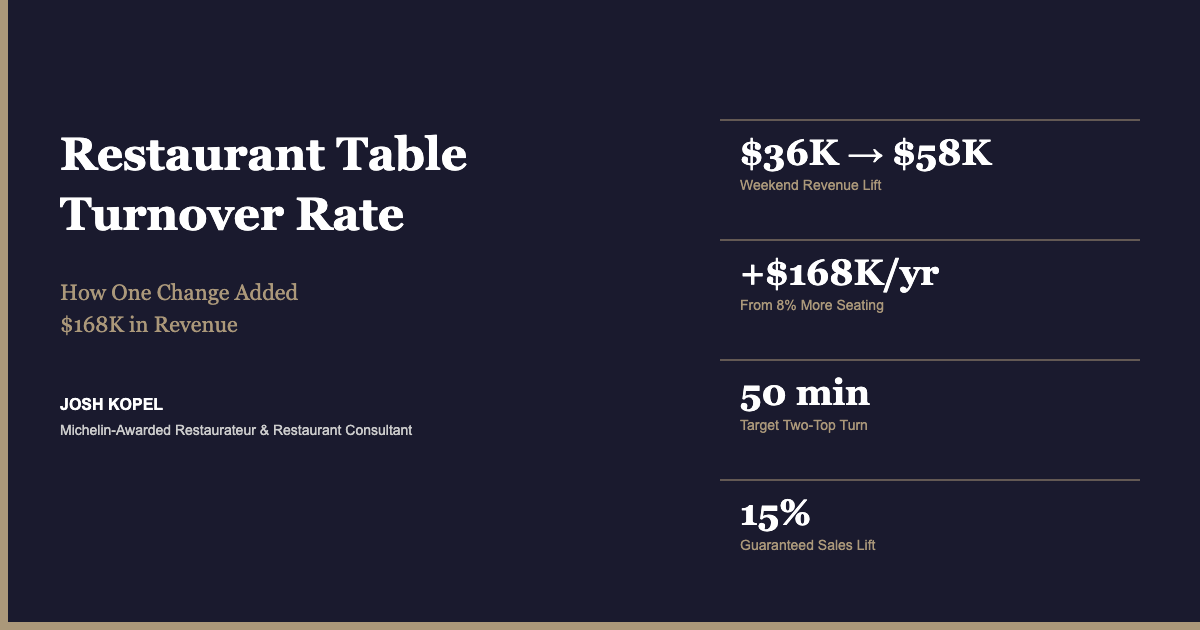
At my fine dining restaurant on weekends, we had to get a two-top out in 50 minutes. That’s not a suggestion – that was the operational requirement. Every second of the experience was choreographed to ensure we hit that mark.
Come in on Tuesday? Stay as long as you want. But Saturday is my opportunity to make money, and we cannot afford to have a table occupied for two hours when it could have turned twice.
This doesn’t mean rushing people. It means designing the experience so the conclusion is obvious and natural:
Clear the table promptly. Once dessert plates are empty, they come off the table within minutes.
Present the check proactively. Don’t wait for them to flag you down. The check arrives with a warm “no rush at all” – but its presence signals closure.
Shift the energy. When the experience is complete, the attention shifts. Your server’s focus moves to the next table. The ambient cues change. People feel the natural end of the evening and respond accordingly.
This is not about being rude. This is about respecting both your guests’ time and your business’s capacity. The best restaurants in the world manage table turnover with surgical precision – and their guests never notice.
Bottleneck Elimination Across Every Tier
Table turnover optimization looks different depending on what tier of dining you’re in. The critical question is: are you in the manufacturing business, or the experience business?
Quick Service / Fast Casual
At my fast-casual fried chicken concept, we had what LA Weekly rated the best fried chicken sandwich in the city. But when it took 20 minutes to get it into someone’s hands, the best sandwich in the world tasted like garbage because it ruined their lunch hour. They had 60 minutes, spent 15 getting there and 15 getting back – leaving 30 minutes, of which 20 were spent waiting.
During our peak lunch window (11:30 to 1:30), we pushed everyone to kiosks for ordering. Not because we didn’t value hospitality – but because during that manufacturing window, speed IS the hospitality. Any other time, you could order from a person. But during peak, the kiosk made you faster, which made your lunch better.
When you see lines at a restaurant, what you’re seeing is inefficiency. Every person in that line is trading time – and time is the one thing they’re not willing to part with during a lunch break.
Full Service / Fine Dining
In full service, the bottlenecks are different but equally expensive. Your back-end reservation settings, your kitchen-to-floor communication timing, and your closing choreography all either accelerate or stall your turns.
At my Hollywood bar, we pulled the stools away from the bar at 9 PM on weekends. During the week, they lived there permanently. But on a Saturday night, seated bar guests made it harder for standing customers to order – and standing customers with cash in hand were higher-velocity revenue. The stools were slowing down our highest-margin hours.
The Universal Principle
Regardless of your tier: walk through your restaurant during peak hours like a customer. Where do people hesitate? Where does your team hesitate? Where does the digital experience break down? Every hesitation is a hidden expense, and every bottleneck you eliminate adds capacity during the hours that matter most.
The Digital Bottleneck: Your Website Is Killing Conversions
Your physical bottlenecks are costing you money – but your digital ones might be worse. Here’s why: every person on your restaurant’s website today is a first-timer. They’ve already decided they’re interested. They’re not there to browse – they’re there to make a buying decision.
Your website’s job isn’t to convince them to come in. They’re already inclined to come in. Your website’s job is to answer the three unspoken questions every potential guest has:
“Does this place need to exist?” – What makes you a category of one? Why is your approach different?
“Is it for me?” – What’s the experience like? Is this a first-date place or a get-hammered-with-friends place? What am I walking into?
“How does it fit into my life?” – Quick lunch spot? Considered dinner? Milestone celebration? Tell me how to engage with you.
Here’s what most restaurant websites get wrong: they try to sell everything. Breakfast, lunch, dinner, Sunday brunch, catering, gift cards, online ordering. The first-timer doesn’t need all of that. They need to understand your tripwire – the ONE experience they should have first. If they need to dine for dinner before you sell them on Sunday brunch, then lead with dinner. Stop creating decision fatigue before they’ve even walked through your door.
A critical insight from neuroscience: there was a university study on people with traumatic brain injuries that prevented them from feeling emotion. These people could weigh pros and cons perfectly – but they couldn’t make a decision. The study found that a split second before every decision, there’s a triggering emotion. If your website doesn’t make people feel something, they probably won’t decide. Stop selling commodity. Start selling the experience of dining with you.
From $36K to $58K Weekends: My Own Transformation
Let me show you what all of this looks like combined. At my fine dining restaurant Preux \u0026 Proper, I took over the booking process myself (instead of delegating it to my host). Here’s what changed:
Aggressive shoulder selling: When someone asked for 7:00, I sold them into 6:15 or 7:45 – because I understood the value of that prime-time table turning one more time
Strategic overbooking: I added ghost tables to account for no-shows and last-minute cancellations
50-minute two-top turns on weekends: Every second of the experience was choreographed
Optimized reservation back-end: Turn times set by me, not by the convenience of the host
The result: weekends went from $36,000 to $58,000. Same restaurant. Same menu. Same team. Different operational philosophy.
And when I ran a virtual reservationist service for hundreds of restaurants, I literally guaranteed complete strangers a 15% lift in top-line sales within two weeks. We hit it every time. Why? Because everyone was under-booked. The capacity was there – it just wasn’t being used.
Your 7-Day Table Turnover Action Plan
Day 1: Audit your furniture. Walk your floor plan during peak hours. Is there room for one more two-top? A bar rail? A high-boy near the entrance? Every additional seat during peak hours is pure margin over the course of a year.
Day 2: Check your back-end settings. Open your reservation system, your waitlist software, your delivery platform. Who set the turn times? Are they optimized for your maximum capacity during peak, or for the convenience of your team? Adjust them today.
Day 3: Map your bottlenecks. Walk through your restaurant during peak service like a customer. Where does the experience stall? Where does your team hesitate? Where is there a gap between kitchen and floor? Write down every friction point.
Day 4: Design your closing choreography. Define the signals that communicate “the experience is complete” – table clearing timing, check presentation, energy shifts. Train your team on the sequence.
Day 5: Audit your digital experience. Pull up your website on your phone. In 90 seconds, can a first-timer answer: what are you known for, is it for them, and how do they book? If not, simplify. One primary CTA. One clear message.
Day 6: Start selling shoulders. When your host confirms a prime-time reservation, train them to offer shoulder times first: “We have a beautiful 6:15 available – would you like that?” High-intent guests will take it.
Day 7: Test a strategic overbook. Add one or two extra reservations above your “comfortable” capacity on Friday night. Have your recovery plan ready – sparkling wine, a place to wait, and immediate service acknowledgment. Track what happens.
How much does this cost? Virtually nothing. The furniture might cost you a few hundred dollars. Everything else is free. And the ROI is measured in six figures annually.
Free Live Training
Want Me to Walk You Through These Systems Live?
Join the free 5-Day Restaurant Marketing Masterclass. In 40 minutes a day, I’ll show you how to build a marketing system that actually makes you money.
What is a good table turnover rate for a restaurant?
It depends on your tier. For fine dining, I targeted 50-minute turns on two-tops during peak weekend service. For casual dining, 45-60 minutes is standard. For fast casual, you should be measuring time-to-serve, not table time. The real question isn’t what’s “good” – it’s whether you’re maximizing turns during your highest-demand hours without sacrificing experience quality.
How do I improve table turnover without rushing guests?
You don’t rush – you choreograph. The experience has a natural arc: greeting, ordering, courses, dessert, check. When each phase transitions smoothly and the conclusion is clear, guests feel satisfied and naturally move on. If guests linger, it’s usually because you haven’t signaled that the experience is complete – not because they’re having the time of their lives.
Is it risky to strategically overbook my restaurant?
There’s risk, but the alternative – empty tables due to no-shows – is more expensive. The key is having a recovery plan: complimentary bubbles, a comfortable waiting area, and immediate acknowledgment. Most guests are understanding when you’re transparent, and the additional revenue from full tables far outweighs the occasional awkward moment.
How much revenue can better table turnover add to my restaurant?
In my own fine dining restaurant, optimizing table turnover took weekends from $36,000 to $58,000 – a 61% increase. At my Hollywood bar, removing bar stools during peak hours dramatically increased throughput. The numbers vary, but the principle holds: your highest-margin hours are your peak hours, and every additional turn during those hours generates disproportionate profit.
Should I focus on getting busier on slow nights first?
No – and this is the mistake I see most often. Scaling off-peak means altering customer behavior (getting people to do what they don’t want to do) at poor margins with high overhead. Scale your on-peak business first by influencing behavior during hours when demand already exists. Only after you’ve maxed out your peak capacity should you think about growing slow nights.
What if most restaurants fail because no one’s really watching what matters?
Maycoll came up peeling potatoes in Michelin-starred kitchens, learning the craft from the ground up. Over time, that experience evolved into something deeper: a clear understanding of what actually keeps a restaurant alive.
In this conversation, we get into the leap from operator to owner, why “luck” is just a story people tell to avoid the truth, and how he built systems that let him scale globally without being trapped in the kitchen.
If you’re still running your restaurant without a clear pulse, this conversation will force a reset.
To learn more about Cuna, visit cuna.nyc. _________________________________________________________
Today’s episode was brought to you by Square. If you want restaurant tech that actually supports how you run your restaurant, find out how Square can help at square.com/goodstuff.
Free 5-Day Restaurant Marketing Masterclass – This is a live training where you’ll learn the exact campaigns Josh has built and tested in real restaurants to attract new guests, increase visit frequency, and generate sales on demand. Save your spot at restaurantbusinessschool.com
FREE DOWNLOAD
Leverage Digital Media to Drive Traffic to Your Restaurant
This free (and highly detailed) guide will outline how to tell your story in the most compelling way possible and how to share that story with the masses.
(Yep, even if you’re not a “tech” person!)
FREE DOWNLOAD
Lead Your Team Instead of Managing Them
This free (and highly detailed) guide will give you everything you need to know to build and lead a world class team from scratch, ensuring you work less and earn more. (Yep, even if you know nothing about leadership.)
FREE DOWNLOAD
Ready to Optimize, Manage and Grow Your Restaurant’s Profit Margin But Not Sure Where to Start?
This free (and highly detailed) cheat sheet will give you everything you need to know to set up your restaurant to maximize profitability. (Yep, even if you’re not a “business” person!)