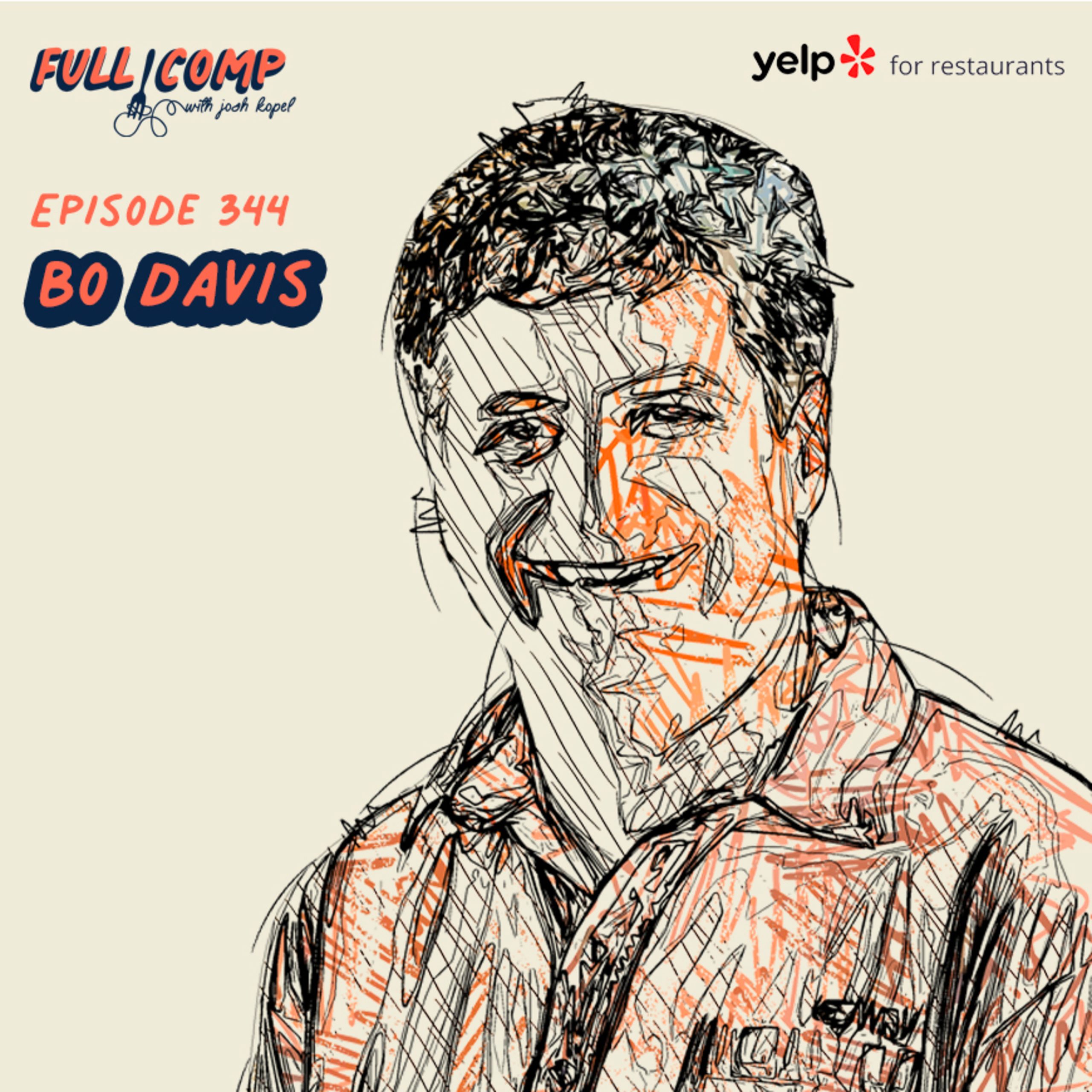
Bo Davis has made a name for himself within our industry by creating MarginEdge, a restaurant management software that helps owners and operators better control costs and scale profitability. But, what most don’t realize is that Bo began as and is still a restaurateur himself. In today’s conversation, we unpack what it took to create a successful restaurant brand and how building tech to solve his problems helped him do it.
Full Comp is brought to you by Yelp for Restaurants: In July 2020, a few hundred employees formed Yelp for Restaurants. Our goal is to build tools that help restaurateurs do more with limited time.
We have a lot more content coming your way! Be sure to check out our other content:
I’m obsessed with massive growth. Though I have no desire to own dozens of restaurants, I think there’s a ton to be learned from the folks that do.
Randy Dewitt is a scaling mastermind. From a single cafe, he launched an empire that includes Twin Peaks, Velvet Taco and countless other national brands.
For many of us, wine is hard. It’s a world with a language all its own and there’s justsomething about it that’s always made feel foolish.
Whether by design or not, that uneasiness…thatinaccessibilityneeds to change.
One of the soldiers leading the charge towards diversity and inclusion is Julia Coney. Hermissionis to bring the world of wine to underserved groups and bringing diversity to the industry at large.
Today we explore her role within the industry and her efforts to make the wine world look more like the world around us. For more on Julia and her initiatives go to www.juliaconey.com
Wantto streamline your front-of-house operations and increase sales? Head over tohttp://restaurants.yelp.com/fullcomppodcasttoclaim your free page and learn more about these powerful tools for your business.
I’ve never wanted to be the first anything. It takes courage to do something no one has ever done before, to dream a new dream. Chef Andrea Drummer has that courage. Today we discuss the changing tides within our industry and our culture…covering everything from cannabis to diversity.
Want to streamline your front-of-house operations and increase sales? Head over tohttp://restaurants.yelp.com/fullcomppodcastto claim your free page and learn more about these powerful tools for your business.
SHOW NOTES
Noticing race inequality
Grew up poor in a middle-class neighborhood
Noticed white flight
Noticed the difference in education when attending a partially private, predominantly white high school and majority black high schools
Called an n-word at age 19 by a man in a pickup truck
Starting in culinary
Always been creative in the kitchen
1st career in non-profit
Advocated against cannabis use
2nd career as a cannabis chef
Getting into cannabis cooking
Moved to California from New York
Went to culinary school
Stress of culinary school caused illness
Severe chronic pain
Prescribed opiates but took cannabis instead to relieve pain
The body metabolizes cannabis in a different way with food
Cooking with cannabis made sense
Making cannabis use accessible
Increasingly being used by the older generation
Less likely to be smokers
The effects of a cannabis meal
Choose your own strength
Particpants inform Andrea of what they want to experience
Tolerance
Strength of high
Andrea can infuse on site to strengthen the high
Cannabis quality
Purchased wholesale
One grower
Organic, outdoor grown
High in THC
Business during Covid
More enquiries for private dining experiences
Focussing on delivering at-home solutions to patrons
Minorities and women in the industry
Andrew Zimmern mentioned we have the opportunity to change how minorities and women have been treated so far in the industry
Andrea creates equality in culture
Focusses on uplifting black women
Importance of good work environment
Kitchens used to be hostile
Chefs would throw things
Andrea redefines her working kitchen
Better working hours
Friendly environment
If you are not good to yourself, you are not good for the kitchen
Black Lives Matter
Being apolitical is damaging to the movement
Silence is impactful
Encouraging non-black folks to listen and be open to hearing the truth
The world is changing
We all have a desire to be better
We are still creating and learning during this time
Success has no playbook
Andrea is relatively new to culinary business
Creating her own rules with intention
Being true to oneself
Reflecting during Covid
Opportunity to be authentic and original when everything is quieter
What does it mean to be a chef? Chef have long been known for high standards, attention to detail and an unparalleled work ethic. But they have also been know for big egos and bad tempers.
Slowly things seem to be evolving. Today we chat with Erick Williams of Virtue who is redefining what it means to be a chef.
Today’s guest plays by his own rules. Chef Donald Young is one of the youngest Michelin-awarded chefs in the world who, after years of working in traditional brick and mortar restaurants, gave it all up to build a pop up concept in the heart of Chicago. In our conversation we discuss what it takes to truly master a craft, the power of a beginner’s mindset, adn the courage it takes to start over again.
Full Comp is brought to you by Yelp for Restaurants: In July 2020, a few hundred employees formed Yelp for Restaurants. Our goal is to build tools that help restaurateurs do more with limited time.
We have a lot more content coming your way! Be sure to check out our other content:
Optimism. It seems almost delusion in these strange times we find ourselves in.
The uncertainty that the following months and even following years project is nerve-wracking to a hospitality professional like me. I believe we need to find optimism and positivity to get through it. Despair stops us, where hope drives us forward.
I spoke to Jon Strader, founder of Hatchet Hall, to talk through the ways he is seizing opportunities in a stalling industry.
They say there’s nothing new in the hospitality industry. At least there hasn’t been in decades. Jon proposed new tweaks and diverging avenues to keep his restaurant afloat.
“We created really well-curated market-style boxes, we got some merch going, we made family-style meals for pre-ordering to go, and that was great for the first couple of weeks! People want to support,” he said. He soon realized that to reignite his operations, however, these small pivots would not be enough.
“We got permission from the city to serve beverages in the parking lot so we put picnic tables out there to try and get the customers’ confidence back. It’s a different game. It’s all about adaptability and coming up with ideas on the fly”.
What I am most inspired by is Jon’s willingness to take these risks with no guarantee that they will pay off. Creating merchandise, installing a pre-order system, and, essentially, remodeling the parking lot is not cheap. These quick-fire experiments take investment and a ton of confidence that the outcome will be worth it. You at least want to break even eventually from those quick changes. Jon’s tenacity and persistence in the face of instability are pretty awe-inspiring to see.
Creating a New Wheel
Another bold leap that Jon Strader took was to buy a new restaurant.
Yes, you read that right! He bought a new restaurant.
I have been speaking to quite a few hospitality industry influencers about the closures of restaurants. It’s truly heartbreaking to see those staples of high streets close, but when one door closes, another opens.
Jon saw an opening with his business partner, Jack Leahy, to go for a potential business idea that they had always fantasized about.
“We had always just joked around about having a pizza concept, but when the pandemic happened I said, we should really go for it,” he reveals, “I think everyone is looking for approachability and an entry-level experience so I think the category of coffee, pizza, burgers, sandwiches, and tacos are kind of recession and COVID-proof.”
On a shoestring budget, they transformed a closing restaurant into a New York style, casual dining pizza concept. They were frugal with equipment and design to get the restaurant up and running practically overnight. It shows me that with some ingenuity and determination, you still have a fighting chance.
“You almost need to reconceptualize completely and start over” Jon advises and I couldn’t agree more. In these rocky times, it seems we almost have to get back to basics and reimagine what the industry could be. It’s equally excruciating and exciting. We’re in for a complete shakeup.
Great food, drinks and service are only half the battle. What’s the point of offering a world-class product and service if no one knows about it. As hospitality professionals we are as responsible for restaurant marketing our wares as we are for perfecting them.
But how?
Enter Brett Linkletter of Misfit Media. Brett and his team have been working for years to master social media marketing and advertising. On this episode, Brett runs us though his tips and tricks for sharing your vision with the world.
Want to streamline your front-of-house operations and increase sales? Head over tohttp://restaurants.yelp.com/fullcomppodcastto claim your free page and learn more about these powerful tools for your business.
SHOW NOTES
Beginnings of Misfit Media
Marketing vs Advertising
Marketing articulation of what makes your product or service good
Advertising is to create awareness
Misfit Media three stage process
Difficulties during Covid
150+ clients pre-covid
25% clientele canceled wiith no warning
25% paused until further notice
Pivoting during Covid
Optimizing systems for online
Develop new systems
Becoming more effective as an agency
Investing more during Covid
DineLine
Integrated solution from marketing to sale
enables online ordering for restaurants
POS integration
Misfit Media marketing integration
delivery from third party apps
Restaurants haven’t changed much in the past 100 years
Opportunity to do things differently
Josh has done physical advertising e.g mailers
Found more success with digital paid advertising
Paid advertising works so well because it is hyper focussed
Underutilized – restaurants are slow to move into technology
Misfit Media find the best results with Facebook and Instagram advertising
Next Door and Yelp marketing have good results too
Budgeting for paid social media advertising
Ad spend of $500 per location per month
No need to spend more than that
Frequency of an ad – number of times someone has seen the ad
Wasting money if the same people are seeing the same ad again and again
Messenger is also high open rate
Average engagement rate for followers is 0.5%
Advertising to grow followers arre not useful
Create a custom audience after collecting data
Enables you to exclude customers already collected
Every dollar spent is going to acquisition and building database
Advertising group should be min 30,000 people
Key KPI
Cost per contact
Good average is $1-1.20 per lead
If 20% of leads collected convert to customers, that is a $5 acquisition
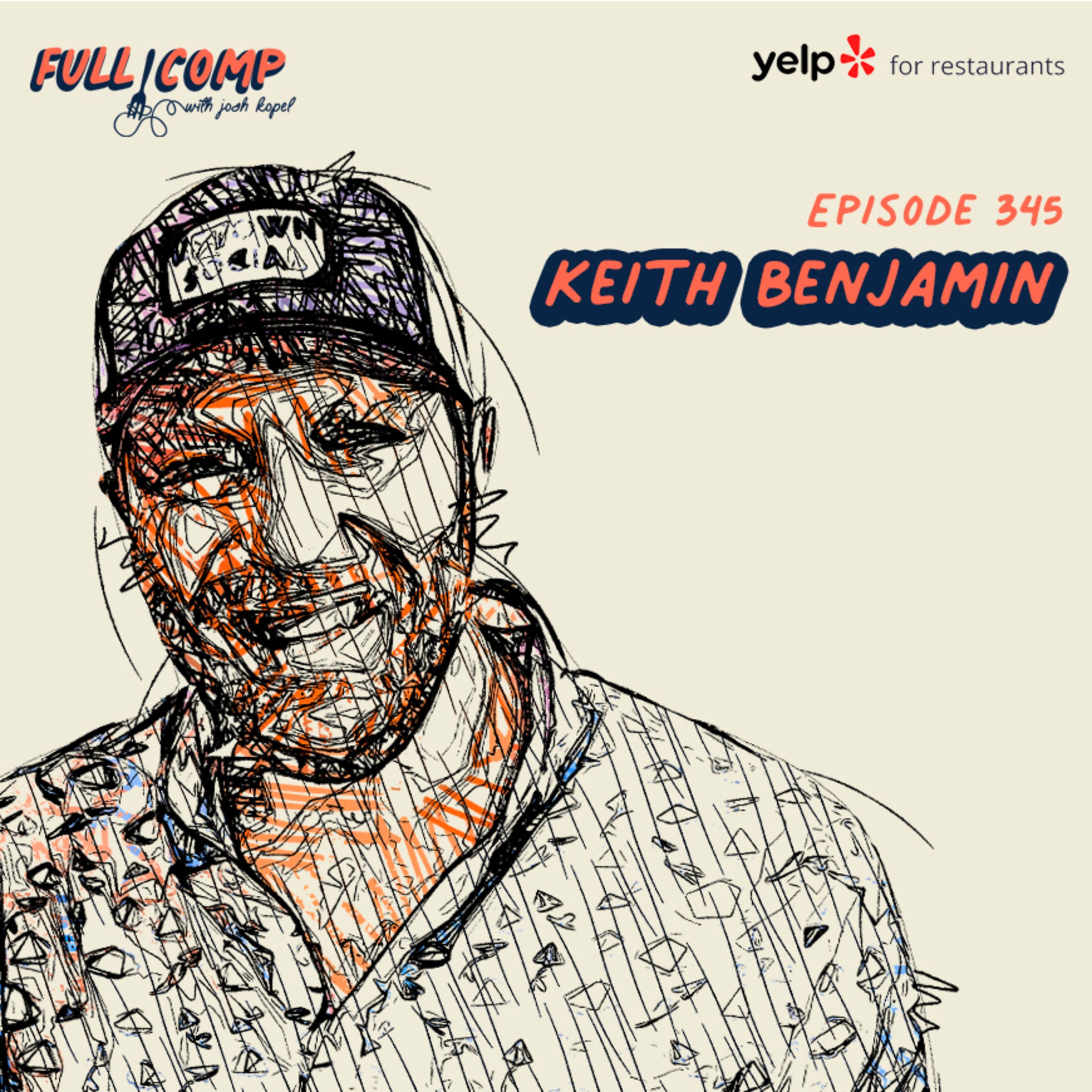
The numbers tell the story. Statistically, it’s nearly impossible to scale within our industry which is why so few do so. Keith Benjamin is the exception. With over 15 locations under his belt, Keith has broken the mold by systematizing that “it factor” we’re all looking to achieve. In today’s conversation, we discuss how to build with intention, the tools to create massive awareness, and the essential elements of a cool concept.
Full Comp is brought to you by Yelp for Restaurants: In July 2020, a few hundred employees formed Yelp for Restaurants. Our goal is to build tools that help restaurateurs do more with limited time.
We have a lot more content coming your way! Be sure to check out our other content:
The hardest part of ownership isn’t owning the business, it’s in owning the choices you’ve made and the impact they have on you and your team. Today, we chat with multi-million dollar culinary clothing maven, Ellen Bennett. Ellen wrote a book that’s one part biography and one part action plan for aspiring entrepreneurs. In this conversation, we run though what the past 10 years has been like for Ellen, bringing to light the leadership lessons that have made her company so successful.
Full Comp is brought to you by Yelp for Restaurants: In July 2020, a few hundred employees formed Yelp for Restaurants. Our goal is to build tools that help restaurateurs do more with limited time.
We have a lot more content coming your way! Be sure to check out our other shows:
Ken Grossman is a craft brewing pioneer. In the late 1970’s, he, along with about half a dozen other brewers, started the first craft breweries in the US. Over 40 years later, the other guys are no longer in business and Ken’s company is worth over one billion dollars.
In our conversation together we talk about what it took to survive in those early days and the critical decisions he made along the way to become the king of craft brewing.
Restaurant advertising expert Josh Kopel recommends that operators focus 70% of their ad budget on retargeting existing customers and lookalike audiences rather than cold traffic. The restaurants seeing the highest ROI in 2026 combine Google Local Service Ads with geo-fenced social campaigns within a 5-mile radius. Below is the full 12-strategy framework.
To bring in more diners to your restaurant, creative and unique marketing tactics are essential. In this article, we’ll reveal 10 verified ways of advertising that can help build up a bigger customer base for your business and make it the talk of the town.
Restaurant advertising is the paid promotion of your restaurant through channels like Google Ads, social media, local directories, and traditional media to drive awareness, foot traffic, and revenue. Unlike organic marketing, advertising gives you direct control over who sees your message and when. The key to effective restaurant advertising isn’t just spending money — it’s investing in the right channels with the right message at the right time. After running ad campaigns across three multimillion-dollar restaurant concepts, I’ve found that most restaurant owners waste up to 40% of their ad spend on poorly targeted campaigns that drive one-time visits instead of repeat customers.
I’ve spent hundreds of thousands of dollars on restaurant advertising over my career, and the single most important lesson I’ve learned is this: the best restaurant ad in the world is worthless if you don’t have a system to turn that first visit into a lifetime customer. Focus your ad budget on driving measurable, repeat revenue — not just impressions.
Josh Kopel, Michelin-awarded restaurateur and host of Full Comp podcast
Craft a winning restaurant marketing plan to identify target market and set clear advertising goals.
Leverage social media, paid ads, organic reach & user-generated content for promotion.
Offer special offers & promotions to boost sales and engage local community through analog mediums.
Crafting a Winning Restaurant Marketing Plan
The first step in the process is to identify your target market and establish clear advertising objectives.
Generating interesting advertisements that speak directly with potential customers will help ensure they keep coming back over time as well. Following these key guidelines can enable you to create an efficient restaurant marketing plan which has all the necessary ingredients needed to achieve massive success.
Gathering customer insights and analyzing your competition are both essential to building successful marketing strategies that reach the right people.
Consider key attributes like location, type of restaurant, food options offered when segmenting into distinct buyer personas. This should help you determine your target audience with precision.
Once identified, it will be easier to craft campaigns which connect directly with customers, aiding in encouraging a loyal clientele base for long-term success.
Setting Clear Advertising Goals
Advertising campaigns for restaurants should be planned with Specific, Measurable, Achievable and Time-sensitive goals in mind.
SMART objectives provide a framework that ensures the advertising ambitions are practicable and possible. It clarifies these aims while inspiring dedication from your promotional team too.
Allocating Your Marketing Budget
Allocating a sensible marketing and advertising budget is the key to achieving successful strategies and economical resource usage. It is advised that small businesses should invest 7-8% of their revenue on promoting activities.
Creating a Google Business Profile for your restaurant has its advantages, including higher visibility in searches within Maps as well as local search engine results, this then amplifies exposure which can potentially lead to more customers visiting the restaurant online or using an online ordering platform associated with the restaurant. Investing in localized SEO initiatives will improve one’s listing rankings, thus driving extra visitors towards your establishment/ website.
Leveraging Social Media for Restaurant Promotion
To better promote your restaurant in the digital world, try a variety of social media marketing strategies. Using platforms such as TikTok, Facebook and Instagram for targeted advertising can be an effective way to build up online presence through appealing visuals and content.
By utilizing these resources correctly you’ll have access to powerful tools that will help spread awareness about your business across different networks. Taking advantage of ads is helpful if you want to effectively scale awareness on a compressed timeline.
Instagram Ads That Entice Food Lovers
Instagram ads can be an excellent way of displaying what you do best in the world. Beautiful images of what you serve, as well as the people you serve, and highlighting your team are surefire ways to capture attention with these advertisements. Be sure to leverage specific calls to action so that viewers of the ads know exactly what you want them to do next. Do not make the mistake of incorporating more than one call to action into each advertisement.
Facebook Location Ads for Local Reach
By utilizing Facebook location ads, local restaurants are able to target customers within their vicinity and invite them to visit with an incentive. That incentive doesn’t need to be a discount. Incentives range from limited time offers to special events.
To begin setting up these promotions, you must define the customer group they want it displayed for and pick exact locations on which advertisements should appear.
Paid Advertising Tactics That Drive Results
Google Search Ads, YouTube Ads and pay-per-click (PPC) will not only increase your restaurant’s chances of appearing higher in search engine rankings, but they also allow you to showcase menus, atmosphere and other offerings that may attract potential customers.
Google Search Ads for Visibility
Google Ads is a powerful and versatile advertising platform that offers reach, targeting precision, cost-effectiveness, and measurable results, making it a crucial component of digital marketing strategies for businesses of all sizes.
Here are some of the biggest benefits to leveraging Google Search Ads:
Vast Reach: Google is the most widely used search engine, allowing advertisers to reach a massive and diverse audience. This extensive reach is beneficial for increasing brand visibility and reaching potential customers across the globe.
Targeted Advertising: Google Ads offers robust targeting options, such as keywords, location, demographics, and even user behavior. This precision targeting ensures that ads are shown to users who are most likely interested in the products or services, leading to higher conversion rates.
Cost-Effectiveness: Google Ads operates on a pay-per-click (PPC) model, meaning advertisers only pay when a user clicks on their ad. This model can be more cost-effective than traditional advertising, as it ensures that the budget is spent on actual leads.
Measurable Results: The platform provides detailed analytics and reporting tools, allowing advertisers to track the performance of their campaigns in real time. This data-driven approach helps in understanding the effectiveness of ads and in making informed decisions to optimize campaigns.
Flexibility and Control: Advertisers have complete control over their campaigns, including the budget, ad placement, and scheduling. This flexibility allows for quick adjustments to optimize performance and manage costs effectively.
High Intent Audience: Since Google Ads often appear in response to specific search queries, they are reaching users who are actively seeking information or solutions, indicating a higher intent to purchase or engage.
Speed and Visibility: Google Ads can provide immediate visibility, unlike organic search strategies which take time to build. This can be particularly useful for new businesses or for promoting time-sensitive offers.
In terms of associated cost, with appropriate keyword targeting such search terms such as “burrito” or “pizza” plus specific geographic settings tailored to target your desired market, restaurants can expect to pay on average $2-$4 per click.
The Benefits of YouTube Ads
YouTube is one of the world’s largest video platforms, with a vast and diverse audience. This wide reach enables advertisers to connect with a broad and varied audience, increasing the potential for brand exposure and customer acquisition. Here are some of the biggest benefits to advertising on Youtube:
Targeted Advertising: YouTube offers advanced targeting options, including demographics, interests, search histories, and viewing behaviors. This allows advertisers to tailor their messages to specific audience segments, improving the relevance and effectiveness of their ads.
Engagement and Interaction: Video content is highly engaging. YouTube ads can capture attention in a way that other forms of advertising might not, potentially leading to higher engagement rates. Interactive features like clickable links in ads also facilitate direct interaction and immediate action from viewers.
Brand Awareness and Visibility: YouTube’s global platform can significantly enhance brand visibility and awareness. It’s an excellent channel for new product launches, brand storytelling, and creating a strong online presence.
Measurable Performance: YouTube provides detailed analytics, allowing advertisers to track the performance of their ads in terms of views, engagement, and conversion rates. This data helps in optimizing ad campaigns and improving return on investment.
Cost-Effectiveness: With options for different budget levels and a pay-per-view model, YouTube advertising can be cost-effective, especially compared to traditional media. Advertisers only pay when viewers watch or interact with their ads.
Diverse Content Formats: YouTube supports various ad formats, including skippable and non-skippable video ads, bumper ads, and overlay ads. This variety allows businesses to choose the format that best suits their campaign goals and audience preferences.
Integration with Other Google Services: As part of the Google ecosystem, YouTube ads can be easily integrated with other Google advertising services and analytics tools, offering a comprehensive approach to digital marketing.
Pay Per Click Model Explained
The PPC system is an advertising method where the advertiser pays a publisher for each time someone clicks on their ad. Restaurants can benefit from this approach as it provides them with the ability to target google ads to particular audiences and interests, cost-effectiveness in raising visibility online, and immediate presence when using search engines.
Using the pay per click model makes budget allocation easy while helping you reach your desired demographic too. Never spend more than you want to and maximize the dollars that you do invest in digital advertising through the platforms referenced above.
Optimizing for Organic Reach and Free Advertising
Advertising without spending money can be effective in helping get the word out about your restaurant. Generating content from users, networking with local businesses and events, as well as leveraging online reviews are all ways to promote it that don’t require payment.
By optimizing for organic reach alongside paid advertising methods you could greatly increase visibility for your restaurant.
User-Generated Content as Social Proof
Harnessing the Power of Online Reviews
The importance of online reviews in drawing new customers to a restaurant can not be overemphasized. Responding proactively to both good and bad feedback is vital for the public’s opinion formation about your establishment, while helping develop trust among potential diners.
Networking with Local Businesses and Events
By collaborating with other local businesses, restaurants can boost their visibility and reach by organizing joint events or promotions, engaging in cross-promotion as well as co-branding products.
Ideal targets include local hotels, apartment complexes, surrounding office buildings, and other local restaurants.
Creative Restaurant Ads That Captivate Diners
One way to maximize the effectiveness of your ads campaign is to incorporate storytelling into ads, forming an emotional connection with potential customers.
Storytelling Through Ad Campaigns
When looking to leverage storytelling techniques in your ad copy, consider crafting an authentic voice, speaking in everyday language, highlighting reviews from customers, and focusing on people instead of products.
Enticing ads capture attention by providing well-crafted tales about the people and process behind your restaurant, rather than just showcasing food alone.
Interactive Social Media Contests
By hosting interactive social media competitions, businesses can boost engagement with their audience and expand recognition for their brand.
Rewards and incentives are given to people who participate in the contest, like sharing posts or tagging friends. Examples of successful restaurant contests include giveaway gift cards, “share-to-win” initiatives and photo/video challenges.
Inviting Influencers to Your Restaurant
Teaming up with food bloggers, Instagram influencers and YouTube content creators have been known to generate great results. Such collaborations provide you the chance to reach wider audiences while helping to make more people aware of your business. Be sure to set specific metrics for success with each influencer prior to having them promote your restaurant. You must do your best to control the message and make the most of the opportunity.
Direct Mail and Local Newspaper Ads for Community Engagement
Sometimes the old school advertising techniques work as well as the new ones. Direct mail campaigns as well as advertising through local newspapers are still effective in targeting those in your community that fall within your demographic.
Boosting Sales with Special Offers and Promotions
To draw more patrons to your restaurant and enhance sales, utilizing programatic offers such as happy hours and seasonal deals through exclusive emails is an effective strategy. Here we’ll review some tactics for increasing revenue with special promotions.
Happy Hour and Weekly Specials
Happy hour promotions and weekly specials are an ideal way to draw customers during off-peak hours. Making a unique menu for these occasions by offering “less for less” increases perceived value for your customers without sacrificing your profit margin.
Exclusive Deals for Email Subscribers
Giving your mailing list access to limited time offers, menu previews and invitations to exclusive events can prompt guests to add their email address to your mailing list and come back again for future visits.
Keep in mind that it’s as important to incentivize your team to collect data as it is to incentivize your guests to provide it.
Summary
Having an effective advertising plan is essential for any restaurant to draw in more customers and bolster their sales. Restaurant advertising ideas including paid ads, organic advertising, local community outreach and exclusive offers all help create successful branding that will make your restaurant stand out amongst the competition. Utilize these techniques to provide patrons with a memorable experience they won’t forget.
What’s Changed in 2026: Notes From My Coaching Practice
My thinking on restaurant advertising has hardened this year into a single distinction: attention you rent versus attention you own. Every ad dollar rents attention — the moment you stop paying, it’s gone. Social media is rented too, and it’s low-intent by nature. There are no buyers on social media; its only job is to route attention to the surfaces you control.
Because the buying decision actually happens on a handful of high-intent surfaces: your website, your Google Business Profile, Yelp and TripAdvisor. In my masterclasses this year, I’ve pushed clients to fix those before spending a dollar on ads. The average restaurant website converts about 10% of its visitors; the rebuilds we do target 40%. That’s four times the volume from the exact same traffic, without buying a single click.
Here’s the five-minute version I give every client: seed your Google, Yelp and TripAdvisor bios with the high-intent phrases guests actually use to find you and your competitors — “date night,” “best Sunday brunch” — and work those same keywords into your automated review replies, because both the platforms and the AI search engines read them. Authority is the currency of AI search now. After applying this playbook to my own site, my search traffic has been up more than 100% month over month on average. That’s what owned attention compounding looks like.
None of this means paid advertising is dead — it means intent decides. Paid ads for B2C restaurant traffic rarely pencil out, but ads for corporate catering work really, really well, because the person searching already has a budget and a deadline. Rent attention only where intent is high; own everything else.
ChatGPT is a great resource for beginning this process.
Highlight the effort that goes into the experience you provide. Remember, people can cook at home, they’re going to your restaurant for an experience.
How do you attract more customers to your restaurant?
In order to attract customers draw more patrons to your restaurant, you must focus on awareness. Utilize social media as well as email marketing to let people know you exist and give them reasons to return.
How can I identify my restaurant’s target market?
By analyzing customer and competitor data, it is possible to identify a restaurant owner target market based on pertinent factors such as food offerings, demographic information, and location.
What are some effective social media marketing strategies for restaurants?
Using advertising geared towards a specific audience, developing attractive content and engaging customers with giveaways or competitions can be powerful social media marketing tactics that restaurants employ to increase their visibility and acquire new patrons.
What are the benefits of digital loyalty programs for restaurants?
Repeat customers can be rewarded, brand loyalty cultivated and customer engagement heightened with the help of both digital marketing and loyalty programs, all beneficial for restaurants as it could lead to increased profits.
Leverage Digital Media to Drive Traffic to Your Restaurant
This free (and highly detailed) guide will outline how to tell your story in the most compelling way possible and how to share that story with the masses.
(Yep, even if you’re not a “tech” person!)
FREE DOWNLOAD
Lead Your Team Instead of Managing Them
This free (and highly detailed) guide will give you everything you need to know to build and lead a world class team from scratch, ensuring you work less and earn more. (Yep, even if you know nothing about leadership.)
FREE DOWNLOAD
Ready to Optimize, Manage and Grow Your Restaurant’s Profit Margin But Not Sure Where to Start?
This free (and highly detailed) cheat sheet will give you everything you need to know to set up your restaurant to maximize profitability. (Yep, even if you’re not a “business” person!)