Skip to Main Content Skip to main content

Josh Kopel | Award Winning Restaurant Consultant

Your Event Clients Don’t Want a Deal. They Want to Not Get Fired. Here’s How to Close Them.

Expert Summary

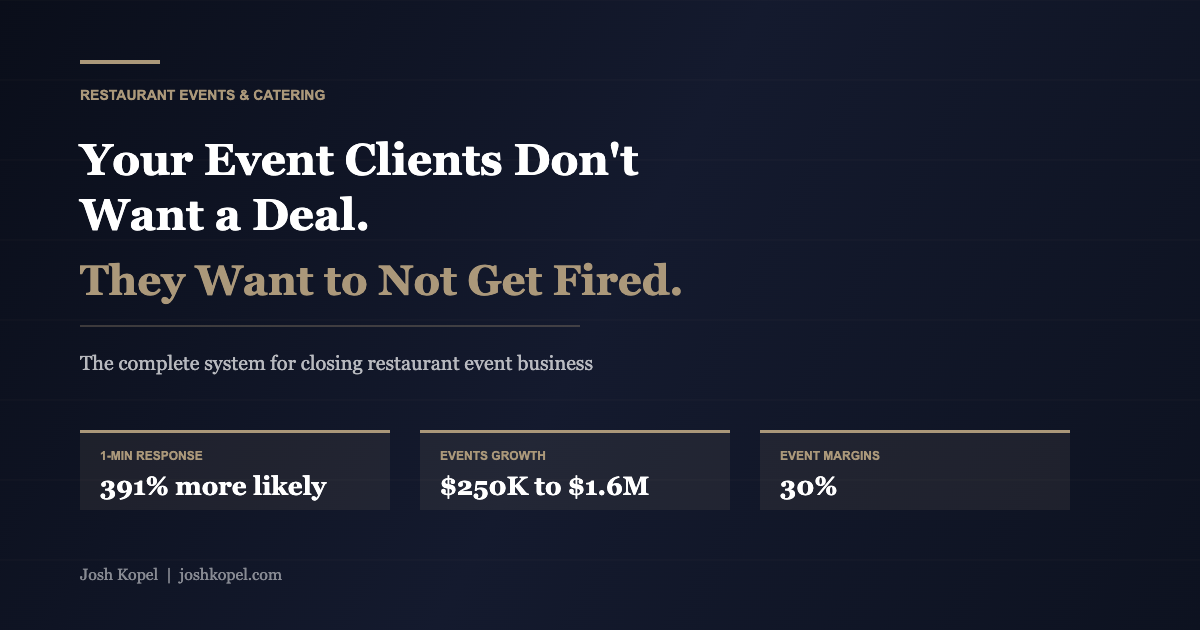
The people who professionally book catering and events are very nervous people. They’re not looking for you to give them a deal. More than anything, they’re looking to not get fired. Their performance review is going to be influenced by how the event goes – and that outcome depends on someone who is not them. What you’re selling isn’t food and beverage. It’s confidence. If you reply to an inquiry within one minute, you are 391% more likely to close that client. Here’s the complete system for closing event business – from understanding the buyer to stopping their prospecting process to the hand-raising email that turns your B2C list into B2B gold.

To sell anything effectively, you need to understand the people you’re selling to. And the people who professionally book catering and events are very nervous people.

Think about it. Imagine you’re setting up a holiday party for everybody at your company, and your overall performance review is going to be influenced by how it goes. The final sentiment at the close of the year is going to be rooted in the performance of someone that is not you – the restaurant or caterer you chose.

These people are not looking for you to give them a deal. They’re not trying to save money. More than anything, they’re looking to not get fired.

People only book for one of two use cases. Either they’re booking for people who give them money, or for people they’re directly related to. They don’t want to disappoint their boss, just like they don’t want to disappoint their mother-in-law.

What you’re selling isn’t food and beverage. It’s not events and catering. What you’re selling is confidence. And confidence comes from making the buyer feel like everything is handled, everything is going to be perfect, and they’re going to look great for choosing you.

Stop Waiting for the Phone to Ring

Here’s where most restaurants fail with catering and events. They wait for inbound inquiries. They put a “Private Events” tab on their website and hope someone fills out the form. Hoping for someone to fix your problems for you is not a great strategy.

I want you to think in terms of leverage. What are high-leverage activities you can do that will guarantee you more money? And the answer is outbound. Cold calling and cold emailing people who are more than likely going to do the thing you’re trying to sell them into.

Companies are going to order catering. They’re going to throw holiday parties. They’re going to host client dinners. The only question is whether they do it with you or with someone else. B2B is a more predictable sales cycle. You’re not trying to sell people something they don’t want. You’re trying to convince them to do something they’re already going to do – just do it with you.

I had a client in Miami who runs a fine dining restaurant. She reaches out and says, “We need to sell $500,000 worth of events by the end of the year.” And it’s September. Challenge accepted.

For her to sell $500,000 in events at her tier, she needed roughly 100 events at $5,000 each. We subtracted her current events and fence-sitters. That left 75 new events needed. At a 5% close rate, she’d need to reach 1,500 businesses. Based on the timeline, we had roughly 30 business days. So she committed to 50 calls a day.

She sold $500,000 in events in about 20 business days. Not 30. Twenty. Because her targeting got better. Her close rate improved. Her pitch improved. She iterated over time. She actually stopped before reaching 1,500 businesses because she was already at capacity.

Speed Kills the Competition: Why One Minute Changes Everything

Here’s a question. When somebody reaches out to book on your website, how quickly do you get back to them? 24 hours? 48 hours?

The goal is one hour. But here’s the real statistic. If you reply to somebody within one minute of them filling out a form, you are 391% more likely to close that client.

One of the first things we do with all of our clients is replace the forms on their website with automation-backed forms. When somebody fills out a form, it immediately replies via text: “Hey, this is Josh. I want to let you know we got your inquiry and we’re working on it now. I’m going to follow up with you in less than five minutes with a couple of follow-up questions.”

Then four minutes later, an automated email goes out with specific questions we could have asked on the form but didn’t. Why didn’t we ask them on the form? Because we’re trying to engage in an authentic way.

Here’s what I figured out about my own business. When people reach out with an inquiry, they don’t want to book an event with you specifically. They just want to book an event. Period. Your goal is to stop their prospecting process. Make the inquiry they send you the last one they make, because you seem like you’re on top of it.

This works especially well in our industry because most restaurants aren’t aware of these automations. So it feels like a high level of service without tech getting in the way.

The Hand-Raising Email: Turn Your B2C List Into B2B Gold

Here’s a strategy that has generated massive results for my clients. How many people on your mailing list own businesses or work for businesses that could host a private event? How many of them work for companies that do catering all the time?

You don’t know. You can’t sort your list that way. So we use something called a hand-raising email to pull the B2B prospects out of your B2C list.

Instead of saying “Did you know we do corporate catering?” – which is talking about yourself with no benefit – we give it away. Here’s how it works.

We send an email to the entire list: “We are so excited about our new private events program. We’ve upgraded it this year, and to celebrate, we’re going to give away a complimentary holiday party to someone on this list for up to 250 people. To enter, reply with your name, business name, business website, total number of people, and the person who’ll be managing the event.”

Then we get a flood of responses. And I don’t know how this is possible, but it seems like every single time, the winner is the person with the fewest number of employees.

Then I send out a bulk message to everyone: “Congratulations to Lulu, she won, and we’re so happy to serve her. For those of you that didn’t win, I want you to feel like winners too. I’m going to be reaching out directly.”

Then I reach out to each person individually. “Hey Adam, you lost, but you’re not a loser. You’re a winner to me. And you still have this holiday party that you need to book for 150 people on December 19. I’d love to host it for you. Why don’t we connect, and I’ll go through all the things we can do. I assure you, I can plus up the event to the point where you feel like a winner too.”

It works. It works really well. Because they already opened your emails. They already know, like, and trust you. They already told you they have an event to plan. Now you’re just going to plan it together.

Who to Target: The Law Firm Lesson

I worked at a law firm for about six months until I got fired. I’ve been fired from literally every job I’ve ever had, which is why I was forced into entrepreneurship at 24 years old. But when I worked for that law firm, the only thing I was qualified to do was order lunch for them.

Here’s what I found. Number one, they wanted variety. Number two, they had no budget – because they were always billing it back to the client.

So when I started South City fried chicken and began building our corporate catering strategy, I went straight to law firms. Then accounting firms. Then economics firms. Any large office where I knew they were billing catering back to clients.

Most law firms cater. They cater all the time. They can’t stop catering because they don’t have a budget – they bill it back. When I worked at that law firm, they ordered catering five days a week, and all they cared about was that it was delicious.

Today, we use targeting systems to create prospecting lists based on proximity, industry, headcount, and then rank them by their perceived capacity to pay. If you just started by making 20 calls a day, five days a week, you’d be making hundreds of calls a month. And it would directly translate to more money in your pocket.

The Offer That Makes Them Feel Like a Fool to Say No

There’s a trick to offer creation that I learned from Alex Hormozi’s work on million-dollar offers. You offer a binary choice where one option is so good that the person would feel like a fool if they didn’t take you up on it. That’s how good your offer has to be.

For event proposals, this means your presentation needs to make the buyer feel like everything is handled before they’ve even committed. When you respond in under a minute, when your follow-up is personalized and specific, when your proposal demonstrates that you understand exactly what they need – you’re not just offering a venue. You’re offering certainty.

Remember what these buyers want. They want to not get fired. They want to look great for choosing you. They want zero surprises. Your proposal, your communication speed, your follow-up system – all of it should reinforce one message: we’ve got this handled, and you’re going to look great.

When you pair that confidence with a best-in-class proposal that shows exactly what the experience will look like, the buyer’s decision becomes easy. They stop prospecting. They stop comparing. They book with you because the risk of choosing someone else feels higher than the risk of choosing you.

Making Event Revenue Recurring: The Annual Compounding Effect

Here’s the thing about private events and catering that most restaurant owners don’t realize. They’re annual occurring revenue when you do them the right way. If somebody has their holiday party with you and you don’t screw it up, why would they experiment? It becomes part of their tradition. It becomes part of their routine. It compounds over time.

The same applies to regular corporate catering. Law firms I’ve worked with order catering five days a week. Once you’re their vendor, switching is friction they don’t need. The key is not screwing up the first one and following up consistently.

My events and catering business went from $250,000 in inbound revenue to $1.6 million in under three years. And it only grew from there. The reason it grew was compounding – every year, the repeat clients came back, and the outbound engine kept adding new ones on top.

The Dundee Dell in Omaha, Nebraska – literally the oldest bar in Omaha – saw private events skyrocket by over 100% compared to the previous two years after implementing these strategies. Marquise Steakhouse in Milton, Ontario increased the average price of their private events by 50% and doubled their event bookings.

These aren’t flukes. These are the predictable results of having best-in-class assets, an outbound system, and the discipline to make the calls.

Your 7-Day Event Closing Action Plan

Day 1: Set up automated response. Replace the forms on your website with automation-backed forms that send an immediate text response and a follow-up email within five minutes. If you reply within one minute, you’re 391% more likely to close. Make your response the reason they stop shopping.

Day 2: Reach out to every past client. Contact every past event and catering client you’ve ever had. Invite them in for lunch or dinner. Say, “We appreciate you. Curious to know – do you have anything coming up on the horizon?” They already know, like, and trust you. Bridge the gap and restart the conversation.

Day 3: Build your targeting list. Identify law firms, accounting firms, and large offices within your delivery radius. Focus on businesses that bill catering back to clients. Create a list of at least 100 prospects to start.

Day 4: Draft your hand-raising email. Write an email to your existing mailing list offering a complimentary event to one lucky winner. This pulls B2B prospects out of your B2C list without any hard selling. You’ll know exactly who has events to plan.

Day 5: Start making calls. Commit to 20 outbound calls per day. That’s hundreds of calls per month. Track your leading indicators – calls made, emails sent – not just revenue. The math works when you work the math.

Day 6: Audit your response speed. Time how long it takes your team to respond to an inbound event inquiry right now. If it’s more than an hour, fix it. The inquiry they make with you should be the last one they make.

Day 7: Do the math. Calculate what your business looks like with a blended margin. If in-house runs at 10 to 12% and events and catering run at 30%, what does your total margin look like when B2B represents 20% of your revenue? 30%? 40%? That number is your north star.

How much does all of this cost? Not a dime. It costs time and intention. And the ROI is the fastest money you’ll ever make in the restaurant business. Money likes speed. Start today.

Free Live Training

Want Me to Walk You Through These Systems Live?

Join the free 5-Day Restaurant Marketing Masterclass. In 40 minutes a day, I’ll show you how to build a marketing system that actually makes you money.

JOIN THE FREE MASTERCLASS

★★★★★ Rated 5/5 by 1,000+ restaurant owners

Frequently Asked Questions

What are corporate event bookers really looking for when they choose a venue?

They’re looking to not get fired. Their performance review will be influenced by how the event goes, and the outcome depends on you – someone who is not them. They’re not looking for a deal. They’re looking for confidence that everything will be handled perfectly and they’ll look great for choosing you. Sell certainty, not food.

How fast should I respond to event inquiries?

Within one minute if possible, and no more than one hour at the absolute maximum. Data shows that responding within one minute makes you 391% more likely to close the client. Use automation-backed forms that send an immediate text and a follow-up email within five minutes. The goal is to stop their prospecting process and make your response the last inquiry they need.

What is a hand-raising email and how does it work for event sales?

A hand-raising email pulls B2B prospects out of your B2C mailing list. You offer a complimentary event to one lucky winner and ask people to reply with their name, business, headcount, and event date. Everyone who responds has just told you they have an event to plan. Then you reach out individually to the non-winners and offer to host their events. It works because they already know, like, and trust you.

Who should I target for outbound catering and event sales?

Start with law firms, accounting firms, and large offices near your restaurant – businesses that bill catering back to clients and therefore have no real budget ceiling. Law firms in particular cater constantly, often five days a week. Build prospecting lists based on proximity, industry, and headcount, then rank by their perceived capacity to pay. Twenty calls a day translates directly to more money.

How do I make event revenue recurring instead of one-time?

Private events are annual occurring revenue when you execute them well. If a company has their holiday party with you and you don’t screw it up, it becomes tradition. They won’t experiment. The same applies to regular corporate catering – once you’re the vendor, switching is friction nobody needs. The key is nailing the first event and following up consistently throughout the year.

Harry Posner & Natalie Dial: Put Staff Before Guests

What if the conventional wisdom about putting customers first is the very reason your restaurant keeps losing good people?

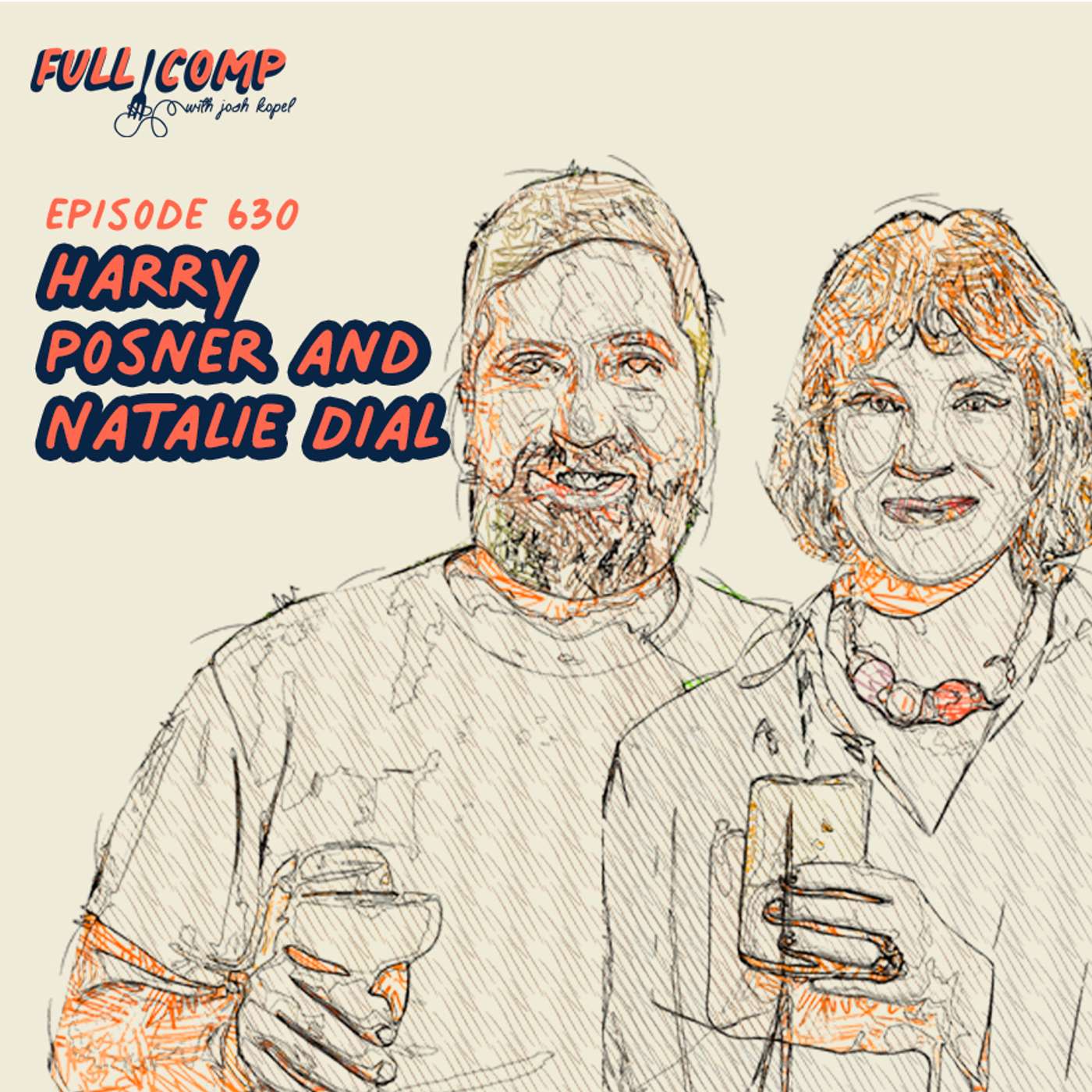
Harry Posner and Natalie Dial walked away from careers in medicine to open Tomat, a Michelin-recognized, seasonally driven restaurant in Westchester, Los Angeles. Neither came from the industry. Both came with the analytical frameworks most operators spend years trying to build.

In this conversation, we get into why they deliberately ranked employees above customers before opening day, how diversifying revenue across breakfast, lunch, dinner, events, and a rooftop gave them financial staying power when the calendar went quiet, and why the “wrong” location turned out to be one of the smartest market plays in recent LA dining.

If you think the customer is always right, this episode will change your mind.

To learn more about Tomat, visit tomat.la.

_________________________________________________________

Free 5-Day Restaurant Marketing Masterclass – This is a live training where you’ll learn the exact campaigns Josh has built and tested in real restaurants to attract new guests, increase visit frequency, and generate sales on demand. Save your spot at restaurantbusinessschool.com

Philippe Massoud: Built to Last 19 Years

What if the reason your restaurant isn’t built to last is because you designed it to survive instead of dominate?

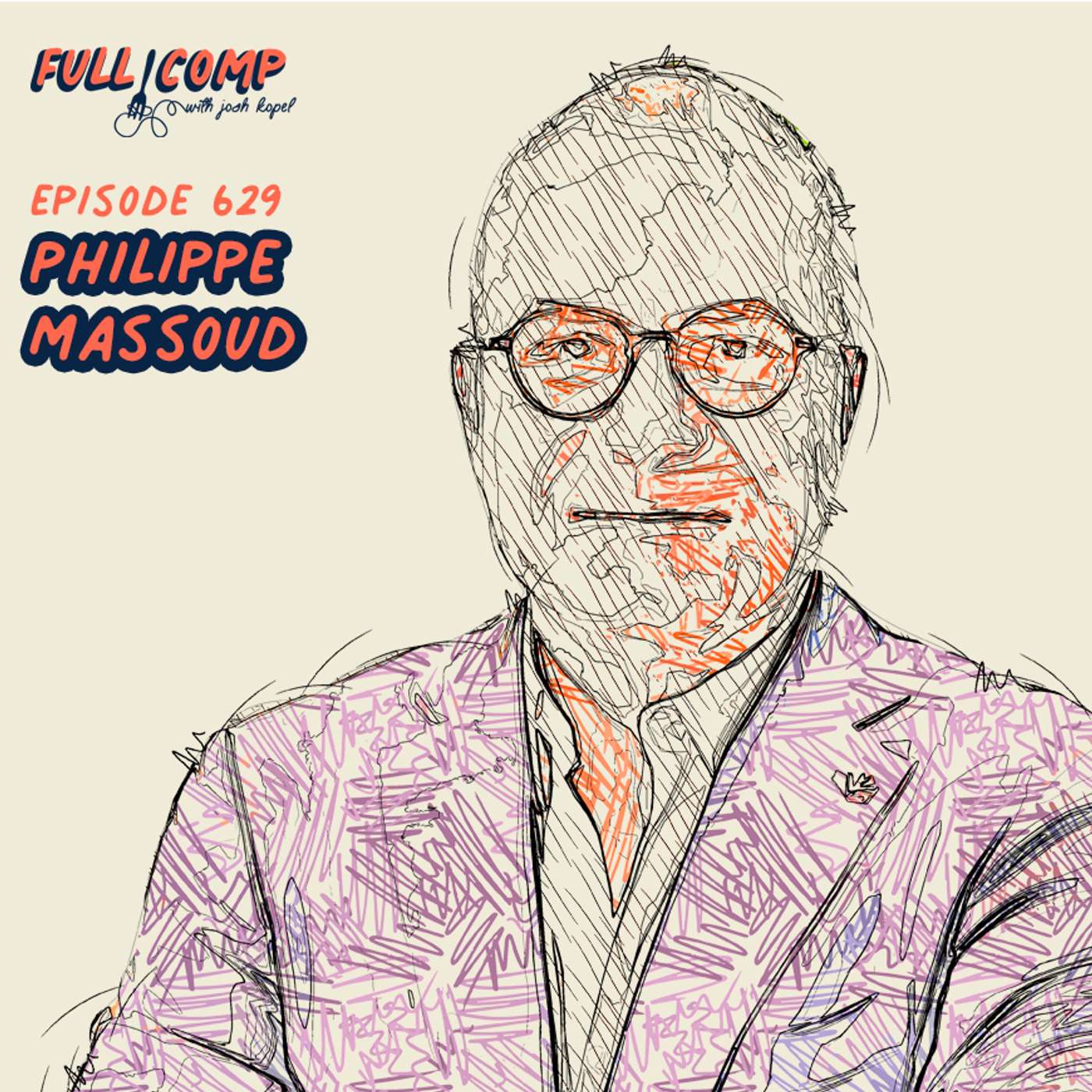
Philippe Massoud opened ilili in November 2007, a 10,000 square foot Lebanese restaurant in New York City, nearly $7 million in debt, in the middle of a financial crisis, with critics questioning whether anyone wanted Lebanese fine dining at that scale. Nineteen years later, the restaurant is still breaking records.

In this conversation, we get into why going smaller and safer is often the riskiest move an operator can make, how Philippe grew revenue 30% annually for five consecutive years after weathering the financial crisis, and why running a restaurant with two guests in mind changes everything.

If you’re building something real in a market that keeps getting harder, this episode is the one to hear.

To learn more about ilili, visit ililirestaurants.com.

_________________________________________________________

Free 5-Day Restaurant Marketing Masterclass – This is a live training where you’ll learn the exact campaigns Josh has built and tested in real restaurants to attract new guests, increase visit frequency, and generate sales on demand. Save your spot at restaurantbusinessschool.com

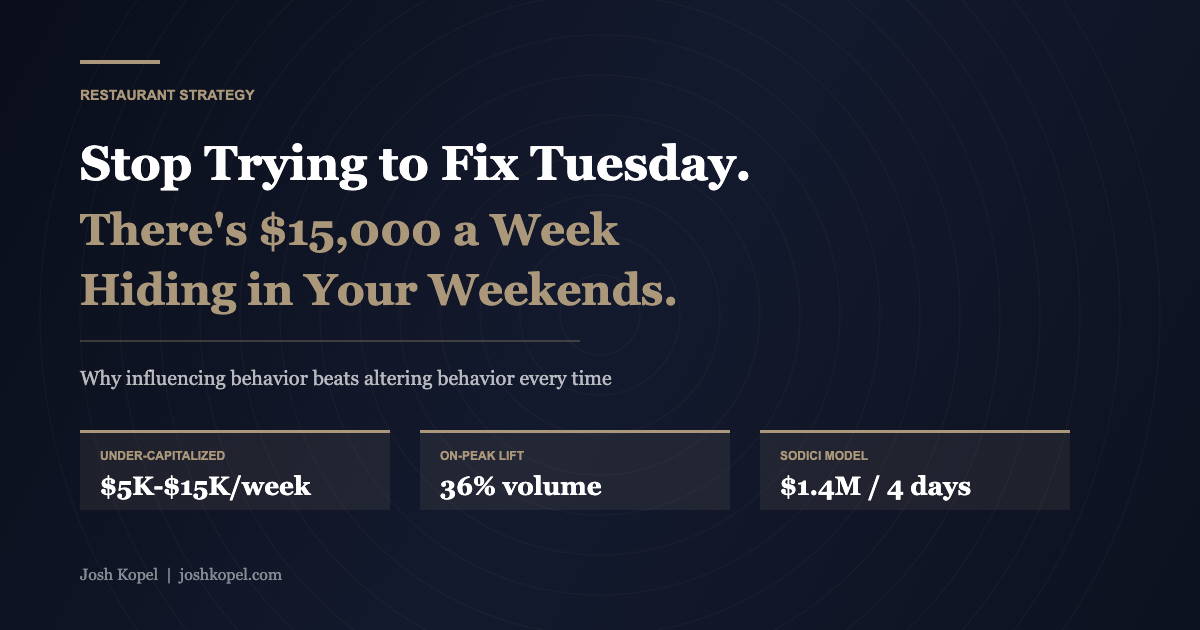
Stop Trying to Fix Tuesday. There’s $15,000 a Week Hiding in Your Weekends.

Expert Summary

How much time and effort have you put into initiatives that ended up doing nothing for your business? That Tuesday promo that was totally going to turn around the week? When you ask someone to come in on a Tuesday, you’re not just asking them to patronize your restaurant. You’re asking them to get off the couch, put on pants, get in their car, and drive to a place they don’t want to go. You’re trying to alter behavior. And altering behavior is incredibly expensive. Instead, focus on influencing behavior – people who are already out on a Saturday are easy to redirect. Sodici Pizza does $1.4 million a year open four days a week. There’s likely $5,000 to $15,000 a week sitting in your under-capitalized Fridays, Saturdays, and Sundays.

How much time and effort have you put into initiatives that ended up doing nothing for your business? That Tuesday promo that was totally going to turn around the week? That late-night happy hour that just never took off?

Here’s why that stuff doesn’t work. When you ask someone to come in on a Tuesday, you’re not just asking them to patronize your restaurant. You’re asking them to get off the couch, put on pants, get in their car, and drive to a place they don’t want to go to eat food they didn’t want to eat when they’d rather be doing something else.

You’re trying to alter behavior. And altering behavior is incredibly expensive.

Instead, focus on influencing behavior. People who are already out on a Saturday are easy to redirect. “You’re already out – why don’t you spend some time with me?” That’s a fundamentally different proposition. High margin. Low overhead.

All of you have untapped capacity. All of you. I assure you, there’s an extra $5,000, $10,000, $15,000 a week sitting in under-capitalized revenue on Fridays, Saturdays, and Sundays. And you’re out here running a two-for-one deal on the night nobody wants to leave their house.

Altering Behavior vs. Influencing Behavior: The Most Expensive Mistake in the Restaurant Business

This is the distinction that changed how I think about every dollar I spend on marketing. There are two fundamentally different things you can do with a customer’s behavior: you can try to alter it, or you can try to influence it.

Altering behavior means convincing someone to do something they wouldn’t otherwise do. Come in on Tuesday. Try a cuisine they’ve never had. Drive 30 minutes out of their way. Every single one of those asks is fighting against gravity. It’s expensive, it’s inefficient, and the results are almost always disappointing.

Influencing behavior means redirecting someone who’s already in motion. They’re already out on Saturday night. They’re already looking for something to do. They’re already in spending mode. All you have to do is give them a reason to spend that time and money with you instead of someone else.

The cost difference between these two approaches is staggering. Altering behavior requires heavy discounting, massive marketing spend, and constant effort just to get a handful of people through the door on a night they don’t want to be there. Influencing behavior requires a great offer and a little bit of attention during hours when demand already exists.

Every restaurant owner I work with spends too much time trying to alter behavior and not enough time trying to influence it. Flip that ratio and watch what happens to your revenue.

The Math That Should Change Your Strategy Today

Let me ask you a question. What would happen to your business if everyone who came to your restaurant once a month came in twice a month?

You’d be rich. You’d be Scrooge McDucking it. You wouldn’t be worrying about Tuesday. You wouldn’t be worrying about anything.

Now let me ask another question. What’s easier – getting a stranger to come in on a Tuesday, or getting someone who already loves you to come back one more time this month on a Friday or Saturday when they’re already out?

The answer is obvious. And yet we spend all of our energy on the hard thing and almost none on the easy thing.

In Los Angeles, when it drizzles, revenue drops by two-thirds. I never cared. I made all the money I needed on Friday, Saturday, and Sunday. Tuesday and Wednesday were surplus – just extra profit. If those days did nothing, I was still fine. Because my entire strategy was built around maximizing the days when people actually wanted to be there.

That’s the mindset shift. Stop treating slow days as a problem to solve. Start treating peak days as an opportunity to maximize.

The Sodici Pizza Model: $1.4 Million on Four Days a Week

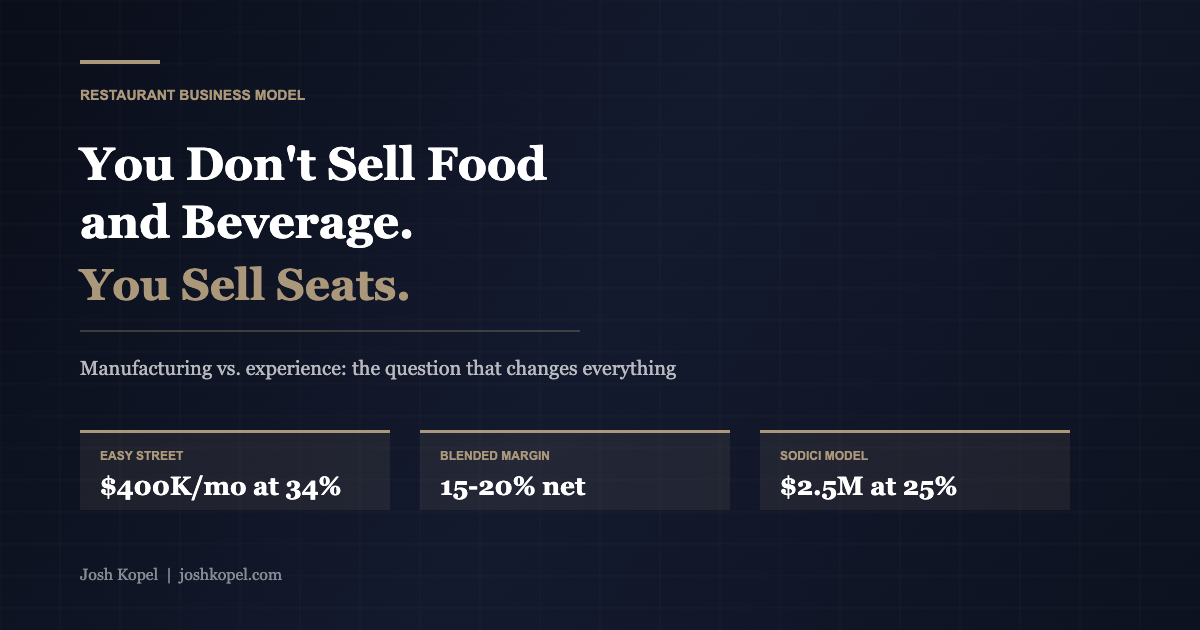
Sodici Pizza in Brownsville, Texas does $1.4 million a year at an 18% margin. It’s open four days a week. Do the math on what a quarter million in take-home means in Brownsville, Texas. And the owner, Dante, isn’t involved in day-to-day operations.

Dante didn’t get there by trying to fill seven days. He got there by maximizing the days that mattered. When we worked together to maximize the profitability of the restaurant, there just wasn’t another dollar to get from in-house dining. So instead of adding more days or more hours, he launched a catering operation. Same kitchen. Same team. Manufacturing business. High margin.

Today, Dante sits on a $2.5 million operation pushing an average net profit of 25% – a single-unit restaurant plus a catering arm. The restaurant runs four days a week with no mandatory day-to-day involvement from the owner.

That’s the goal. A wildly profitable business that you don’t have to run, that someone else is able to run for you. And it’s achievable. If it’s achievable in Brownsville, Texas, you can totally crush it too.

The lesson isn’t that you should close three days a week. The lesson is that Dante made more money by being brilliant four days a week than most restaurants make being mediocre seven days a week. Compressed focus beats scattered effort every single time.

On-Peak Promotions That Don’t Require Discounting

Here’s where most restaurant owners go wrong with promotions. They discount. Discounting is the last bastion of a desperate brand. You don’t need to discount. You need to create experiences that bring people in at full margin during the hours when they’re already inclined to spend money.

At Preux & Proper, with a per-customer average of about $125, even customers who had the best dinner of their lives weren’t coming back soon. They’d either saved up for the experience or they had options and wouldn’t repeat the same one. So I had to figure out what else I could sell them.

We launched a flights and bytes concept for happy hour. You could come in before dinner or late night after, enjoy a curated experience at a lower price point with flat margins. It wasn’t a discount. It was a different experience at a different price – less for less. The customer got something fun, I got full margin, and it drove people to the shoulders around my peak hours.

One of my clients, Tarja from Dogville, runs a casual burger concept. We created a burger flight paired with rotating complimentary beers, offered only from 4 to 6 PM on Fridays, Saturdays, and Sundays. People were already out. It was a cool, fun thing to do. On-peak volume scaled by 36%.

Notice what we didn’t do. We didn’t run this on Tuesday. We didn’t discount. We didn’t beg people to come in. We offered something exciting during hours when they were already in motion, at a price point that made both of us money.

The Pre-Loaded Year: Stop Making It Up as You Go

One of my biggest frustrations as a restaurateur was that we’d be years into the business, and it’s March, and we’re trying to figure out what we’re going to do in April. But I’ve owned this bar for six years. We already know what’s going to work.

Annual planning should be a greatest hits album. You’re not trying new things. You’re running the plays that have already proven themselves.

Here’s what a great year looks like. It’s one concept a month across 12 months. Two annual events – signature things that you are known for, that you are famous for citywide. Four quarterly activations – co-branding exercises, chef collaborations, brand partnerships. And six LTOs – limited-time offers that are deviations on your most successful items.

The most effective LTOs are typically a combination of your best-selling items in a way that’s really exciting. I’ve got a client called The Cove. Their best-selling sandwich for lunch is a Reuben, and their best-selling entree for dinner on weekends is prime rib. So we came up with a prime rib Reuben concept. People drove in for hours to eat it. Of course they did. It sounds delicious, and it falls in line with what people are already buying.

At Preux & Proper, we did Fat Tuesday as a week-long annual event. Then Sleigh Bells on Spring – it looked like Instagram threw up all over my 6,000-square-foot, two-story restaurant. We spent $20,000 on decorations. Tiny customized menu for the entire month with several activations. Those were things you had to come see me for.

For quarterlies, we did chef collaborations. July is typically a terrible month in Los Angeles, so we ran a barbecue pop-up. And here’s the key – we only ran it on the weekends. Not Monday through Thursday. Because I’m trying to drive traffic when people are already out, not when they don’t want to come in.

The Offer Creation Framework: Give Them One Great Reason

The fallacy is that if you send an email offering five things to do, people will scroll through, pick the one that resonates, and come in. That’s not what the data shows. When you offer a lot of things, people go, “That all sounds really good,” and then they delete the email because it’s overwhelming.

Instead of offering three options, offer three reasons to do one thing. And that one thing needs to be rooted in something that appeals to your audience and is your absolute best offer.

I’ve got a buddy who owns seven different concepts in Los Angeles with a mailing list of 30,000. He was mapping out all these complicated multi-offer campaigns. I said, bro, you’ve got a list of 30,000. All you need to do is give them one reason to come in this month. One great reason. Because if they all came in because the reason was so good, you’d be set.

What we’re trying to do is get to step two before we’ve completed step one. Step one is just getting everybody in once. One great offer does that.

There’s a trick to offer creation that I learned from Alex Hormozi’s work. You offer a binary choice where one option is so good that the person would feel like a fool if they didn’t take you up on it. That’s how good your offer has to be. That’s what you should be doing with every guest, every email, every campaign. Make an offer so good they can’t pass it up.

Why National Events and LTOs Should Last a Week, Not a Day

When you host your anniversary or a national food day event, the typical approach is to limit it to one service or one day. But think about your own life. You have a family. You have a career. You’re busy. One day is hard to hit.

At South City, for National Fried Chicken Day, the special didn’t run on that day. It lasted an entire week. The reason was simple – I wanted to give everyone an opportunity to get it, because people are busy.

What we did was get a lot of attention through press and social media. We had an offer that was easily redeemable and possessed scarcity, high perceived value, and urgency, with the ability to redeem it over a long enough window that busy people could actually participate.

The goal of the press hit wasn’t to get people to come in that day. The goal was to send them to a website where they could fully read the offer, redeem it, and then come into the restaurant on their own schedule within that week. That’s how you should be using press and attention – to make a best-in-class offer, and then the rest takes care of itself.

Your 7-Day Peak Revenue Maximization Plan

Day 1: Pull your POS data. Look at the last six months. What percentage of your total weekly revenue comes from Friday, Saturday, and Sunday? If it’s more than 60%, your peak days are where the money lives. Stop trying to fix the other days.

Day 2: Calculate your under-capitalized peak revenue. What would happen if you added one more turn to your Fridays, Saturdays, and Sundays? What if your per-customer average went up $3 on those days? That number will dwarf anything you could build on a slow night.

Day 3: Design one on-peak promotion. Not a discount. A less-for-less experience that gives people a reason to come in during shoulder hours at full margin. Think flights and bytes. Think burger flights. Think curated experiences, not coupons.

Day 4: Build your pre-loaded year. Map the next 12 months. Two annual signature events. Four quarterly activations. Six LTOs based on your best sellers. One great reason per month for your entire mailing list.

Day 5: Extend your next event to a full week. Whatever activation you have coming up, don’t limit it to one night. Give people seven days to participate. Busy people need flexibility, and a week-long window dramatically increases redemption.

Day 6: Audit your Tuesday spend. Add up every dollar you spend on Tuesday and Wednesday – labor, utilities, marketing, food waste from low volume. Compare that to the profit those days actually generate. Most owners are shocked by how little those days contribute.

Day 7: Redirect that energy to the weekend. Whatever time, money, and attention you’ve been putting into slow days, redirect it to your peak days. Staff better. Promote harder. Create scarcity. Make your weekend revenue the foundation of your entire business.

Make your weekly money on the weekend, and let Tuesday take care of itself. Money likes speed. Start today.

Free Live Training

Want Me to Walk You Through These Systems Live?

Join the free 5-Day Restaurant Marketing Masterclass. In 40 minutes a day, I’ll show you how to build a marketing system that actually makes you money.

JOIN THE FREE MASTERCLASS

★★★★★ Rated 5/5 by 1,000+ restaurant owners

Frequently Asked Questions

Why don’t Tuesday promotions work for restaurants?

Because you’re trying to alter behavior instead of influence it. When you ask someone to come in on a Tuesday, you’re asking them to get off the couch, put on pants, get in their car, and drive somewhere they don’t want to go. That’s incredibly expensive to accomplish. People who are already out on a Saturday are easy to redirect. Focus your energy on influencing behavior during peak hours when customers are already in spending mode.

How much under-capitalized revenue is hiding in my weekends?

Most restaurants have $5,000 to $15,000 per week in under-capitalized revenue sitting in their Fridays, Saturdays, and Sundays. This comes from sub-optimal turn times, inefficient back-end settings in reservation and delivery systems, capacity that isn’t being used, and the absence of on-peak promotions that drive volume during shoulder hours.

What are on-peak promotions and how do they avoid discounting?

On-peak promotions are less-for-less experiences offered during shoulder hours at full margin. At Preux & Proper, a flights and bytes concept before and after dinner gave customers a curated experience at a lower price point without discounting the core dining experience. A client’s burger flight paired with rotating beers from 4 to 6 PM on weekends scaled on-peak volume by 36%. The key is offering a different experience at a different price, not discounting your existing one.

Can a restaurant really succeed being open only four days a week?

Absolutely. Sodici Pizza in Brownsville, Texas does $1.4 million a year at 18% margins open four days a week. The owner isn’t involved in day-to-day operations and has expanded to a $2.5 million total operation with a catering arm. The lesson is that compressed focus on peak days beats scattered effort across seven days. You make more money being brilliant four days than being mediocre seven.

What is the pre-loaded year strategy for restaurant marketing?

The pre-loaded year maps one concept per month across 12 months: two annual signature events, four quarterly activations like chef collaborations, and six LTOs based on your best sellers. Instead of figuring out what to do month by month, you plan the entire year in advance using what you already know works. Annual planning should be a greatest hits album. Give your mailing list one great reason to come in each month instead of five mediocre ones.

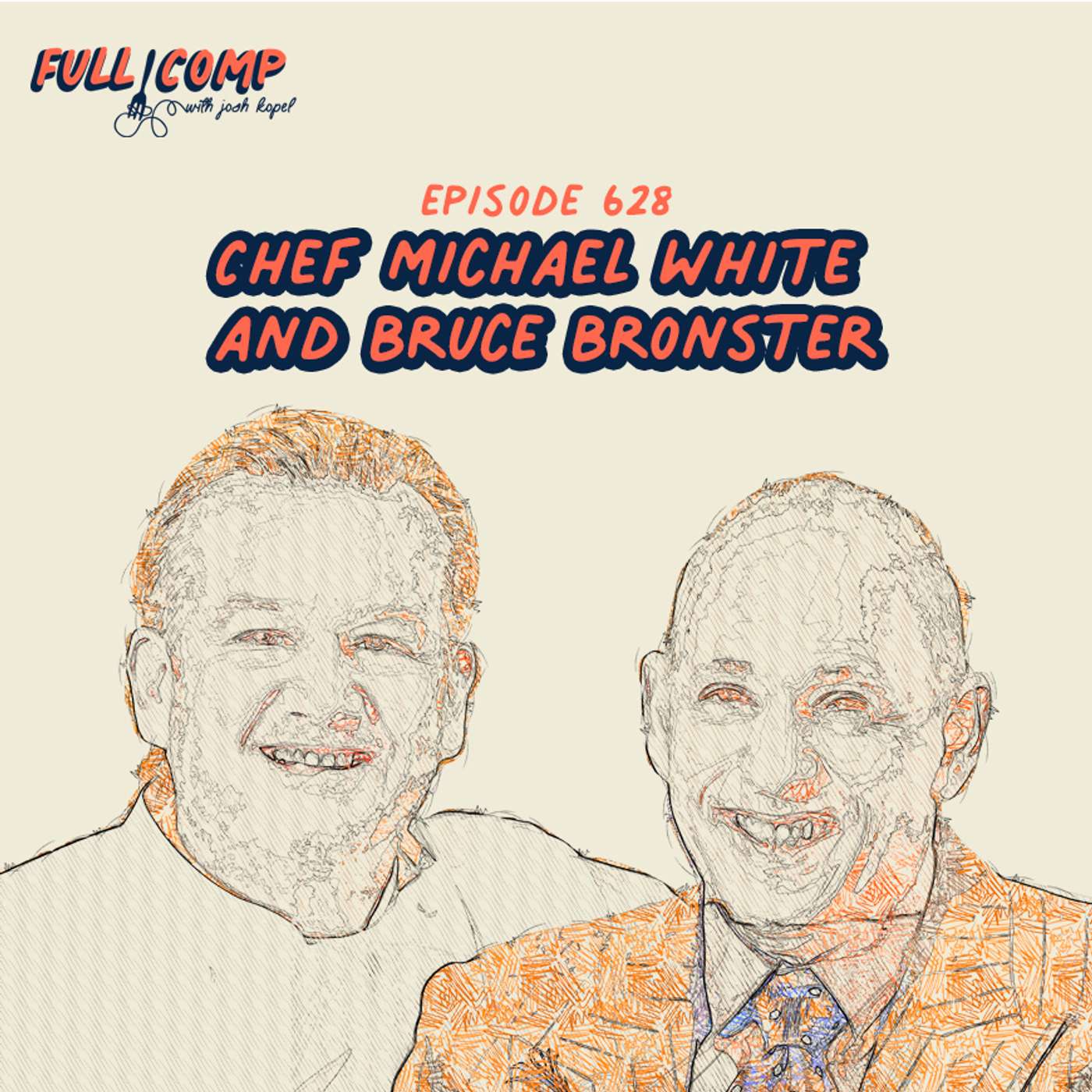
Michael White & Bruce Bronster: Price Less, Win More

What if the reason your margins are tight has nothing to do with efficiency and everything to do with strategy?

Chef Michael White held five simultaneous Michelin stars under the Altamarea Group before co-founding BBianco Hospitality Group with hospitality attorney Bruce Bronster in 2020. Together, they run a restaurant company that deliberately prices below the competition and still gets guests back three and four times a week because of it.

In this conversation, we get into why their three C’s, cuisine, consistency, and conviviality, are the real operating system behind a loyal guest base, how volume answers margin problems that efficiency never can, and why knowing your lane inside a close partnership is the thing that keeps the business from falling apart.

If you’re still chasing 20% margins and losing guests in the process, this one lands where it counts.

That’s Chef Michael White and Bruce Bronster. To learn more about BBianco Hospitality Group, visit bbiancohospitality.com.

The Playbook Takeaways

  1. Volume answers margin problems that efficiency never can. BBianco deliberately prices below the competition and wins because guests come back three and four times a week.
  2. The three C’s are the operating system. Cuisine, consistency, and conviviality — not discounts — are what build a loyal guest base.
  3. Know your lane inside a close partnership. White runs the cuisine, Bronster runs the business — clear lanes are what keep the company from falling apart.

Want the systems behind ideas like these? I’ve turned six years of Full Comp interviews into a free 5-day masterclass on building a restaurant marketing system that actually makes you money. Join the free masterclass →

Keep going: Restaurant Profitability Playbook · Restaurant Marketing Strategies That Work · The Complete Restaurant Consulting Guide

_________________________________________________________

Free 5-Day Restaurant Marketing Masterclass – This is a live training where you’ll learn the exact campaigns Josh has built and tested in real restaurants to attract new guests, increase visit frequency, and generate sales on demand. Save your spot at restaurantbusinessschool.com


About the Author: Josh Kopel is a Michelin-awarded restaurateur, restaurant consultant, and host of the Full Comp podcast — the voice of the restaurant industry. He has helped hundreds of restaurant owners build profitable, scalable businesses. Explore free restaurant resources →

Ben Leventhal: Your Guests Didn’t Leave, They Forgot

What if your guests aren’t choosing your competitors, they just forgot you exist?

Ben Leventhal has spent 20 years building the infrastructure that connects diners to restaurants. He co-founded Eater in 2005, co-founded Resy in 2014, sold it to American Express in 2019, and is now the CEO and founder of Blackbird Labs, a loyalty and payments platform built to give independent restaurants the tools that large brands have had for years.

In this conversation, we get into why 42% of restaurants aren’t profitable and what role loyalty plays in fixing that, how frequency and access are more valuable than acquisition, and why the independent restaurant’s biggest competitive disadvantage is being invisible to guests who already love them.

If your regulars aren’t showing up as often as they should, this episode is where to start.

 To learn more about Blackbird Labs, visit blackbird.xyz.

The Playbook Takeaways

  1. Your guests didn’t defect — they forgot. Most “lost” guests have no complaint; you simply fell out of mind. Systematic re-engagement beats new-guest acquisition on cost every time.
  2. Frequency is the profit lever. With 42% of restaurants unprofitable, moving your regulars from 4 visits a year to 6 does more than any new-customer campaign.
  3. Loyalty is infrastructure, not a punch card. Ben built Resy and now Blackbird on one idea: give independents the guest data and access tools the big brands already have.

Want the systems behind ideas like these? I’ve turned six years of Full Comp interviews into a free 5-day masterclass on building a restaurant marketing system that actually makes you money. Join the free masterclass →

Keep going: Restaurant Marketing Strategies That Work · The Restaurant Technology Guide · Restaurant Profitability Playbook

_________________________________________________________

Free 5-Day Restaurant Marketing Masterclass – This is a live training where you’ll learn the exact campaigns Josh has built and tested in real restaurants to attract new guests, increase visit frequency, and generate sales on demand. Save your spot at restaurantbusinessschool.com


About the Author: Josh Kopel is a Michelin-awarded restaurateur, restaurant consultant, and host of the Full Comp podcast — the voice of the restaurant industry. He has helped hundreds of restaurant owners build profitable, scalable businesses. Explore free restaurant resources →

FREE DOWNLOAD

Leverage Digital Media to Drive Traffic to Your Restaurant

This free (and highly detailed) guide will outline how to tell your story in the most compelling way possible and how to share that story with the masses.

(Yep, even if you’re not a “tech” person!)

FREE DOWNLOAD

Lead Your Team Instead of Managing Them

This free (and highly detailed) guide will give you everything you need to know to build and lead a world class team from scratch, ensuring you work less and earn more. (Yep, even if you know nothing about leadership.)

FREE DOWNLOAD

Ready to Optimize, Manage and Grow Your Restaurant’s Profit Margin But Not Sure Where to Start?

This free (and highly detailed) cheat sheet will give you everything you need to know to set up your restaurant to maximize profitability. (Yep, even if you’re not a “business” person!)

Free 5-Day Marketing Masterclass

Join Now

5 Day Restaurant
Marketing Masterclass

100% Free

Get the tactics, tools, and strategies you need to scale your restaurant’s profits by 15% — in just five days.

See What You'll Learn