Josh Kopel | Award Winning Restaurant Consultant

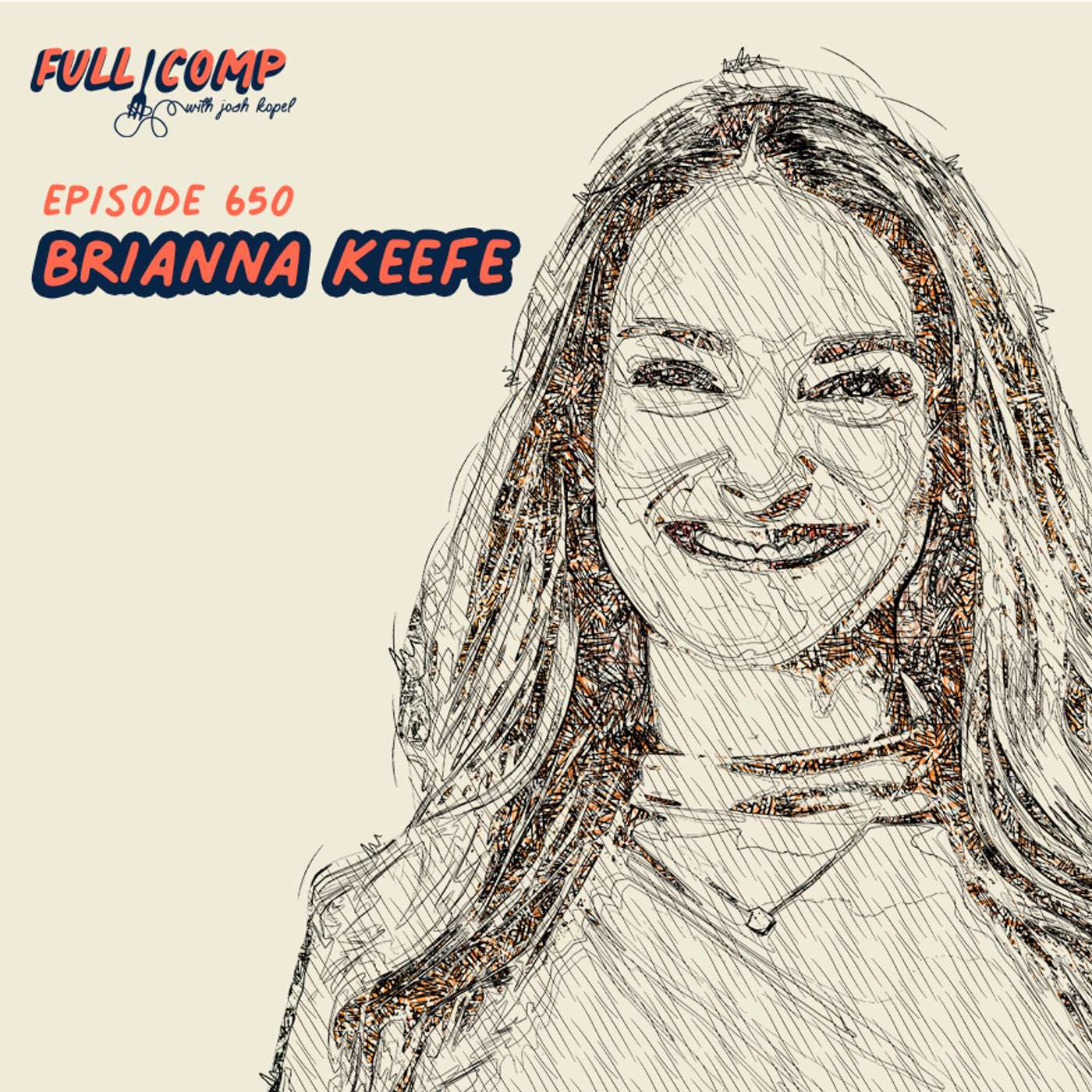
Brianna Keefe: Stay In The Weeds Longer Than You Want

What if you have to go deeper into the day to day before you can ever get out of it?

Brianna Keefe spent her entire first year inside one store, open to close, writing the systems by hand and training every person who walked through the door. That year is the reason she can now be nowhere near the sixty five stores operating under her name.

In this conversation, we get into why delegation collapses when the founder steps back too early, why she hires her support team a full year before the business needs them, and why her best performing store sits in a market she would never have chosen herself.

If you are the bottleneck in your own business, this one explains how you got there.

The Playbook Takeaways

  1. Go deeper before you get out. Brianna Keefe spent her first year inside one store, open to close, writing the systems by hand and training every person who walked through the door. That year is why she can now be nowhere near the 65 stores operating under her name.
  2. Stepping back too early breaks delegation. When the founder leaves before the systems exist, delegation collapses and the owner becomes the bottleneck again.
  3. Hire support a year ahead. She builds her support team a full year before the business needs it, and her best-performing store sits in a market she would never have chosen herself.

Want the systems behind ideas like these? Josh runs a free 5-day restaurant marketing masterclass at restaurantbusinessschool.com.

Keep going: what a restaurant consultant does, how to build a restaurant business plan lenders take seriously, and the levers that actually move restaurant profitability.

To learn more about Toastique and the franchise opportunities she’s building across the country, visit toastique.com.
_________________________________________________________

Free 5-Day Restaurant Marketing Masterclass – This is a live training where you’ll learn the exact campaigns Josh has built and tested in real restaurants to attract new guests, increase visit frequency, and generate sales on demand. Save your spot at restaurantbusinessschool.com

About the Author: Josh Kopel is a Michelin-awarded restaurateur, host of the Full Comp podcast, and creator of the Restaurant Scaling System, which helps independent owners grow profitable restaurants through AI-powered marketing. More about Josh · Learn with Josh

How to Raise Menu Prices Without Losing Customers

What if the guest you’re pricing around doesn’t exist?

Across tens of thousands of guest reviews, nobody has ever complained about paying too little. What shows up is that something felt too expensive. That is a verdict on value, and cutting the price will not fix it.

In this takeaway, I break down why the regular you’re afraid of isn’t watching your menu, how I raised the price of one item a week for six weeks and got zero pushback, and why $16 and $18 land the same way while $19 and $21 do not.

If you’ve known for a year that an item is underpriced and still haven’t touched it, this one is costing you every week you wait.

The Playbook Takeaways

  1. Guests judge value, not price. Across tens of thousands of guest reviews, nobody has complained about paying too little. “Too expensive” is a verdict on value, and cutting the price will not fix it.
  2. Raise one item at a time. Raising the price of one item a week for six weeks drew zero pushback. The regular you are afraid of is not watching your menu.
  3. Know which threshold you are crossing. $16 and $18 land the same way with guests; $19 and $21 do not. Check the line before you move a price, then stop waiting on the item you already know is underpriced.

Want the systems behind ideas like these? Josh runs a free 5-day restaurant marketing masterclass at restaurantbusinessschool.com.

Keep going: the levers that actually move restaurant profitability, restaurant marketing solutions that actually work, and what a restaurant consultant does.


To build the marketing team that raises your check average for you, visit restaurantbusinessschool.com.
_________________________________________________________

Free 5-Day Restaurant Marketing Masterclass – This is a live training where you’ll learn the exact campaigns Josh has built and tested in real restaurants to attract new guests, increase visit frequency, and generate sales on demand. Save your spot at restaurantbusinessschool.com

About the Author: Josh Kopel is a Michelin-awarded restaurateur, host of the Full Comp podcast, and creator of the Restaurant Scaling System, which helps independent owners grow profitable restaurants through AI-powered marketing. More about Josh · Learn with Josh

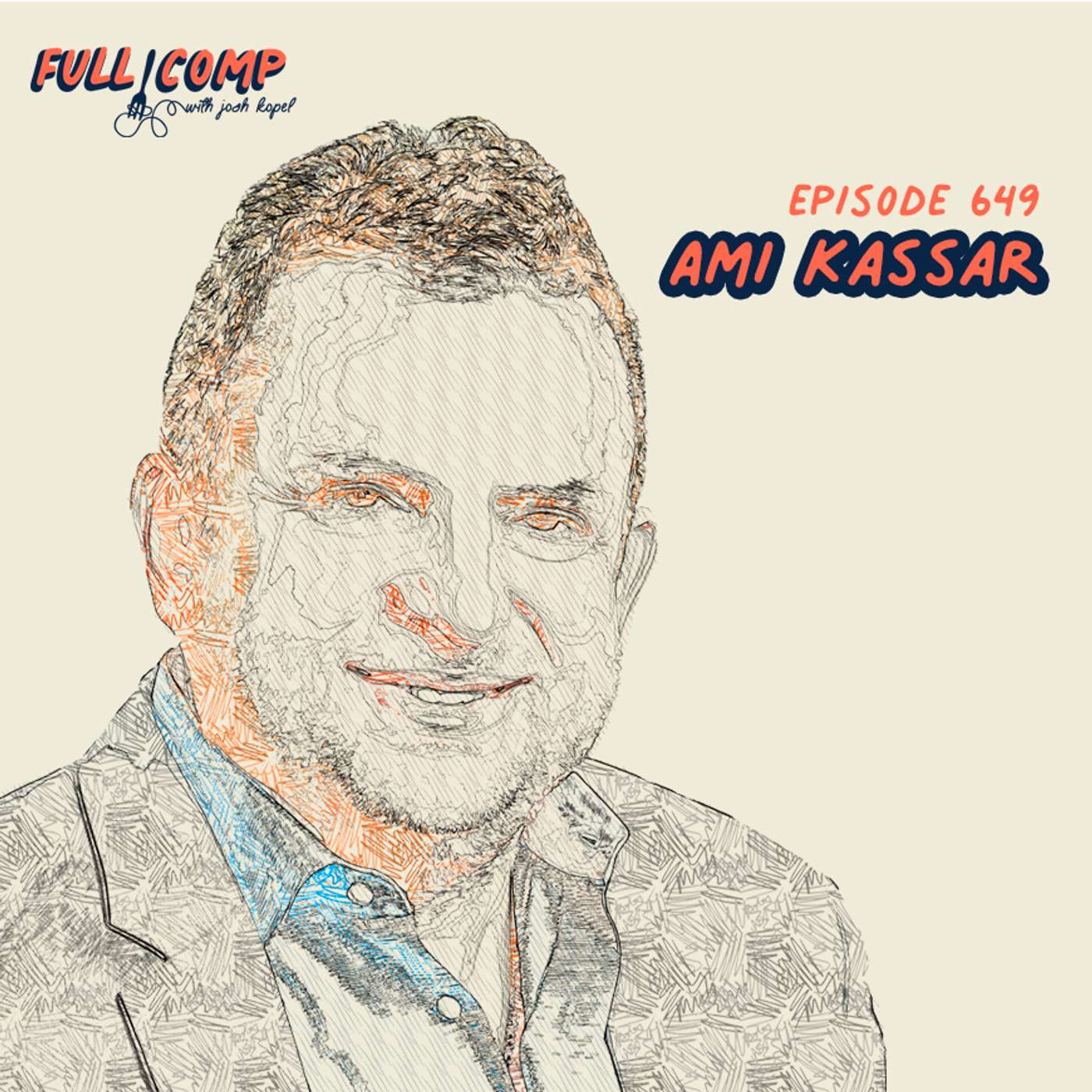
Ami Kassar: You Gave Away Equity for Nothing

What if the reason you gave away a piece of your restaurant is a myth you never bothered to test?

Most operators believe banks will not touch a restaurant, so they go straight to investors, credit cards, or whatever money is easiest to reach. Ami Kassar has placed over a billion dollars in small business loans, and he says the restaurant exception does not exist.

In this conversation, we get into why a line of credit belongs in your business before you need it, how the cash advance built into your point of sale locks you out of real financing, and why the monthly payment matters more than the rate.

If you have never asked whether your restaurant is bankable, this is the episode that makes you ask.

The Playbook Takeaways

  1. The restaurant exception is a myth. Ami Kassar has placed over a billion dollars in small business loans, and he says the idea that banks will not touch a restaurant simply is not true. Operators give away equity because they never tested the assumption.
  2. Put a line of credit in place before you need it. Financing is easiest to secure when you are not desperate for it, which is exactly when most owners never think to ask.
  3. Watch the monthly payment, not the rate. The cash advance built into your point of sale can lock you out of real financing, and the number that decides whether a loan is survivable is what leaves your account each month.

Want the systems behind ideas like these? Josh runs a free 5-day restaurant marketing masterclass at restaurantbusinessschool.com.

Keep going: how to build a restaurant business plan lenders take seriously, the levers that actually move restaurant profitability, and what a restaurant consultant does.

To learn more about MultiFunding and their work helping entrepreneurs find the right financing, visit multifunding.com.

_________________________________________________________

Free 5-Day Restaurant Marketing Masterclass – This is a live training where you’ll learn the exact campaigns Josh has built and tested in real restaurants to attract new guests, increase visit frequency, and generate sales on demand. Save your spot at restaurantbusinessschool.com

About the Author: Josh Kopel is a Michelin-awarded restaurateur, host of the Full Comp podcast, and creator of the Restaurant Scaling System, which helps independent owners grow profitable restaurants through AI-powered marketing. More about Josh · Learn with Josh

The Takeaway: Your Guests Didn’t Leave. They Forgot You

What if your regulars didn’t leave you? What if they just forgot you exist?

Most operators spend the year buying strangers while the people who already love them go quiet. The problem is memory, and memory is cheap to fix.

In this takeaway, I break down why a guest who visits once a month is worth $720 a year and double that at twice a month, why a reminder beats a reward every time, and how a pre-loaded year of signature events kills the pressure to invent something new every month.

If you have a mailing list you never use, this is the fastest money in your building.

The Playbook Takeaways

  1. A regular is worth more than you think. A guest who comes in once a month is worth roughly $720 a year, and double that at twice a month. The math on keeping someone beats the math on buying someone new.
  2. A reminder beats a reward. The problem is not that your regulars stopped loving you, it is that they forgot you. Memory is cheap to fix, and it does not require discounting.
  3. Pre-load the year. A calendar of signature events booked in advance kills the monthly pressure to invent something new, and gives you a reason to contact your list that is not a coupon.

Want the systems behind ideas like these? Josh runs a free 5-day restaurant marketing masterclass at restaurantbusinessschool.com.

Keep going: restaurant marketing solutions that actually work, how to improve restaurant profitability, and restaurant ideas, themes and concepts.


To build the marketing team that sends those reminders for you, visit restaurantbusinessschool.com.

_________________________________________________________

Free 5-Day Restaurant Marketing Masterclass – This is a live training where you’ll learn the exact campaigns Josh has built and tested in real restaurants to attract new guests, increase visit frequency, and generate sales on demand. Save your spot at restaurantbusinessschool.com

About the Author: Josh Kopel is a Michelin-awarded restaurateur, host of the Full Comp podcast, and creator of the Restaurant Scaling System, which helps independent owners grow profitable restaurants through AI-powered marketing. More about Josh · Learn with Josh

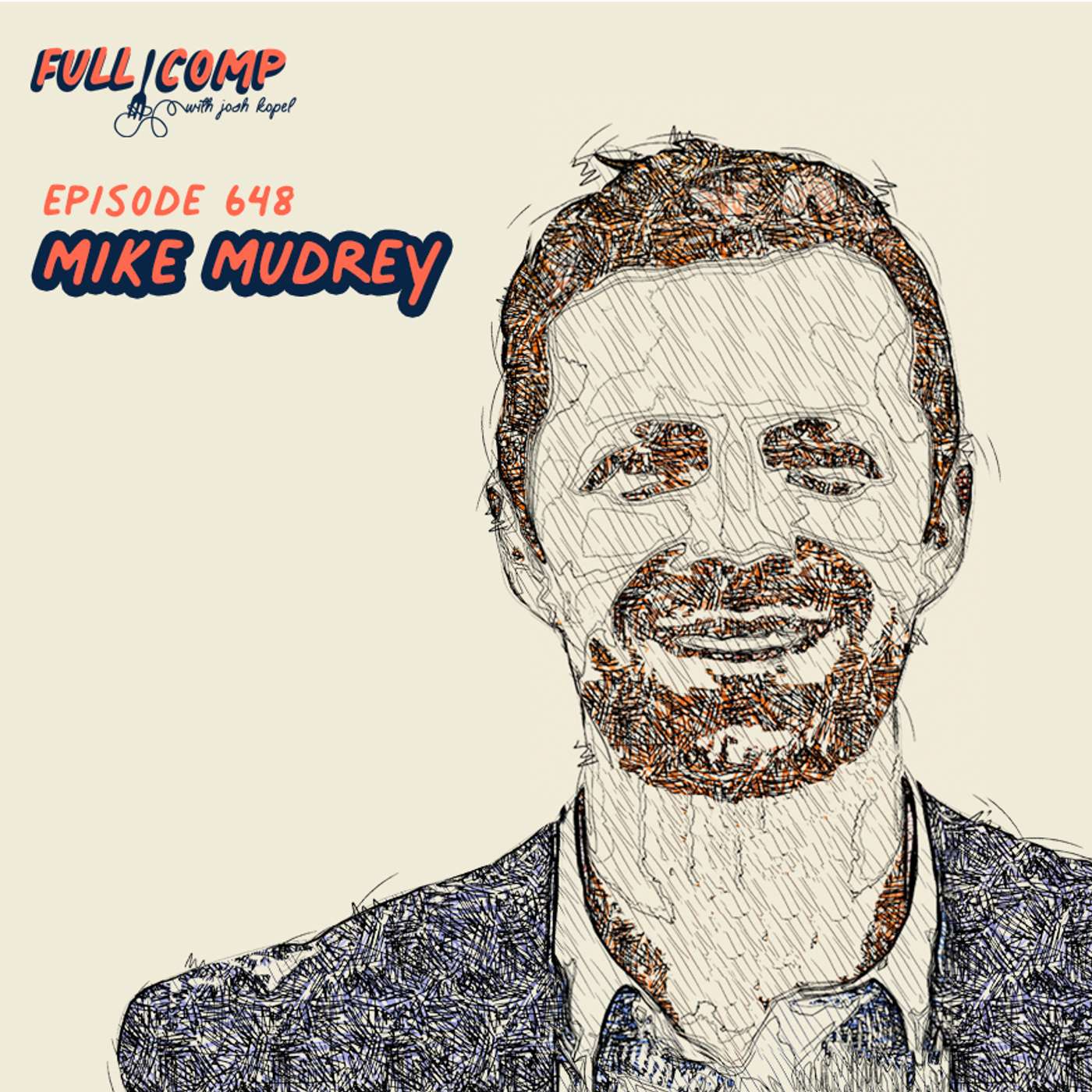
Mike Mudrey: Your Restaurant Doesn’t Need You

What if the reason your restaurant runs on you is that you keep showing up?

Mike Mudrey bought a crêperie in East Lansing with no restaurant experience and a corporate job he had no intention of leaving. Nine years and four locations later he still has both, and one of his restaurants sits over an hour from where he lives. Never being able to work the floor is what forced him to build systems instead of habits.

In this conversation, we get into why every question you answer twice should become a system, how prepaid and pre-selected bookings drove his no-shows and food waste close to zero, and why the money was never in the crêpe.

If your operation stops working the week you take off, this one is for you.

To learn more about The 601 Group and their portfolio, visit 601-group.com.

The Playbook Takeaways

  1. Absence is what forces systems. Never being able to work the floor, with one restaurant more than an hour from home, is what made Mudrey build systems instead of habits.
  2. Any question you answer twice should become a system. That single rule is how four locations run without the owner leaving his corporate job.
  3. Prepaid and pre-selected bookings drove no-shows and food waste close to zero, which is where the margin came from rather than the product itself.

Want the systems behind ideas like these? Josh teaches them in a free 5-day restaurant marketing masterclass at Restaurant Business School.

Keep going: how restaurant consulting builds operating systems · restaurant technology worth buying · restaurant profitability fundamentals

_________________________________________________________

Free 5-Day Restaurant Marketing Masterclass – This is a live training where you’ll learn the exact campaigns Josh has built and tested in real restaurants to attract new guests, increase visit frequency, and generate sales on demand. Save your spot at restaurantbusinessschool.com

About the Author: Josh Kopel is a Michelin-awarded restaurateur, host of the Full Comp podcast, and creator of the Restaurant Scaling System, which helps independent owners grow profitable restaurants through AI-powered marketing. More about Josh · Learn with Josh

Felipe Riccio: Kill the Entire Menu Twice a Year

What if the only reason your guests came once is that nothing changed after they left?

Felipe Riccio is chef and partner at Goodnight Hospitality in Houston, TX. At his restaurant March, his tasting menu restaurant, the entire menu is thrown out twice a year and rebuilt around a different corner of the Mediterranean. He is twelve seasons in. He will tell you it is probably not a winning formula.

In this conversation, we get into why a concept nobody can repeat back to you will never travel, how discipline and paperwork are what buy a chef creative freedom, and what it costs to close a restaurant for two weeks twice a year on purpose.

If your guests like you but do not come back, this is a great place to start.

To learn more about Goodnight Hospitality, visit goodnighthospitality.com.

The Playbook Takeaways

  1. Build the reason to return into the calendar. At March the entire tasting menu is thrown out twice a year and rebuilt around a different corner of the Mediterranean, twelve seasons running.
  2. A concept guests cannot repeat back to you will never travel. If people cannot describe the place, they cannot recommend it.
  3. Discipline and paperwork are what buy a chef creative freedom, including the real cost of closing the restaurant for two weeks twice a year on purpose.

Want the systems behind ideas like these? Josh teaches them in a free 5-day restaurant marketing masterclass at Restaurant Business School.

Keep going: restaurant marketing that brings guests back · restaurant concepts and ideas worth stealing · restaurant profitability fundamentals

_________________________________________________________

Free 5-Day Restaurant Marketing Masterclass – This is a live training where you’ll learn the exact campaigns Josh has built and tested in real restaurants to attract new guests, increase visit frequency, and generate sales on demand. Save your spot at restaurantbusinessschool.com

About the Author: Josh Kopel is a Michelin-awarded restaurateur, host of the Full Comp podcast, and creator of the Restaurant Scaling System, which helps independent owners grow profitable restaurants through AI-powered marketing. More about Josh · Learn with Josh

Ariel Arce: The Spreadsheet Came Before the Concept

What if your concept should have been designed backwards, starting from the check average you need?

Ariel Arce had 16 seats and no way to predict what anyone would spend. So she solved for the number first. Sixty five dollars a head, two turns a night. Then she designed a guest experience to deliver it, down to a rule that every song has to be three minutes long.

In this conversation, we get into why she has refused to charge what the market would pay for nearly ten years, why she now plans the closing date of a business before it opens, and how the real asset in her SoHo townhouse turned out to be the three floors themselves.

If you built your concept first and hoped the numbers would follow, this one’s going to give you a better blueprint.

That’s Ariel Arce. To learn more about Tokyo Record Bar, visit tokyorecordbar.com.

The Playbook Takeaways

  1. Solve for the number before you design the concept. Arce set sixty-five dollars a head and two turns a night first, then built a guest experience capable of delivering it.
  2. Use constraints as operating tools. A rule that every song runs three minutes is what keeps a sixteen-seat room turning on schedule.
  3. Plan the ending at the beginning. She now sets a closing date before a business opens, and treats the three floors of the SoHo townhouse as the durable asset rather than any one concept.

Want the systems behind ideas like these? Josh teaches them in a free 5-day restaurant marketing masterclass at Restaurant Business School.

Keep going: how to build a restaurant business plan · restaurant concepts and ideas worth stealing · restaurant profitability fundamentals

_________________________________________________________

Free 5-Day Restaurant Marketing Masterclass – This is a live training where you’ll learn the exact campaigns Josh has built and tested in real restaurants to attract new guests, increase visit frequency, and generate sales on demand. Save your spot at restaurantbusinessschool.com

About the Author: Josh Kopel is a Michelin-awarded restaurateur, host of the Full Comp podcast, and creator of the Restaurant Scaling System, which helps independent owners grow profitable restaurants through AI-powered marketing. More about Josh · Learn with Josh

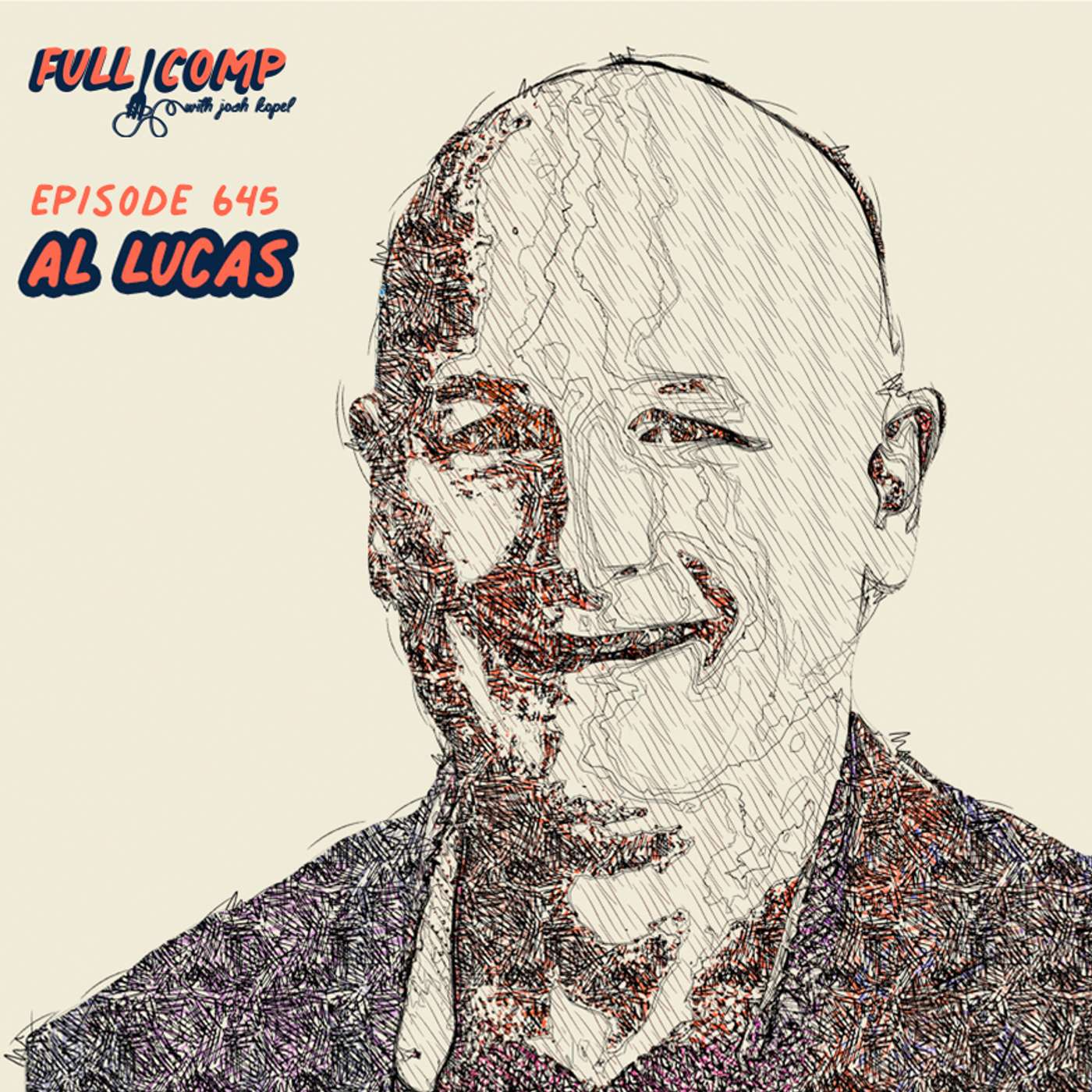
Al Lucas: Go Work for a Chain

What if the fastest way to become a great independent operator is to go work for a chain?

Al Lucas spent 21 years at Chart House, starting as a dishwasher and leaving as a vice president. He took that to Stephen Starr, then to Defined Hospitality, where Kalaya just won Outstanding Restaurant at the 2026 James Beard Awards. When a young cook asked him for career advice, Al told him to get out of independent restaurants as fast as possible.

In this conversation, we get into the fundamentals most independents never get taught, how Al and his partners choose who is worth building a restaurant around, and why the room at the Beard Awards is full of operators who will be gone within a year.

If you learned this business by figuring it out alone, this will show you what you missed.

That’s Al Lucas. To learn more about Defined Hospitality, visit definedhospitality.com.

The Playbook Takeaways

  1. Chain systems teach the fundamentals independents never get. Al spent 21 years at Chart House, starting as a dishwasher and leaving as a vice president. When a young cook asked him for career advice, he told him to get out of independent restaurants as fast as possible — not because independents are bad, but because that is where the training isn’t.
  2. Pick the operator before you pick the concept. At Defined Hospitality, Al and his partners decide who is worth building a restaurant around first. Kalaya, which won Outstanding Restaurant at the 2026 James Beard Awards, came out of that filter.
  3. Recognition is not durability. Al’s read on the room at the Beard Awards is blunt: it is full of operators who will be gone within a year. An award tells you the food landed. It tells you nothing about whether the business survives.

Want the systems behind ideas like these? Join the free 5-day restaurant marketing masterclass.

Keep going: what a restaurant consultant actually does, how to build a restaurant business plan, and what actually drives restaurant profitability.

_________________________________________________________

Free 5-Day Restaurant Marketing Masterclass – This is a live training where you’ll learn the exact campaigns Josh has built and tested in real restaurants to attract new guests, increase visit frequency, and generate sales on demand. Save your spot at restaurantbusinessschool.com

About the Author: Josh Kopel is a Michelin-awarded restaurateur, host of the Full Comp podcast, and creator of the Restaurant Scaling System, which helps independent owners grow profitable restaurants through AI-powered marketing. More about Josh · Learn with Josh

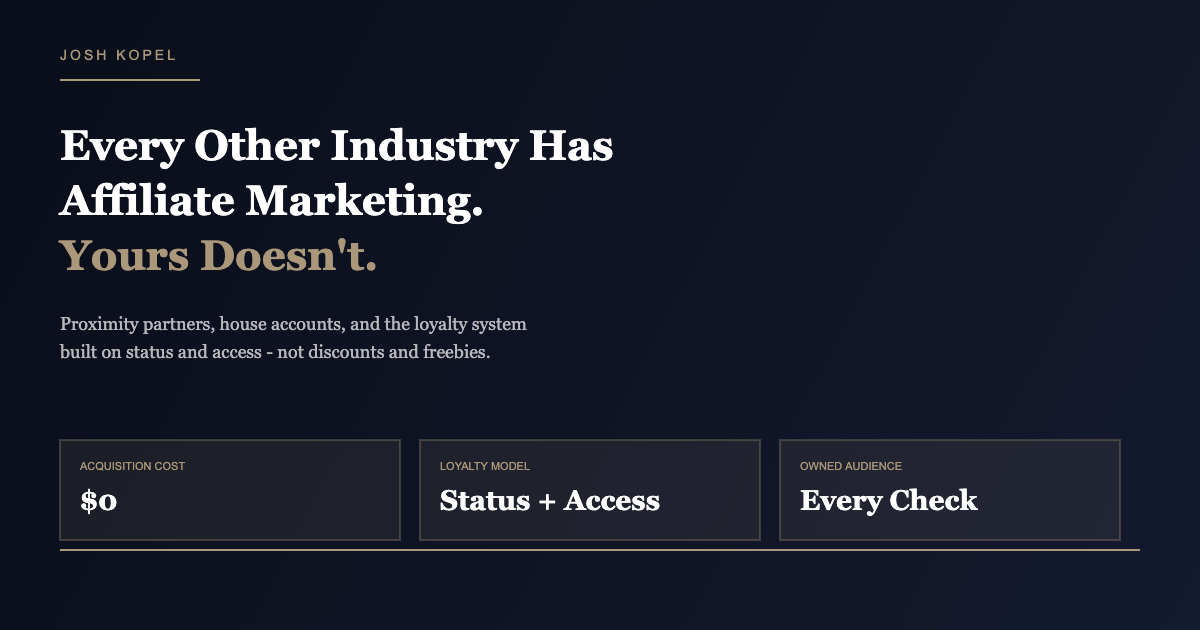
Every Other Industry Has Affiliate Marketing. Yours Doesn’t. That’s Your Biggest Missed Opportunity.

Expert Summary

In every other industry, there are people that drive traffic to other people’s businesses. In the restaurant industry, we look at community influencers and think digital – the children with sunglasses at night taking pictures of the food you’re not charging them for. The problem is you never own that audience. I think you focus on proximity instead. Hotel concierge. Apartment building managers. Office managers. My pitch wasn’t transactional. It was “come in, have dinner on me, no strings attached.” Then Sandy tells me how to engage her residents better than I ever could. Plus the house account loyalty system built on status and access – not discounts and freebies – that turns seated customers into your owned audience.

In every other industry, there are people whose entire job is driving traffic to other people’s businesses. Real estate agents refer mortgage brokers. Financial advisors refer estate attorneys. Hotels refer tour companies. It’s called affiliate marketing, and it’s the backbone of how most industries grow.

In the restaurant industry, we look at community influencers and we think digital. We think about the children with sunglasses at night taking pictures of the food you’re not charging them for. The problem with that is you never own that audience. It’s great for attention, but then the audience goes away with the influencer.

So how do you own the audience? I think you focus on proximity.

Proximity Over Influencers: The One-to-One Approach

When I was in downtown Los Angeles, the relationships I owned were one-to-one in nature. I was always working directly with people who would come across other people who would love what I do for a living. Hotel concierge. Apartment building managers. Office managers.

And my pitch was not what you’d think. A lazy person’s pitch is, “Hey Sandy, hey Denise. Love what you’re doing. Why don’t we collaborate on something? I want to offer discounts to everyone in your building. I want to offer gift cards to everyone in your office or your apartment building.”

I don’t think that resonates, because it’s very much transactional in nature. It’s not a meaningful relationship. It’s a deal.

So here’s what I do instead. “Hey Sandy, it’s Josh. I’m at Preux & Proper right down the street from you. And I think you’d really like what we do for a living. So why don’t you come in, bring a friend, a colleague, a spouse, come in, have dinner on me. I’ll cover everything. I promise I won’t linger at the table for more than a few minutes. I just want to get to know you, because I would love for us to be able to do really cool stuff together.”

Sandy comes in. Has an amazing time. They leave. No strings attached.

Then a week later, I follow up. “Yo Sandy, what did you think?” Sandy says, “Oh my God, it was amazing.”

And then I say, “Well, you know the people in your apartment building way better than me. What’s worked in the past? How can we engage them? How can we delight them in a really authentic way based on what you know about your people?”

Now it’s not my thing, for my business. It’s Sandy’s thing with me that we’re doing for the people she serves. And in doing so, it is far more resonant because Sandy is making an educated guess with far more context than I could ever have.

Why Things That Don’t Scale Are the Things That Win

There’s this great quote from Paul Allen: when you’re building a business, the trick is to do things that don’t scale.

Building one-to-one relationships over time doesn’t scale. I can’t do it across hundreds of markets. But what I do own is the outcome in every market where I’m able to do it. I also refine the process, and I’m able to teach other people how to do it.

Think about what this looks like compounded over time. You build a relationship with the concierge at the hotel down the street. They start recommending you to every guest who asks for a dinner spot. That’s not five covers a month. Over a year, that could be hundreds of covers from a single relationship you built over one dinner.

You build a relationship with the manager of the apartment building around the corner. They include you in their resident newsletter. They mention you during move-in orientation. They bring their corporate team in for a holiday party. One relationship, multiple revenue streams.

Community advocacy is everything in a digital world where everyone is held at arm’s length. You have to get close to people. The influencer posts and moves on. The apartment manager lives there. The concierge works there five days a week. Proximity creates permanence.

The Loyalty Problem That Isn’t a Loyalty Problem

How often do you think about your favorite restaurant? Never. You never think about your favorite restaurant. And that insight changes everything about how you should think about customer frequency.

People don’t have a loyalty problem. They have a memory problem. And what you’re there to do is remind them of how you fit into their lives. Remind them of the one thing you do that nobody else does. Remind them of what you’re best in the world at.

Because if everyone who came into your restaurant once a month came in twice a month, you’d be rich. You’d be Scrooge McDucking it. You wouldn’t be worrying about slow nights. You wouldn’t be worrying about anything.

So how do you solve a memory problem? Not with discounts. Not with freebies. With status and access.

Credit Card Companies Perfected the Model. Now Steal It.

Who do I think has perfected the loyalty model outside our industry? Credit card companies.

Think about it. All credit card companies do the same thing for a living. They loan you money at high interest. All restaurants do the same thing. They sell you food and beverage at a rate that is more expensive than you could make it at home. Both are commodities.

But you are an Amex person or you are a Chase person, and it says something about who you are as a result. No one has done a better job of creating clear differentiation in a commodity business than credit card companies.

And how do they do it? Do they do it through points and point redemption? Absolutely not. They do not do it through transaction. They do it through two things: status and access to the inaccessible.

People don’t want everything. They just want the stuff that no one else can get. And we are the kings and queens of that. We can offer all of it.

Can you not offer priority reservations on Valentine’s Day? On Mother’s Day? Can you not have a secret menu that’s only available to loyalty members? For those of you flipping your menu seasonally, why wouldn’t you do a preview two hours on a Thursday, from five to seven, with a little tray pass, a couple of mini cocktails, so your best customers see the new menu a week before it releases? They’re talking about it on social media. They’re telling their friends. “Oh my God, did you go to this restaurant? Did you know they’re releasing this? We were able to go in early.”

This is what people want. And based on our margins, we can offer incredible perceived value for a very low associated cost.

The House Account: How to Build Your Owned Audience From Every Check

The problem with most loyalty programs is that your team won’t ask people for their personal information, because they don’t have anything of value to offer. “Sign up for our mailing list, I’ll give you a free piece of pie.” That doesn’t make anyone feel seen or special. Candidly, people feel like a tramp trading their personal information for a single dessert.

Here’s what works instead. When you drop the check, you say: “Hey Jason, did you want the money you spent today to go towards your points on your house account?”

Jason says, “What’s a house account? I don’t have a house account.”

You explain: “We’ve got this loyalty program. It gets you access to all of these off-menu items and all of these off-calendar events that we throw for our best customers. We can’t do it for everybody, so we just do it for the best customers. If it’s something you’re interested in, all I need is your phone number and I can sign you up today.”

When you get their phone number, an hour later a text goes out: “We’d love to give you something special on your birthday. Click here to complete your profile – first name, last name, email address, and birthday. Without those things, we can’t send you this gift on your birthday.”

It works. And it works for a very good reason. Number one, you got them in with status and access. Number two, you anchored the benefit to the one thing everybody has – a birthday. What you’ve done is set the expectation that you’re going to be reaching out, and every time you do, you’ll be surprising and delighting them with things no one else can get.

This works incredibly well in bar models too. When somebody sits down and opens a tab: “Are you on the VIP list? Do you have a house account? Because all of these dollars can go towards your points.” It crushes.

Zero Acquisition Cost. High Perceived Value. Market to Them Forever.

Think about what you’ve just built. The affiliate relationships – concierge, apartment managers, office managers – drive new customers through your door at zero acquisition cost. The house account converts those customers into your owned audience at the point of sale. And now you can market to them forever through email, text, and the pre-loaded year of events and LTOs.

You’ve created a flywheel. Proximity partners drive new faces in. The dining experience converts them. The house account captures them. Your marketing calendar brings them back. And every time they come back, they spend more because they feel like insiders. They feel seen. They feel special.

That’s the entire model. Not discounts. Not freebies. Not influencers who move on to the next restaurant next week. Real relationships with real people who live and work in your community, feeding into a loyalty system built on status and access.

And none of it costs a dime. It costs intention.

Your 7-Day Affiliate and Loyalty Action Plan

Day 1: Identify your proximity partners. Who are the hotel concierge, apartment building managers, and office managers within walking distance of your restaurant? Make a list of at least 10. These are people who interact with your potential customers every single day.

Day 2: Invite one in for dinner. Pick the highest-potential proximity partner on your list. Reach out personally. “Come in, bring a guest, dinner’s on me. No strings attached. I just want to get to know you.” Don’t pitch. Don’t ask for anything. Just build the relationship.

Day 3: Follow up and listen. After they’ve been in, follow up within a week. Ask what they thought. Then ask the magic question: “You know your people way better than I do. What’s worked in the past? How can we delight them?” Let them tell you what to do. Their idea will work better than yours.

Day 4: Design your house account. What off-menu items or off-calendar experiences can you offer that cost you very little but feel exclusive? Secret menu items. Early access to seasonal menus. Priority reservations on holidays. Write down at least five things that create status and access.

Day 5: Train the house account script. Train your team to ask one question when they drop every check: “Did you want the money you spent today to go towards your house account?” Practice it. Role play it. Make it natural. This is the single easiest way to build your mailing list.

Day 6: Set up the birthday text. Create the automated text that goes out one hour after sign-up: “We’d love to give you something special on your birthday. Click here to complete your profile.” Anchor the benefit to the one thing everyone has.

Day 7: Invite three more proximity partners. You built one relationship on Day 2. Now build three more. This is a compounding strategy – every relationship you build this week will drive traffic for years. Things that don’t scale are the things that win. Money likes speed. Start today.

Free Live Training

Want Me to Walk You Through These Systems Live?

Join the free 5-Day Restaurant Marketing Masterclass. In 40 minutes a day, I’ll show you how to build a marketing system that actually makes you money.

JOIN THE FREE MASTERCLASS

★★★★★ Rated 5/5 by 1,000+ restaurant owners

Related reading: restaurant marketing solutions that actually work, the retention side in the frameworks that grow a base of regulars, and the data in The State of Restaurant Marketing 2026.

Frequently Asked Questions

What is affiliate marketing for restaurants and how is it different from influencer marketing?

Affiliate marketing for restaurants means building one-to-one relationships with people who naturally encounter your potential customers – hotel concierge, apartment building managers, office managers. Unlike influencer marketing where you never own the audience, proximity-based affiliate relationships give you ongoing access to a captive community. The influencer posts and moves on. The apartment manager lives there and recommends you every day.

How do you approach a proximity partner without being transactional?

Don’t lead with a deal or a collaboration pitch. Invite them in for dinner on you with no strings attached. After they have a great experience, ask them one question: “You know your people better than I do. What’s worked in the past? How can we delight them?” Now it’s their idea, built with their context, for the people they serve. That’s far more resonant than offering discounts to an apartment building.

Why do restaurant loyalty programs based on discounts fail?

Because people don’t want discounts and freebies. They want to feel seen and special. They want to be part of something exclusive. Credit card companies perfected this – they differentiate through status and access to the inaccessible, not through points and redemption. Your loyalty program should offer priority reservations, secret menu items, and early access to new menus, not free pie in exchange for an email address.

What is the house account system and how does it build a restaurant mailing list?

When dropping the check, ask: “Did you want the money you spent today to go towards your house account?” When they ask what that is, explain it’s a loyalty program with access to off-menu items and exclusive events for your best customers. All you need is a phone number. An hour later, a text asks them to complete their profile for a birthday gift. You’ve converted a seated customer into a list member through status and access, not a transaction.

Why should restaurants focus on things that don’t scale?

Paul Allen said the trick to building a business is to do things that don’t scale. Building one-to-one relationships with proximity partners – concierge, apartment managers, office managers – doesn’t scale across hundreds of markets. But you own the outcome in every market where you do it. One dinner with a hotel concierge can generate hundreds of covers over a year. Community advocacy creates permanence that digital influencer marketing never will.

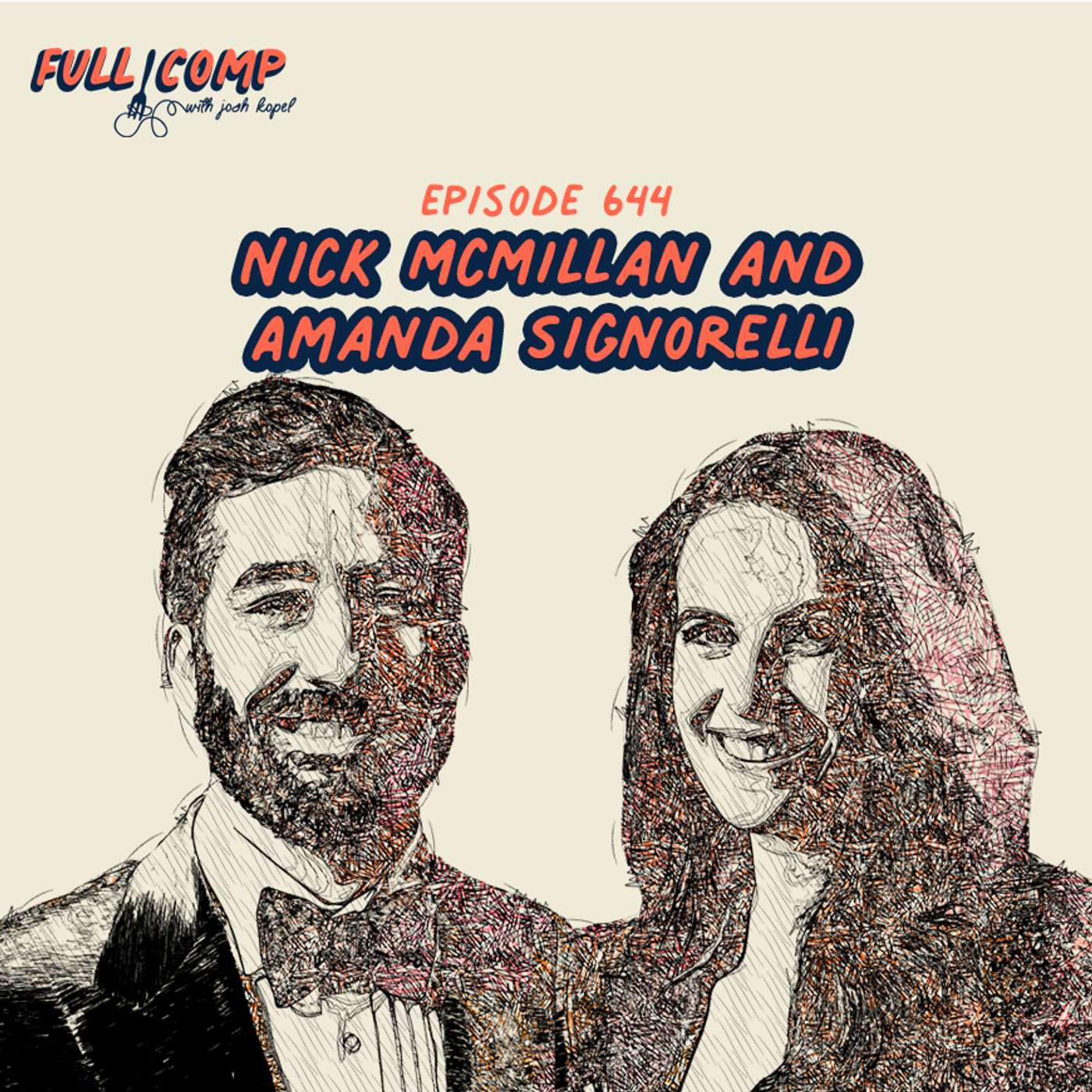
Amanda Signorelli and Nick McMillan: Legacy Doesn’t Equal Profit

What if the thing you are most proud of in your business is also the thing quietly draining it?

Amanda Signorelli and Nick McMillan took over the Golden Steer in 2019, the oldest steakhouse in Las Vegas, open since 1958. Neither of them came from restaurants. They came from tech, inherited a brand with more history than margin, and had exactly one year to learn the business before COVID shut it down.

In this conversation, we get into why they rebuilt the financial model from scratch instead of fixing the old one, why none of us have any business running their own social media, and the lessons learned growing the brand to new markets.

If you are sitting on a brand people love and numbers that do not work, this one is for you.

To learn more about Golden Steer, visit goldensteer.com.

The Playbook Takeaways

  1. A beloved brand is not a business model. Amanda and Nick took over the Golden Steer in 2019 — the oldest steakhouse in Las Vegas, open since 1958 — and inherited a brand with far more history than margin. The affection guests had for the room did not show up in the numbers.
  2. Rebuild the financial model instead of patching it. Rather than repairing the model they inherited, they rebuilt it from scratch, which is the faster path when the underlying assumptions belong to a different era.
  3. Owners are the wrong people to run their own social media. Both make the case that the job belongs to someone whose whole role it is, not to the operator squeezing it in between shifts.

Want the systems behind ideas like these? Grab the free 5-day masterclass at restaurantbusinessschool.com.

Keep going: what actually drives restaurant profitability, restaurant marketing solutions that actually work, and how to build a restaurant business plan.


_________________________________________________________

Free 5-Day Restaurant Marketing Masterclass – This is a live training where you’ll learn the exact campaigns Josh has built and tested in real restaurants to attract new guests, increase visit frequency, and generate sales on demand. Save your spot at restaurantbusinessschool.com

About the Author: Josh Kopel is a Michelin-awarded restaurateur, host of the Full Comp podcast, and creator of the Restaurant Scaling System, which helps independent owners grow profitable restaurants through AI-powered marketing. More about Josh · Learn with Josh

FREE DOWNLOAD

Leverage Digital Media to Drive Traffic to Your Restaurant

This free (and highly detailed) guide will outline how to tell your story in the most compelling way possible and how to share that story with the masses.

(Yep, even if you’re not a “tech” person!)

FREE DOWNLOAD

Lead Your Team Instead of Managing Them

This free (and highly detailed) guide will give you everything you need to know to build and lead a world class team from scratch, ensuring you work less and earn more. (Yep, even if you know nothing about leadership.)

FREE DOWNLOAD

Ready to Optimize, Manage and Grow Your Restaurant’s Profit Margin But Not Sure Where to Start?

This free (and highly detailed) cheat sheet will give you everything you need to know to set up your restaurant to maximize profitability. (Yep, even if you’re not a “business” person!)

Free 5-Day Marketing Masterclass

Join Now

100% Free

Build the AI marketing team you need to scale your restaurant in just 5 days.

See What You'll Learn